
Quick Answer
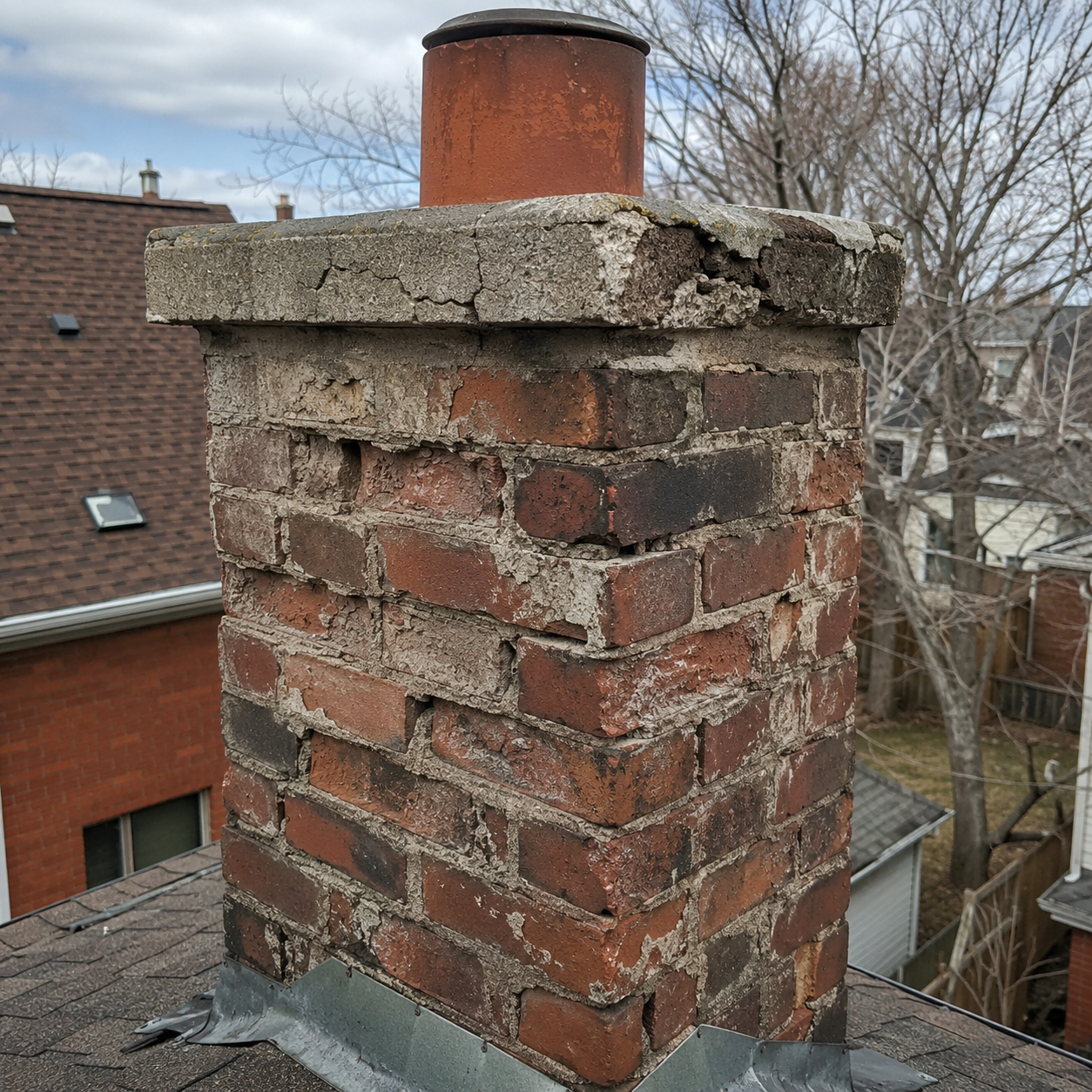
If your chimney is showing spalling bricks, crumbling mortar, leaning sections, water stains, rust marks, loose pieces, or damp smells near the fireplace, it may be dealing with moisture damage, freeze-thaw wear, failing mortar, crown damage, cap problems, or age-related masonry deterioration. In Toronto, chimney problems often get worse after winter because water enters small cracks, freezes, expands, and breaks down brick and mortar. The safest next step is to identify whether the issue is minor, spreading, water-related, or serious enough to need chimney repair or rebuilding.
A chimney can look fine from the street while still having early damage near the roofline. Because chimneys sit above the roof, they are directly exposed to rain, snow, wind, ice, sun, and repeated freeze-thaw cycles. That exposure makes them among the most vulnerable masonry components of an older Toronto home.
Many homeowners first ask, “What’s happening to my chimney?” when they notice brick flakes on the ground, white staining, loose mortar, damp smells, ceiling stains, or a chimney stack that no longer looks straight. Some of these signs may indicate a minor repair. Others may mean water has been entering the chimney for years.
This guide explains the most common chimney problems Toronto homeowners see, what causes them, when repair may be enough, and when a larger chimney rebuild may be the safer long-term choice.
Why Toronto Chimneys Deteriorate
Toronto chimneys deteriorate because they are exposed to moisture, snow, ice, wind, and freeze-thaw cycles from all sides. Unlike walls that may be partly protected by roof overhangs, chimneys usually stand above the roofline where the weather hits them directly.
Older chimneys may also have softer brick, aging mortar, old crown repairs, missing caps, rusted metal parts, or flashing that no longer sheds water properly. Once water enters the chimney, it can travel into mortar joints, brick faces, crown cracks, flue areas, and roofline openings.
The Ontario Building Code is the official provincial source for building code information in Ontario. The City of Toronto building permit guide also notes that permits may be required for the installation or reconstruction of chimneys or fireplaces. Simple maintenance is different from major reconstruction, but homeowners should ask questions when the chimney is unstable, being rebuilt, or part of a larger structural repair.
Common Signs Something Is Wrong With Your Chimney
The most common signs of chimney trouble are visible brick damage, failing mortar, water staining, leaning, loose pieces, and interior moisture near the fireplace or chimney wall. Some signs are easy to see from the ground, while others require a safe inspection.
Watch for these chimney warning signs:
- Spalling bricks, where the brick face flakes, chips, or breaks away.
- Crumbling, recessed, cracked, or missing mortar joints.
- Loose bricks near the top of the chimney.
- A chimney stack that appears to lean or separate.
- White staining on brick is often called efflorescence.
- Dark water stains around the chimney exterior.
- Rust stains near caps, flashing, or metal components.
- Cracks in the chimney crown.
- A missing, loose, rusted, or damaged chimney cap.
- Water stains on ceilings, walls, or fireplace areas inside the home.
- Damp or musty smells near the fireplace after rain.
- Fallen mortar, brick chips, or masonry pieces near the home.
One small chip may not mean the chimney is failing. But several signs together, especially after winter, usually mean the chimney should be checked before the damage spreads.
Spalling Bricks: Why the Brick Face Is Breaking Away
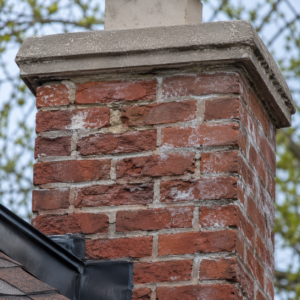
Spalling occurs when the brick face flakes, chips, pops, or breaks away. On chimneys, spalling is often caused by moisture entering the brick and freezing during cold weather.
Toronto chimneys are especially prone to spalling because the upper portion of the chimney is highly exposed. If water gets into a brick face, crown crack, open mortar joint, or cap gap, freezing weather can cause the trapped moisture to expand. Over time, the brick facade starts to break apart.
Spalling may look like:
- Flaking brick surfaces.
- Chipped brick corners.
- Rough or hollowed brick faces.
- Small brick pieces on the roof or ground.
- Damage near the top courses of the chimney.
- Spalling combined with cracked mortar joints.
Spalled bricks usually cannot be made whole again by coating the surface. If the brick is badly damaged, it may need to be replaced. Otto’s guide on what causes brick spalling on Toronto homes explains how moisture, freeze-thaw cycles, salt, drainage, and old repairs can contribute to this type of brick damage.
Failing Mortar: Why the Joints Are Crumbling
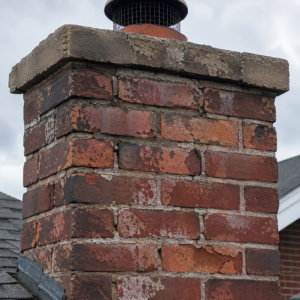
Failing mortar is one of the most common chimney repair issues. Mortar joints hold the bricks together, but they also help keep water from moving deep into the chimney.
Mortar may fail due to age, moisture, freeze-thaw movement, poor past repairs, chimney movement, or water entering through the crown or cap area. Once mortar joints open, more water can enter. That creates a cycle in which moisture weakens the joints, and the weakened joints let in more moisture.
Signs of failing chimney mortar include:
- Joints that look recessed or hollowed out.
- Mortar that crumbles when touched.
- Cracks running through horizontal or vertical joints.
- Loose mortar pieces after winter.
- Open gaps between bricks.
- Water stains follow joint lines.
If the bricks are still sound and the chimney is stable, tuckpointing in Toronto may help by removing weak mortar joints and restoring them. If the crown, cap, or flashing still lets water in, those issues should also be corrected so the new mortar lasts.
Crown and Cap Problems: Water Entering From the Top
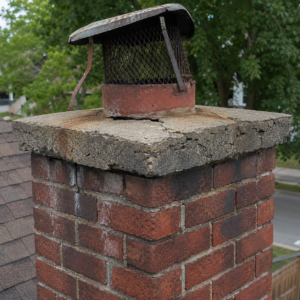
Chimney crown and cap problems often cause damage by allowing water to enter through the chimney’s top. The crown should help shed water away from the chimney, while the cap helps cover the flue opening.
Problems can include:
- A cracked or deteriorated chimney crown.
- A crown that is too flat and holds water.
- A missing chimney cap.
- A loose, rusted, or poorly fitted cap.
- Open gaps around the flue.
- Water stains near the top brick courses.
- Rust marks from damaged metal components.
When water enters through the top, it can damage brick, mortar, flue areas, and interior surfaces. Otto’s guides on chimney cap problems that lead to masonry damage and how chimney crown damage affects brick and mortar explain these top-side water issues in more detail.
Chimney Leaks: Why Water Shows Up Inside
Chimney leaks can come from the crown, cap, mortar joints, cracked bricks, flashing, roofline gaps, or multiple issues at once. The water entry point may not be directly above the visible stain.
Homeowners may notice:
- Water stains near the fireplace.
- Damp smells after rain.
- Peeling paint near the chimney wall.
- Ceiling stains close to the chimney.
- Rust on fireplace components.
- Moisture that appears after snowmelt or wind-driven rain.
Because chimneys can connect to fireplaces or fuel-burning appliances, moisture and venting concerns should be treated carefully. The Government of Canada provides carbon monoxide safety guidance for homes, including the importance of proper maintenance of fuel-burning systems. A masonry repair is not a substitute for appliance safety checks, but chimney blockage, poor venting, or water-damaged chimney systems should not be ignored.
Leaning or Loose Chimneys: When Damage Becomes More Serious
A leaning or loose chimney can be a serious issue because it may mean the masonry has lost stability. This is different from a few damaged bricks or worn mortar joints.
Possible causes include long-term mortar failure, water damage, frost movement, settlement, roofline movement, previous poor repairs, or severe deterioration above the roofline. If the chimney is moving, surface patching is not enough.
Call a mason sooner if you see:
- A chimney stack leaning away from the house.
- Gaps where the chimney meets the roofline or wall.
- Loose upper courses of brick.
- Several missing or failing mortar joints.
- Falling brick or mortar pieces.
- Large cracks through the chimney stack.
If the chimney is unstable, homeowners should avoid standing below it, leaning ladders against it, or trying to remove loose pieces. A safe professional inspection is the next step.
Repair Options for Chimney Problems
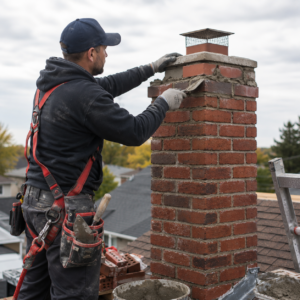
Chimney repair options depend on the type of damage, how far it has spread, and whether the chimney is still stable. A small mortar problem and a leaning chimney are very different repairs.
Common chimney repair options include:
- Tuckpointing: Removes weak mortar joints and restores them.
- Brick replacement: Replaces spalled, cracked, loose, or broken bricks.
- Crown repair: Repairs cracks or surface damage at the chimney top.
- Crown replacement: Used when the crown is badly cracked, flat, loose, or breaking apart.
- Cap repair or replacement: Helps reduce water, debris, and animal entry at the flue opening.
- Flashing review: Checks whether water is entering at the point where the chimney meets the roof.
- Partial rebuild: Rebuilds a damaged upper section when localized repair is not enough.
- Full chimney rebuild: Used when the chimney is unstable, badly deteriorated, or failing across a larger section.
Otto’s Masonry provides chimney repair in Toronto for cracked brick, failing mortar joints, chimney crowns and caps, leaks, leaning stacks, brick replacement, repointing, and rebuilding as needed.
When Chimney Repair May Be Enough
Chimney repair may be enough when the chimney is stable, and the damage is limited to a few bricks, worn mortar joints, minor crown wear, small leaks, or localized cap problems.
Repair may be suitable when:
- Only a few bricks are spalling or cracked.
- Mortar damage is limited, and the chimney remains straight.
- The crown has minor cracks, but is not breaking apart.
- The cap is loose, missing, or damaged, but the masonry below is mostly sound.
- Water stains are minor, and the source can be corrected.
- The chimney is not leaning or separating.
- There are no large falling masonry pieces.
In these cases, targeted repair can often correct the issue before it becomes larger. The important part is to fix the source of water entry, not just the visible damage.
When Chimney Rebuilding May Be Needed
Chimney rebuilding may be needed when the chimney is unstable, badly deteriorated, loose, leaning, or failing across a larger section. Rebuilding is usually considered when repair would only patch a chimney that can no longer perform safely.
Rebuilding may be needed when:
- The chimney is leaning or visibly loose.
- Many bricks are spalling or cracked.
- Mortar joints are deeply missing across a large area.
- The crown is badly broken, and the upper masonry is deteriorated.
- Previous repairs keep failing.
- Loose bricks or mortar are falling.
- The chimney has widespread water damage.
- The stack is unsafe above the roofline.
If you are comparing repair with rebuilding, Otto’s guide on chimney repair vs chimney rebuilding in Toronto explains the difference between localized repair and a larger rebuild decision.
What Homeowners Can Safely Check Themselves
Homeowners can safely check for chimney warning signs from the ground and inside the home. The goal is to gather clues without climbing onto the roof or disturbing damaged masonry.
Check these items:
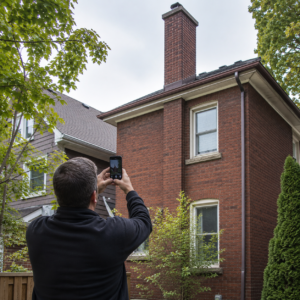
- Use phone zoom from a safe location to look at the chimney top.
- Look for spalling brick, open mortar joints, or visible cracks.
- Check whether the crown or cap appears damaged, missing, tilted, or rusted.
- Look for water stains, rust marks, or white staining on the chimney.
- Look around the fireplace for damp smells, stains, or peeling paint.
- Check for fallen brick chips, mortar pieces, or cap material after storms.
- Note whether the damage becomes worse after winter.
- Take photos from the same angle to compare changes over time.
Do not climb onto the roof, lean ladders against loose brickwork, or try to remove damaged pieces from the chimney. Chimney repairs above the roofline involve fall and loose-masonry risks.
When to Call a Mason
You should call a mason when a chimney shows spalling brick, failing mortar, crown cracks, cap problems, water stains, rust marks, leaks, leaning, or loose masonry. These signs usually indicate the chimney is experiencing moisture, weather exposure, age, or movement.
Call sooner if brick or mortar pieces are falling, the chimney looks unstable, interior water stains appear, or the issue worsens after winter. A small repair caught early may prevent a larger rebuild later.
Otto’s Masonry provides masonry services in Toronto, including chimney repair, brick repair, tuckpointing, crown repair, cap repair, masonry restoration, and chimney rebuilding. If the chimney is part of a larger exterior masonry problem, a full masonry review may be more useful than patching one visible spot.
FAQs About Chimney Problems in Toronto
Why is my chimney brick falling apart?
Chimney bricks often fall apart because moisture enters the masonry and freezes in cold weather. This can cause brick faces to spall, mortar joints to fail, and loose pieces to break away.
What are the most common chimney problems in Toronto?
Common chimney problems in Toronto include spalling brick, failing mortar joints, cracked crowns, missing or damaged caps, leaks, rust staining, loose brick, and deterioration after freeze-thaw cycles.
Is chimney spalling serious?
Chimney spalling can be serious if it is spreading, affecting many bricks, or combined with failing mortar and water entry. Small isolated damage may be repairable, but widespread spalling should be checked.
Can tuckpointing fix my chimney?
Tuckpointing can help when the main issue is failing mortar joints and the chimney is still stable. If the chimney has loose bricks, major spalling, crown damage, leaks, or leaning, additional repair may be needed.
How do I know if my chimney needs rebuilding?
A chimney may need rebuilding if it is leaning, loose, badly cracked, severely spalling, missing large areas of mortar, dropping masonry pieces, or failing across a larger section above the roofline.
Can a damaged chimney cause leaks inside the house?
Yes. Water can enter through cracked crowns, missing caps, open mortar joints, damaged bricks, flashing issues, or roofline gaps and show up as stains, damp smells, or moisture near the fireplace or chimney wall.
When should I call a mason about my chimney?
Call a mason when you see spalling brick, crumbling mortar, crown cracks, cap damage, water stains, loose masonry, leaning, falling pieces, or chimney damage that gets worse after winter.
Final Answer
If you are wondering what is happening to your chimney, the most likely issues are moisture damage, freeze-thaw deterioration, spalling brick, failing mortar, crown damage, cap problems, leaks, or age-related masonry wear. Toronto chimneys are highly exposed, so small water entry points can lead to larger brick-and-mortar damage over time.
The practical takeaway is to look at the pattern of damage. A few worn joints or bricks may be repairable, but leaning, loose masonry, widespread spalling, interior leaks, or falling pieces should be checked quickly. The right repair should address both the visible damage and the underlying water source.