

Quick Answer
Chimney repair is usually enough when the damage is limited to mortar joints, a few bricks, minor crown wear, or small localized leaks. Chimney rebuilding is usually considered when the chimney is leaning, loose, severely cracked, badly spalling, or failing across a larger section. In Toronto, freeze-thaw weather makes this decision important because small chimney defects can grow quickly when water gets into the brick and mortar before winter.
Many Toronto homeowners do not know whether their chimney needs a repair or a rebuild. That confusion makes sense because chimney problems can look similar from the ground. A few cracked joints, a damaged crown, or some loose bricks may look minor, while deeper moisture damage can hide until the chimney starts shedding pieces or pulling apart near the top.
The best way to think about it is simple: chimney repair deals with specific damaged parts, while chimney rebuilding replaces a larger failing section of the chimney. A good mason should not recommend rebuilding every chimney, but they also should not patch a chimney that is no longer stable.
This guide explains the difference between chimney repair and chimney rebuilding, what signs homeowners should watch for, how Toronto weather affects the decision, and when professional masonry help makes more sense than waiting another season.
Why Chimney Damage Matters for Toronto Homes
Chimney damage matters in Toronto because chimneys are among the most exposed masonry features on a home. They sit above the roofline, take weathering from all sides, and often absorb more rain, snow, wind, ice, and temperature stress than protected wall sections do.
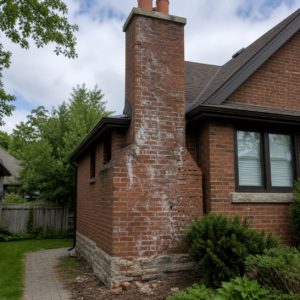
Toronto’s freeze-thaw cycle is especially hard on chimney brick and mortar. Water enters small cracks, open joints, damaged caps, or weak crown areas. When that water freezes, it expands. Over time, this can crack mortar, spall brick faces, loosen upper courses, and make small defects more serious.
Older homes in East York, The Annex, Rosedale, Forest Hill, The Beaches, North York, Etobicoke, Scarborough, and other Toronto neighbourhoods may also have chimneys built with older brick, aged mortar, and past repairs that no longer match the rest of the structure. That does not mean every older chimney needs rebuilding, but it does mean the repair method should fit the masonry’s condition.
The City of Toronto’s Property Standards bylaw requires exterior parts of buildings to be kept in good repair and free from loose or unsafe materials. For homeowners, that is a practical reminder that chimney damage should not be treated as only a cosmetic issue when bricks, mortar, or upper sections are loose.
What Chimney Repair Usually Means
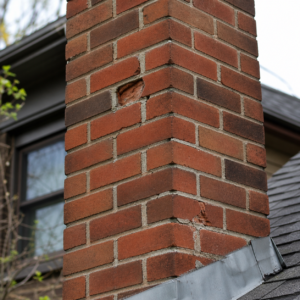
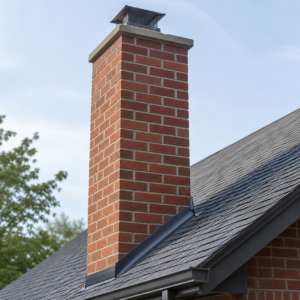
Chimney repair usually means fixing specific damaged parts of the chimney while keeping the main structure in place. This can include replacing a few damaged bricks, repointing mortar joints, repairing the crown, addressing small leaks, or correcting localized deterioration.
Repair may be enough when the chimney is mostly stable and the damage is limited. For example, a chimney with several cracked mortar joints but solid brickwork may need tuckpointing or repointing. A chimney with a few damaged bricks near the top may need selective brick replacement. A chimney with minor crown cracking may need crown repair before water gets deeper into the masonry.
Otto’s Masonry offers chimney repair in Toronto for issues such as deteriorating mortar, cracked brick, leaning stacks, crown concerns, and chimney rebuilding when needed. The important part is choosing the right scope instead of assuming every chimney problem needs the same fix.
What Chimney Rebuilding Usually Means
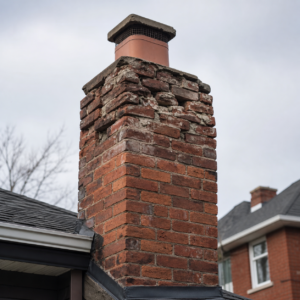
Chimney rebuilding means removing and rebuilding a larger failing section of the chimney. This may involve rebuilding from the roofline up, rebuilding only the upper courses, or rebuilding more of the chimney if deterioration is severe.
Rebuilding is usually considered when repairs would only cover the surface, while the chimney remains unstable or badly deteriorated. If many bricks are loose, the chimney is leaning, the mortar has failed deeply, or the upper section is breaking apart, a patch repair may not be enough to restore safety and durability.
A rebuild should not be recommended lightly, as it is a larger project than a repair. Still, when the chimney is structurally compromised, repeated small repairs can become a waste of money. In those cases, rebuilding the failing section may be the more honest and durable option.
Problem Signs Homeowners Should Watch For
Chimney problems often show up as cracked mortar, spalling brick, loose pieces, staining, leaning, or water entry. Some signs point to minor repair needs, while others suggest the chimney should be assessed sooner.
- Cracked, recessed, powdery, or missing mortar joints.
- Brick faces flaking, crumbling, or popping off.
- Loose bricks or small masonry pieces found near the home.
- White staining, also called efflorescence.
- Dark staining or damp areas around the chimney.
- Cracked chimney crown or damaged cap area.
- Gaps around flashing or signs of roofline leaks.
- Chimney stack leaning, twisting, or pulling away.
- Upper brick courses look uneven, loose, or separated.
- Repeated repairs that fail again after winter.
If the chimney only has a few weak mortar joints, repair may be the right answer. If the stack is leaning, bricks are loose, or large sections are deteriorating, rebuilding may be necessary to discuss. Otto’s has also covered homeowner warning signs in its blog post, “5 Signs Your Chimney Needs Repair in Toronto,” which can help homeowners identify early chimney concerns.
What Causes Chimney Damage in Toronto?
Most chimney damage in Toronto is caused by moisture, freeze-thaw cycles, aging mortar, poor caps or crowns, flashing problems, salt exposure, and previous repairs that did not solve the water source. Chimneys are highly exposed, so small defects can worsen over repeated winters.
Common causes include:
- Freeze-thaw damage: Water enters small openings, freezes, expands, and damages brick or mortar.
- Failed mortar joints: Open joints allow water to enter deeper into the chimney.
- Spalling bricks: Brick faces break away after repeated moisture and freezing.
- Damaged crown or cap: Water enters from the top instead of shedding away.
- Flashing problems: Water enters where the chimney meets the roof.
- Age and weather exposure: Older brick-and-mortar buildings may be more vulnerable after decades of exposure.
- Wrong previous repairs: Hard or incompatible materials may trap moisture or stress older masonry.
The National Research Council Canada has published guidance showing that moisture and freeze-thaw exposure are major factors in masonry durability. That is why a chimney repair should not focus only on what looks damaged from the outside. The source of water exposure matters just as much as the visible condition of the brick or mortar.
Repair vs Rebuild: A Practical Comparison
The easiest way to compare chimney repair and chimney rebuilding is to look at the severity, spread, and stability of the damage. A repair is usually for limited damage. A rebuild is usually for widespread or structural failure.
| Chimney Condition | Repair May Be Enough | Rebuild May Be Needed |
|---|---|---|
| Minor mortar loss | Yes, if the chimney is stable | Usually no |
| A few damaged bricks | Yes, with selective replacement | Sometimes, if damage is spreading |
| Light crown cracking | Often, if caught early | Sometimes, if water has damaged the lower courses |
| Spalling across many bricks | Sometimes, if limited to one area | Often, if the upper chimney is deteriorating |
| Loose upper courses | Sometimes, if minor and localized | Often |
| Leaning chimney | Usually no | Often |
| Severe cracking or separation | Sometimes, after assessment | Often |
| Repeated failed patch repairs | Less likely | Possible |
This table is a guide, not a replacement for inspection. Chimneys can look better or worse from the ground than they really are. A mason should check the brick, mortar, cap or crown, flashing area, roofline exposure, and the chimney’s stability.
Repair Options for Chimney Problems
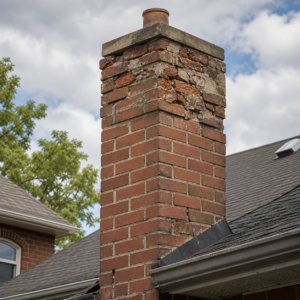
The right chimney repair option depends on what has failed. Some chimneys only need mortar repair, while others need brick replacement, crown repair, flashing coordination, or partial rebuilding.
- Chimney tuckpointing or repointing: Used when mortar joints are cracked, recessed, loose, or missing.
- Selective brick replacement: Used when individual bricks are cracked, spalling, or loose, but the chimney remains stable.
- Crown or cap repair: Used when water is entering from the top of the chimney.
- Partial chimney rebuild: Used when the upper section has failed but the lower chimney remains sound.
- Full chimney rebuild: Used when the chimney is severely deteriorated, unstable, or failing beyond the upper courses.
- Related roofline work: Sometimes needed when flashing or water entry at the roof connection is part of the issue.
If mortar joints are the main issue, Otto’s tuckpointing Toronto service may be relevant. If bricks are cracked, loose, or spalling, brick repair in Toronto may also be part of the chimney repair plan.
Homeowner Decision Guide
Repair may be enough when the chimney is stable, the damage is limited, and the water source can be corrected. Rebuilding may be needed when the chimney is unstable, the top section is falling apart, or repairs would only hide deeper failure.
Repair may be enough when:
- Only a few mortar joints are cracked or missing.
- A small number of bricks are damaged.
- The chimney is straight and stable.
- The crown or cap has minor damage.
- There are no loose upper courses.
- Water entry is limited, and the cause is clear.
A rebuild may be needed when:
- The chimney is leaning or visibly shifting.
- Several upper courses are loose or separating.
- Many bricks are spalling or crumbling.
- Deep cracks run through the chimney stack.
- Previous repairs keep failing after winter.
- The chimney is no longer safe or weather-tight.
There is also a middle option: partial rebuilding. Many Toronto chimneys do not need to be rebuilt from the bottom up. In some cases, the failing upper section can be rebuilt while the lower section remains in place. That decision depends on the condition of the chimney and how far the deterioration has travelled.
What Homeowners Can Safely Check Themselves
Homeowners can safely inspect visible chimney conditions from the ground, but they should not climb onto the roof or disturb loose masonry. A safe visual check can still reveal useful warning signs.
Look for missing mortar, brick flakes on the ground, white staining, leaning, dark water marks, cracked chimney caps, gaps near the roofline, or uneven upper brick courses. After winter or heavy rain, check whether new pieces have fallen or whether staining has changed.
It is also helpful to take photos from the same safe location over time. If the chimney looks worse after winter, if flakes appear near the home, or if water stains appear indoors near the chimney, the issue should be assessed. Do not seal, patch, or cover chimney damage without understanding why water is entering.
When to Call a Mason
You should call a mason when chimney damage is spreading, bricks are loose, mortar is missing, the chimney is leaning, or leaks are appearing near the chimney. These signs can point to problems that need more than a small patch.
It is also worth calling before winter if you already see open joints or damaged brick. Toronto freeze-thaw cycles can turn small openings into larger defects. Otto’s guide on winter damage and spring masonry repairs explains how seasonal moisture and freezing can affect brick, stone, mortar, and chimneys.
A proper chimney assessment should examine the brick, mortar, crown, cap, flashing, exposure, and overall stability. The Ontario Building Code regulation includes construction requirements for masonry and concrete chimneys, which is one reason chimney work should be handled carefully. Homeowners do not need to read code language to know every detail, but they should understand that chimneys are not just decorative masonry. They are exposed building components that require safe, durable repairs.
FAQs About Chimney Repair vs Chimney Rebuilding
How do I know if my chimney needs repair or rebuilding?
Your chimney may only need repair if the damage is limited to mortar joints, a few bricks, or minor crown wear. Rebuilding may be needed if the chimney is leaning, loose, severely cracked, badly spalling, or failing across a larger section.
Can a leaning chimney be repaired?
A leaning chimney should be assessed quickly. Minor movement may limit repair options in some cases, but visible leaning often indicates that the chimney may need partial or full rebuilding, depending on its stability and the extent of damage.
Does spalling brick mean my chimney needs rebuilding?
Not always. A few spalled bricks may be replaced as part of a repair. Widespread spalling, loose bricks, or repeated freeze-thaw damage near the upper courses may point toward partial rebuilding.
Is chimney tuckpointing enough to stop leaks?
Sometimes. If leaks are caused by open mortar joints, tuckpointing may help. If water is entering through the crown, cap, flashing, or a larger structural problem, tuckpointing alone may not solve the leak.
Can only the top part of a chimney be rebuilt?
Yes, in many cases. If the upper chimney is failing but the lower section is still sound, a partial rebuild from the roofline or from a damaged upper section may be enough.
When is the best time to repair a chimney in Toronto?
Spring, summer, and fall are usually better for planned chimney masonry work. If damage is creating a safety concern or active water entry, it should be assessed as soon as possible, even outside ideal seasonal timing.
Should I wait if my chimney only has small cracks?
Small cracks can sometimes be monitored, but they should not be ignored if they are spreading, retaining moisture, or accompanied by loose mortar, spalling brick, or leaks. In Toronto, winter can worsen small cracks in chimneys.
Final Answer
Chimney repair is usually the right choice when the chimney is stable, and the damage is limited to mortar joints, a few bricks, crown wear, or small water entry points. Chimney rebuilding is usually considered when the chimney is leaning, loose, severely cracked, badly spalling, or failing across a wider section.
For Toronto homeowners, the safest decision comes from understanding both the visible damage and the moisture source behind it. If your chimney is shedding brick, showing open joints, leaking, or looking unstable, you can contact Otto’s Masonry to discuss whether repair, partial rebuilding, or a larger chimney rebuild makes the most sense.