

Quick Answer
To choose a masonry contractor in Toronto, look for proven local experience, clear repair recommendations, proper insurance, detailed estimates, and familiarity with older brick, stone, chimneys, mortar, and freeze-thaw damage. A good contractor should explain the cause of the problem, not just quote the visible repair. Toronto homeowners should be cautious of vague pricing, rushed advice, and repairs that ignore moisture, drainage, or material compatibility.
Choosing a masonry contractor is not just about finding someone who can replace brick or fill mortar joints. Masonry work affects the strength, weather resistance, appearance, and long-term value of your home. In Toronto, where many homes have older brick, exposed chimneys, concrete steps, stone details, and foundations affected by freeze-thaw cycles, the wrong repair can create bigger problems later.
A low price can be tempting, especially when the damage looks small from the outside. But masonry issues often involve more than what is visible. A cracked brick may point to water movement. Missing mortar may suggest a wider repointing issue. A chimney leak may come from the crown, cap, flashing, mortar joints, or damaged brick. This is why the contractor you choose should be able to assess the whole condition, not just patch the easiest area.
This guide explains what Toronto homeowners should check before hiring a masonry contractor, what questions to ask, what warning signs to avoid, and how to compare estimates in a practical way.
Why Choosing the Right Masonry Contractor Matters in Toronto
The right masonry contractor matters because Toronto homes face moisture, winter freezing, older materials, and mixed repair histories. A repair that looks acceptable at first can fail early if the contractor uses the wrong mortar, ignores water entry, or replaces brick without matching the wall’s condition.
Toronto and GTA homes often include brick walls, chimneys, porch columns, concrete steps, stonework, parging, retaining walls, and interlocking surfaces. Many properties have also undergone years of patch repairs, painting, coatings, water exposure, settling, and seasonal wear. This makes proper diagnosis important.
If you are comparing contractors, the first question should not be, “Who is cheapest?” A better question is, “Who understands why the masonry is failing and how to repair it in a way that fits the home?” That does not mean you should overpay. It means the estimate should make sense, the scope should be clear, and the repair should address the actual problem.
For homeowners who are still unsure what kind of work they need, reviewing the main masonry services in Toronto can help clarify brick repair, tuckpointing, chimney repair, concrete repair, parging, stonework, and waterproofing concerns before requesting estimates.
Start With the Type of Masonry Problem You Have
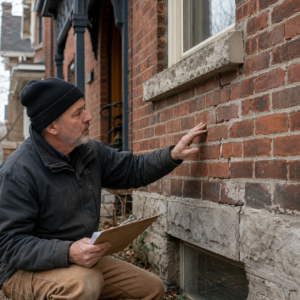
The best contractor for your project depends on the type of masonry problem you are trying to solve. Some contractors focus on brickwork. Others handle chimneys, concrete, stone, waterproofing, or restoration. A strong masonry contractor should be clear about what they do well and when a different repair approach may be needed.
Before calling anyone, try to identify what you are seeing:
- Cracked, loose, or missing bricks
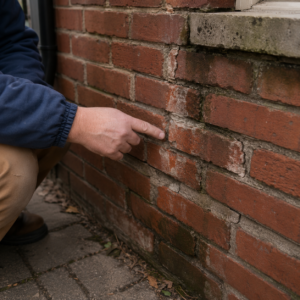
- Mortar joints that are cracked, sandy, recessed, or falling out
- Spalling brick faces that are flaking or breaking apart
- White staining that may point to moisture movement
- A chimney with loose brick, leaning sections, or cracked mortar
- Concrete steps, porches, or walkways with cracks or uneven surfaces
- Damp basement areas near exterior masonry or foundation walls
- Stonework that has shifted, cracked, or separated
You do not need to diagnose the full issue yourself. Still, clear photos and a basic description help a contractor understand whether the project is a simple repair, a larger restoration, or a moisture-related problem.
If the visible issue is a damaged brick, start with the condition of the brick and the surrounding mortar. A small area may need targeted brick repair in Toronto, while widespread damage may call for a broader restoration plan.
Look for Real Local Masonry Experience
A Toronto masonry contractor should understand local homes, local weather, and the way older masonry behaves over time. This is different from a general renovation experience. Masonry requires knowledge of materials, moisture, mortar, wall movement, and repair sequencing.
Local experience matters because Toronto homes often have:
- Older clay brick that may be softer than newer brick
- Mortar joints affected by many freeze-thaw cycles
- Chimneys exposed to heavy wind, rain, snow, and ice
- Porches and steps exposed to salt, water, and settlement
- Heritage-style details that need careful material matching
- Drainage conditions that affect walls and foundations
A contractor who understands these conditions is more likely to recommend a repair that fits the house. For example, replacing a few bricks without fixing the open mortar joints around them may not be enough. Repointing with a mortar that is too hard for older brick can also cause problems, because the brick may become the weaker part of the wall.
Good local experience also shows in the questions the contractor asks. They may ask when the problem appeared, whether it worsens after rain, whether the wall stays damp, whether there are interior stains, or whether the damage is worse near the roofline, grade, chimney, or steps.
Ask for a Clear Scope, Not Just a Price
A useful masonry estimate should explain what work will be done, where it will be done, and why that repair is being recommended. A price with no scope is hard to compare and can lead to confusion once work starts.
When reviewing an estimate, look for details such as:
- Which areas of the wall, chimney, steps, or foundation are included
- Whether damaged bricks will be repaired, replaced, or left in place
- Whether mortar joints will be ground out and repointed
- How deep repointing will go, if relevant
- Whether matching brick, stone, or mortar is part of the work
- Whether cleanup, debris removal, and site protection are included
- Whether water-related causes will be addressed, or only the visible damage
Be careful with estimates that only say “masonry repair” without explaining the repair area or method. That does not always mean the contractor is bad, but it gives you less protection as a homeowner. If two estimates have very different prices, the scope may be different even if both appear to address the same wall.
For mortar joint repairs, ask whether the contractor is recommending spot repointing or a larger section of tuckpointing in Toronto. Spot repairs may be enough for isolated damage. Larger repointing may be needed when joints are failing across a wider area.
Check Insurance, Safety Practices, and Permit Awareness
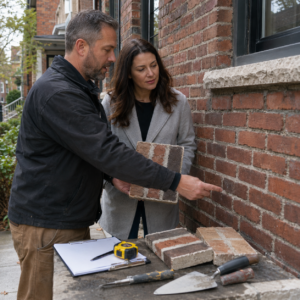
A masonry contractor should be able to explain insurance, safety, and any permit considerations that may apply to the project. Not every masonry repair requires a building permit, but some projects may involve structural changes, major alterations, chimneys, heritage properties, or work affecting public areas.
The City of Toronto explains that a building permit is required for most construction, demolition, additions, or major renovations, and that permit review checks plans against the Ontario Building Code, zoning by-laws, and other applicable laws. Homeowners can review the City’s building permit guidance when a project goes beyond a simple repair.
For heritage properties, the City of Toronto also states that owners require a heritage permit before making changes to designated properties. If your home is designated under the Ontario Heritage Act, review the City’s heritage property application requirements before approving exterior masonry work.
You do not need a contractor who turns every small repair into a permit discussion. You do need someone who understands when permits, heritage rules, safety, access, scaffolding, or structural concerns may matter.
For 2026, Toronto homeowners should be especially careful when comparing masonry quotes for older homes, chimneys, and exterior walls with a history of moisture. A clear repair scope should explain not only what will be fixed, but also whether water, access, material matching, or permit considerations may affect the work.
Compare How Contractors Explain the Cause of the Damage
A good masonry contractor should explain why the damage happened, not only what they plan to fix. This matters because many masonry issues are caused by water, drainage, age, poor previous repairs, or movement.
Common causes of masonry problems in Toronto include:
- Freeze-thaw cycles that expand trapped water inside brick or mortar
- Leaking gutters or downspouts that keep the brick wet
- Failed chimney caps, crowns, flashing, or mortar joints
- Hard mortar used on softer, older brick
- Soil, mulch, or snow piled against exterior masonry
- Concrete steps or porches are shifting and pulling on nearby masonry
- Paint or coatings trapping moisture in the brick
- Old repairs that covered the symptom but not the cause
If the contractor only says, “We can patch that,” ask what may have caused the damage. A simple repair may still be the right answer, but it should be based on the wall’s condition. If moisture is the real issue, patching alone may fail again.
This is especially important with chimneys. A chimney problem may involve brick replacement, repointing, cap repair, crown repair, flashing concerns, or partial rebuilding. If you are comparing chimney estimates, a contractor should explain whether the chimney needs repair, rebuilding, or only local repointing. You can also review chimney repair in Toronto to understand common repair paths before deciding.
Watch for Red Flags When Hiring a Masonry Contractor
Some warning signs are easy to miss when you are focused on price or scheduling. A contractor may still be polite and confident, but the advice should be clear, careful, and specific to your home.
Be cautious if a contractor:
- Gives a price without asking for photos, location, measurements, or a site visit when needed
- Cannot explain what caused the masonry damage
- Pushes a full replacement before explaining repair options
- Suggests sealing or painting over damaged masonry without repairs
- Uses vague wording such as “fix wall” with no scope details
- Ignores drainage, roof runoff, chimney caps, or moisture patterns
- Does not discuss material matching on visible brick or stone
- Pressures you to decide immediately without giving time to review the estimate
Also, be careful with unusually low quotes. A lower quote may be fair if the scope is smaller, but it may also mean fewer steps, thinner patching, poor cleanup, no material matching, or no attention to underlying moisture. The lowest price is not always the best value if the repair fails after one or two winters.
How to Compare Masonry Estimates Fairly
To compare masonry estimates fairly, make sure each contractor is pricing the same scope of repairs. If one estimate includes brick replacement, repointing, cleanup, access, and matching materials, while another only includes surface patching, the prices are not equal.
Use these questions when comparing estimates:
- Are they repairing the same area?
- Are they replacing damaged units or only patching them?
- Are they repointing the mortar properly or only applying a surface skim?
- Are they including access equipment or scaffolding if needed?
- Are they matching brick, stone, mortar colour, and joint style?
- Are they addressing drainage or moisture causes?
- Are cleanup and disposal included?
- Is the timeline realistic for the season and weather?
For concrete steps, porches, walkways, or exterior slabs, the same rule applies. One contractor may suggest resurfacing, while another may recommend removal and replacement. The right answer depends on the depth of damage, movement, safety, drainage, and how the concrete connects to nearby masonry. Homeowners dealing with this type of issue can review concrete repair in Toronto before comparing options.
Repair May Be Enough When…
A smaller masonry repair may be enough when the damage is limited, the structure is stable, and the cause can be corrected without rebuilding a larger section. A good contractor should be able to explain when a targeted repair makes sense.
Repair may be enough when:
- Only a few bricks are cracked or spalling
- Mortar damage is isolated to one section
- The chimney is mostly stable, but has local joint failure
- Concrete cracking is minor and does not create a safety concern
- The wall dries properly after rain
- The water source has been corrected
- The surrounding masonry is still sound
In these cases, a contractor who jumps straight to a large rebuild may be overreaching. That does not mean larger work is never needed. It means the recommendation should match the actual condition of the masonry.
A Larger Fix May Be Needed When…
A larger repair may be needed when damage is widespread, recurring, unsafe, or linked to underlying moisture or movement issues. This is where a detailed assessment becomes more important than a quick patch.
A larger fix may be needed when:
- Many bricks are loose, cracked, or spalling across the same wall
- Mortar joints are failing over a wide section
- The chimney is leaning, unstable, or badly deteriorated
- Water stains are appearing inside the home
- Previous repairs keep failing
- Concrete steps or porch sections have shifted significantly
- Drainage keeps pushing water toward the same masonry area
In some cases, the visible masonry repair is only one part of the solution. If moisture is entering near the foundation, exterior water management may also need attention. Homeowners dealing with damp lower walls or basement moisture can review basement waterproofing and moisture control as part of the broader decision.
What Homeowners Can Safely Check Before Hiring
Homeowners can do a basic visual check before contacting a masonry contractor. This helps you explain the issue clearly and compare recommendations more confidently.
Before asking for estimates, check:
- Where the damage is located
- Whether it gets worse after rain or snowmelt
- Whether mortar joints are cracked, missing, or sandy
- Whether bricks are flaking, loose, or pushed outward
- Whether nearby gutters, downspouts, or grading are sending water toward the wall
- Whether the problem is close to a chimney, window sill, porch, or foundation
- Whether similar repairs were done before and failed
Take clear photos from far away and close up. Include surrounding areas, not just the worst crack. A wider photo helps show whether water, rooflines, downspouts, grade, or nearby structures may be affecting the masonry.
Do not scrape out mortar, pressure wash brick, remove bricks, or apply sealers before getting advice. These actions can hide the problem or make the repair harder to assess.
Questions to Ask Before You Hire
The right questions can reveal whether a contractor is thinking carefully or only selling a quick repair. You do not need technical language. Simple, direct questions work best.
Ask questions like:
- What do you think caused this damage?
- Is this a small repair, a larger repair, or a moisture problem?
- Will the brick, stone, or mortar be matched to the existing wall?
- Does the work need to happen before winter?
- Will the repair address the cause or only the visible damage?
- Do you see any drainage, chimney, or foundation concerns?
- What is included in cleanup and site protection?
- Are there permits or heritage concerns I should know about?
You can also ask whether the contractor has experience with homes similar to yours. A century-old home in East York, a brick semi in The Beaches, a chimney in North York, and stonework in Rosedale may not require the same approach.
When to Call a Masonry Contractor
Call a masonry contractor when the issue involves loose materials, water entry, failing mortar, cracked brick, chimney damage, unsafe concrete, or recurring repairs. These are not just cosmetic problems. They can spread if left through Toronto’s freeze-thaw seasons.
You should call sooner if you notice:
- Loose brick or falling mortar
- A leaning or visibly damaged chimney
- Brick faces breaking apart
- Water stains inside near an exterior wall
- Large gaps in mortar joints
- Concrete steps are becoming uneven or unsafe
- Damage that keeps returning after previous patches
If the issue is minor, a contractor may recommend monitoring it or scheduling seasonal repair. If the issue is active or unsafe, waiting can make the repair more difficult. A helpful way to stay ahead of problems is to review masonry at least twice a year, especially after winter and before fall. For more context on homeowner maintenance, see this guide on how often to address masonry issues.
FAQs About Choosing a Masonry Contractor in Toronto
How do I choose a good masonry contractor in Toronto?
Choose a masonry contractor in Toronto by checking local experience, insurance, clear estimates, material knowledge, and how well they explain the cause of the damage. The best choice is usually the contractor who gives a clear repair plan, not just the lowest price.
What should a masonry estimate include?
A masonry estimate should include the repair area, work method, materials, access needs, cleanup, and whether brick, stone, or mortar matching is included. It should be specific enough to compare fairly with other estimates.
Should I hire a general contractor or a masonry contractor?
For brick, stone, mortar, chimney, concrete, parging, and foundation-related masonry work, a masonry contractor is usually the better choice. Masonry requires material-specific knowledge that general renovation experience may not cover.
Do masonry repairs in Toronto need a permit?
Some simple masonry repairs may not need a permit, but larger structural work, major renovations, chimney changes, and heritage properties may require extra review. Homeowners should check the City of Toronto’s permit and heritage guidance when the scope of work is more than a minor repair.
Why are masonry estimates so different in price?
Masonry estimates can differ because contractors may be pricing different scopes of work. One estimate may include proper repointing, brick replacement, access, cleanup, and matching materials, while another may only include surface patching.
What questions should I ask before hiring a mason?
Ask what caused the damage, what repair method is recommended, whether materials will be matched, whether moisture issues need attention, and what is included in the estimate. These questions help you avoid vague repairs and unclear pricing.
When should I call a masonry contractor?
Call a masonry contractor when you see cracked brick, missing mortar, loose masonry, chimney damage, spalling, recurring water stains, or unsafe concrete. In Toronto, these issues can worsen after rain, snow, and freeze-thaw cycles.
Final Answer
To choose a masonry contractor in Toronto, focus on local masonry experience, clear estimates, proper insurance, material knowledge, and the contractor’s ability to explain the cause of the damage. Do not choose based on price alone if the scope is vague or the repair ignores moisture, mortar condition, drainage, or material matching. A good contractor should help you understand whether you need a small repair, a larger restoration, or a moisture-related fix before work begins.
If you are not ready to book yet, it may help to review what Toronto homeowners should check before booking masonry repair, so you can prepare photos, questions, and details of the damage before requesting an estimate.