

Quick Answer
Before booking masonry repair in Toronto, homeowners should check where the damage is, whether it is spreading, if water is involved, and whether the issue affects brick, mortar, chimney, concrete, parging, or stonework. It also helps to take photos, look for nearby drainage problems, review permit concerns for larger work, and ask the contractor for a clear written scope. These checks make it easier to understand whether the repair is simple, urgent, seasonal, or part of a deeper masonry problem.
Booking masonry repair can feel simple at first. You notice cracked brick, missing mortar, a damaged chimney, loose parging, or worn concrete, then you call a mason for an estimate. The problem is that many masonry issues are symptoms, not the full story.
A cracked brick may be caused by trapped moisture. Missing mortar may point to age and weather exposure. A leaning chimney may involve more than loose joints. Parging that keeps peeling may be tied to water behind the surface. If you only look at the visible damage, the repair may not last as long as it should.
This guide explains what Toronto homeowners should check before booking masonry repair, how to prepare useful information for a contractor, and how to avoid common mistakes that can lead to weak repairs, unclear quotes, or repeated damage.
Why Pre-Repair Checks Matter for Toronto Homes
Pre-repair checks matter because Toronto homes deal with freeze-thaw cycles, older brickwork, rain, snow, salt exposure, aging mortar, and moisture movement around foundations, chimneys, steps, porches, and exterior walls. A repair that looks small in summer can become more serious after another winter if water continues to enter the masonry.
Many Toronto and GTA homes have brick, stone, chimney, concrete, or parging systems that have already been patched over the years. Some repairs were done properly. Others may have used the wrong mortar, covered up moisture issues, or focused only on appearance. Before booking masonry repair, it helps to look at the area with a simple question: What may have caused this damage?
Homeowners should also remember that some larger repairs may require compliance with building rules. The City of Toronto explains when building permits may be required for construction, demolition, additions, or material alterations. Not every brick-and-mortar repair requires a permit, but structural changes, major rebuilds, or work affecting safety should be reviewed before work begins.
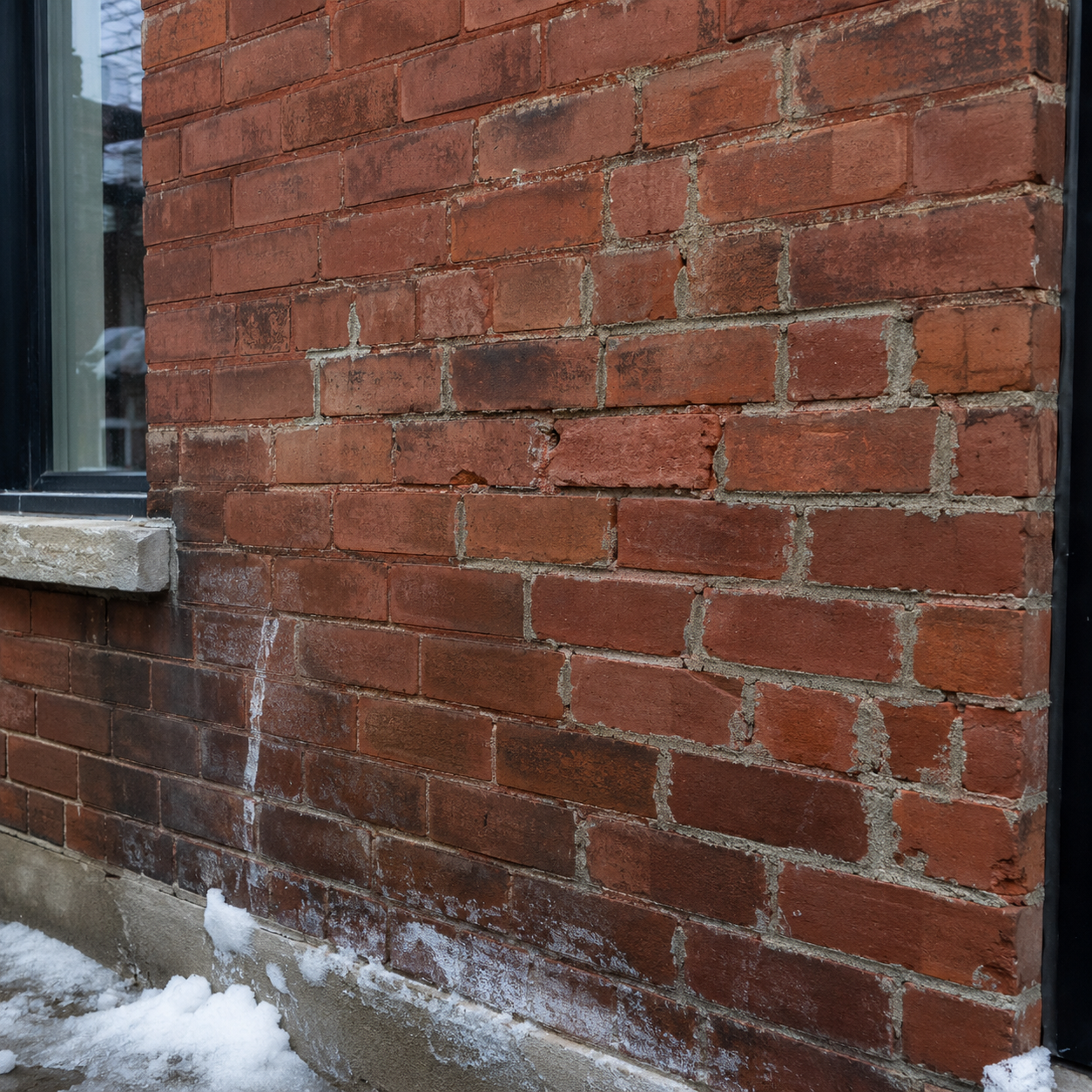
Check the Exact Location of the Damage
The location of masonry damage often tells you how serious the issue may be. Damage near windows, doors, chimneys, foundations, steps, and corners can mean something different from light surface wear in the middle of a wall.
Before calling a contractor, note where the damage appears:
- Exterior wall: Look for cracked bricks, missing mortar joints, bulging areas, spalling, or water staining.
- Chimney: Look for leaning, loose bricks, cracked crown areas, missing mortar, or brick flaking near the roofline.
- Foundation or lower wall: Look for parging cracks, damp areas, salt stains, or masonry damage close to grade.
- Steps and porches: Look for cracks, loose sections, uneven surfaces, or water pooling.
- Window and door areas: Look for stair-step cracks, gaps, rust staining, or separation around lintels and sills.
- Retaining walls or garden masonry: Look for leaning, drainage problems, loose stones, or soil pressure behind the wall.
The more specific you are, the easier it is for a mason to understand the scope of possible repairs. Saying “the brick wall is damaged” is less useful than saying “there are stair-step cracks under the second-floor window on the east wall, and the mortar is missing in several joints.”
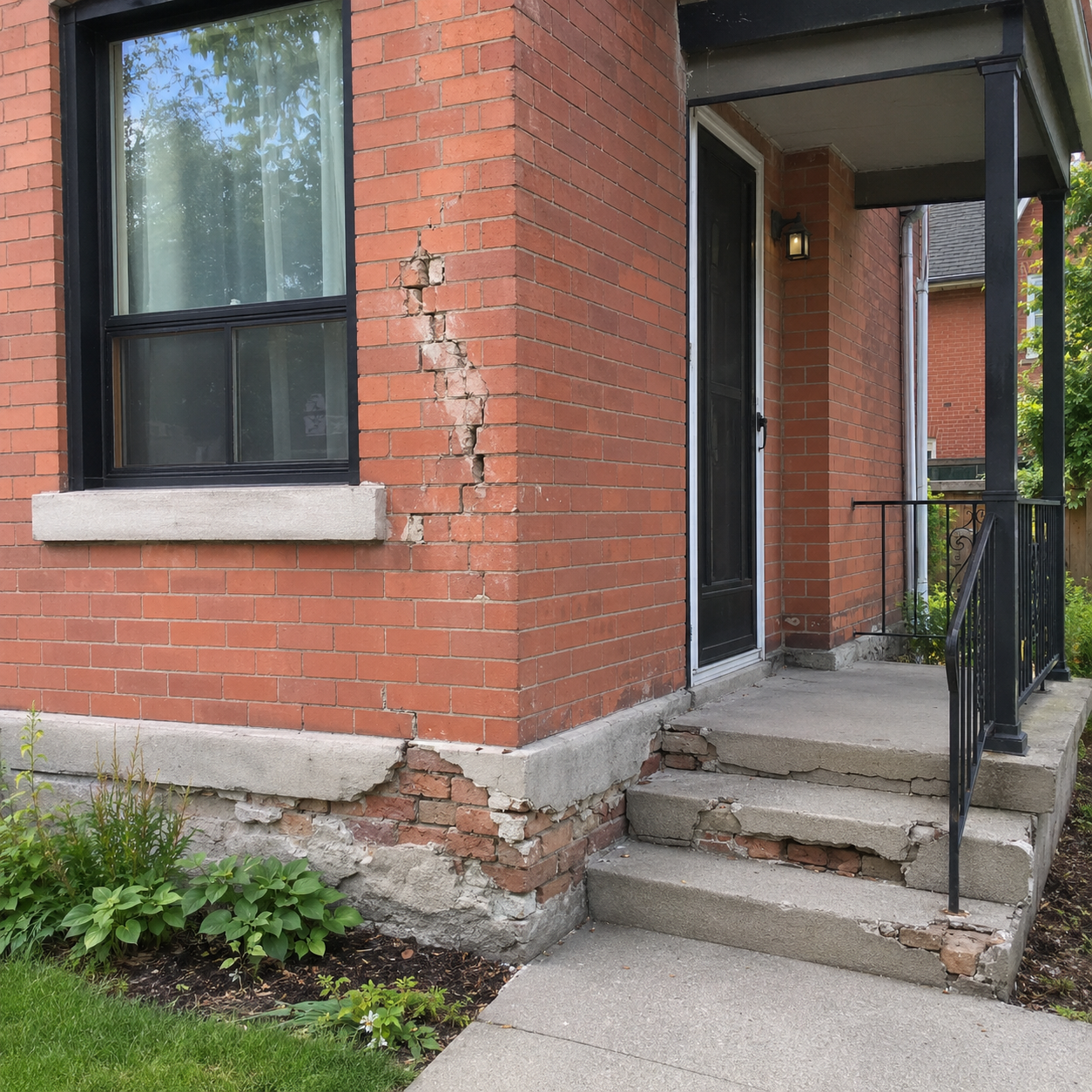
Check Whether the Damage Is Spreading
Spreading damage is more concerning than damage that has stayed the same for years. If cracks are widening, mortar is falling out, brick faces are flaking more each season, or a wall looks like it is moving, the repair may need closer attention.
Look for signs that the issue is active:
- Cracks that appear longer or wider than before.
- New cracks near older patched areas.
- Mortar pieces are collecting on the ground after winter or rain.
- More brick faces are flaking or breaking away over time.
- Gaps are forming around windows, doors, trim, or roofline areas.
- A chimney that appears slightly tilted or more deteriorated than last season.
- Water stains that keep returning after storms.
If you are not sure whether damage is spreading, take photos from the same spot every few weeks or months. Use both close-up photos and wider photos. This gives you and the contractor a clearer record of whether the issue is stable or changing.
Check for Water, Drainage, and Moisture Clues
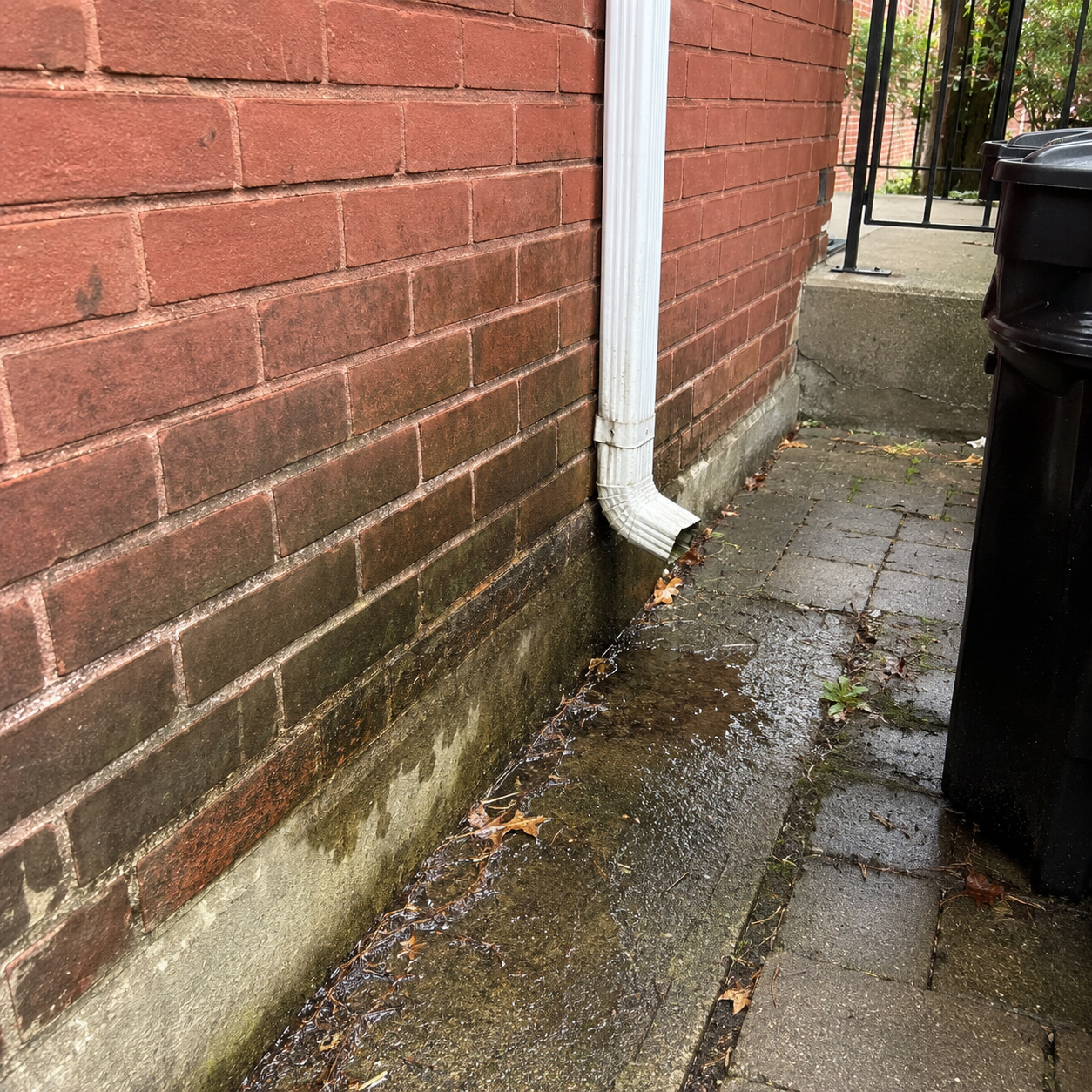
Water is one of the most important things to check before booking masonry repair. Brick, stone, mortar, concrete, and parging can all deteriorate faster when water repeatedly enters, sits, freezes, or drains poorly.
Before booking a repair, look around the damaged area for moisture clues:
- Downspouts are draining too close to the wall.
- Gutters are overflowing near the damaged masonry.
- Soil or paving sloping toward the foundation.
- Water pooling near steps, porches, or retaining walls.
- Dark staining that stays damp after rain.
- White powdery staining, often called efflorescence.
- Interior damp spots or peeling paint near the damaged exterior wall.
- Chimney leaks near the ceiling, fireplace, or attic area.
If water is part of the problem, repairing only the visible brick or mortar may not be enough. The repair may also need to address grading, flashing, drainage, caps, crowns, gutters, or surface water flow. This is especially important in Toronto because freeze-thaw cycles can turn small moisture paths into larger masonry damage over time.
Check Whether the Issue Is Brick, Mortar, Stone, Concrete, Parging, or Chimney-Related
Different masonry materials need different repair methods. Before booking masonry repair, homeowners should try to identify which part of the masonry system is failing.
Here are common categories:
- Brick repair: damaged bricks, spalling, cracks, loose bricks, or broken brick faces. For more specific repair examples, see Otto’s Masonry’s brick repair Toronto page.
- Mortar repair: missing, cracked, sandy, recessed, or loose mortar joints. When the bricks are still sound, but the joints are worn, tuckpointing in Toronto may be the more relevant service.
- Chimney repair: loose chimney bricks, cracked crown areas, mortar loss, leaning, leaking, or damaged caps. Otto’s Masonry’s chimney repair Toronto page explains common chimney repair needs.
- Concrete repair: cracked steps, damaged porch surfaces, scaling, uneven areas, or unsafe edges.
- Parging repair: peeling, cracking, flaking, hollow-sounding areas, or foundation coating failure.
- Stone masonry repair: loose stone, cracked joints, movement, weathering, or damaged stone details.
You do not need to diagnose the issue perfectly. The goal is to understand enough to ask better questions and describe the problem clearly when requesting an estimate.
Check Whether the Damage Is Cosmetic or More Serious
Some masonry damage is mostly cosmetic, but some signs point to deeper repair needs. Homeowners should not assume that every crack is dangerous, but they also should not ignore movement, loose masonry, or water-related damage.
Damage may be mostly cosmetic when:
- Only the surface appearance is affected.
- The wall is straight and stable.
- There are no loose bricks or deep gaps in the joints.
- The damage has not changed over time.
- There are no water stains or damp areas nearby.
Damage may need faster attention when:
- Cracks are stair-stepped, horizontal, or widening.
- Brickwork is bulging, leaning, or pulling away.
- Mortar is deeply missing across a larger area.
- Bricks are loose or falling apart.
- Damage appears around openings, corners, chimneys, or foundations.
- Water is entering the home or staining interior finishes.
If you are unsure, treat movement and moisture as warning signs. A proper inspection can help distinguish simple repair work from damage that requires a broader repair plan.
Check the Timing Before Booking Masonry Repair
Timing matters because masonry work depends on weather, temperature, access, and the type of repair. Some repairs can be done in cooler conditions with the right methods, while others are easier to schedule during milder weather.
In Toronto, homeowners often think about masonry repair in spring after winter damage becomes visible. Summer and early fall can also be practical times for exterior work because conditions are often more stable. Winter work may still be possible for certain repairs, but the contractor needs to use methods suited to the temperature and material.
Do not wait only because the damage looks small. If the issue involves water entry, loose bricks, chimney movement, or significant mortar loss, an early assessment is best. Waiting through another freeze-thaw season may make the repair more expensive.
A good question to ask is: “Can this safely wait, or should it be handled before the next winter?” The answer depends on the location, severity, moisture exposure, and whether the damage is active.
Check Whether a Permit or Heritage Review Might Apply
Most simple masonry maintenance does not need the same review as major construction, but homeowners should still check before larger or more sensitive work. This is especially true for structural changes, exterior alterations, work affecting public areas, or heritage properties.
The City of Toronto’s permit guidance is a useful starting point for projects involving material alterations or structural work. If the property is listed, designated, or located in a heritage context, homeowners should also review the City of Toronto heritage permit information before changing visible exterior masonry.
For regular repair work, the contractor should still be able to explain whether the project is simple maintenance, repair, restoration, replacement, or a larger change. If a contractor dismisses permit or heritage questions without asking about the property, that is a reason to slow down and confirm details.
Check What Information to Prepare Before Requesting an Estimate
Good information helps a masonry contractor give a clearer estimate. You do not need to prepare a full technical report, but a few simple details can make the first conversation more useful.
Before booking, prepare:
- Photos of the damaged area from close-up, mid-range, and wider angles.
- The location of the damage on the property.
- When you first noticed the issue.
- Whether it changed after winter, heavy rain, or previous repairs.
- Any signs of water inside the home.
- Whether the damaged area is hard to access.
- Any known past repairs in the same area.
- Your main concern is safety, water entry, appearance, selling the home, or preventing further damage.
This helps the contractor understand the likely scope before visiting. It also helps you compare estimates because each contractor is responding to the same information.
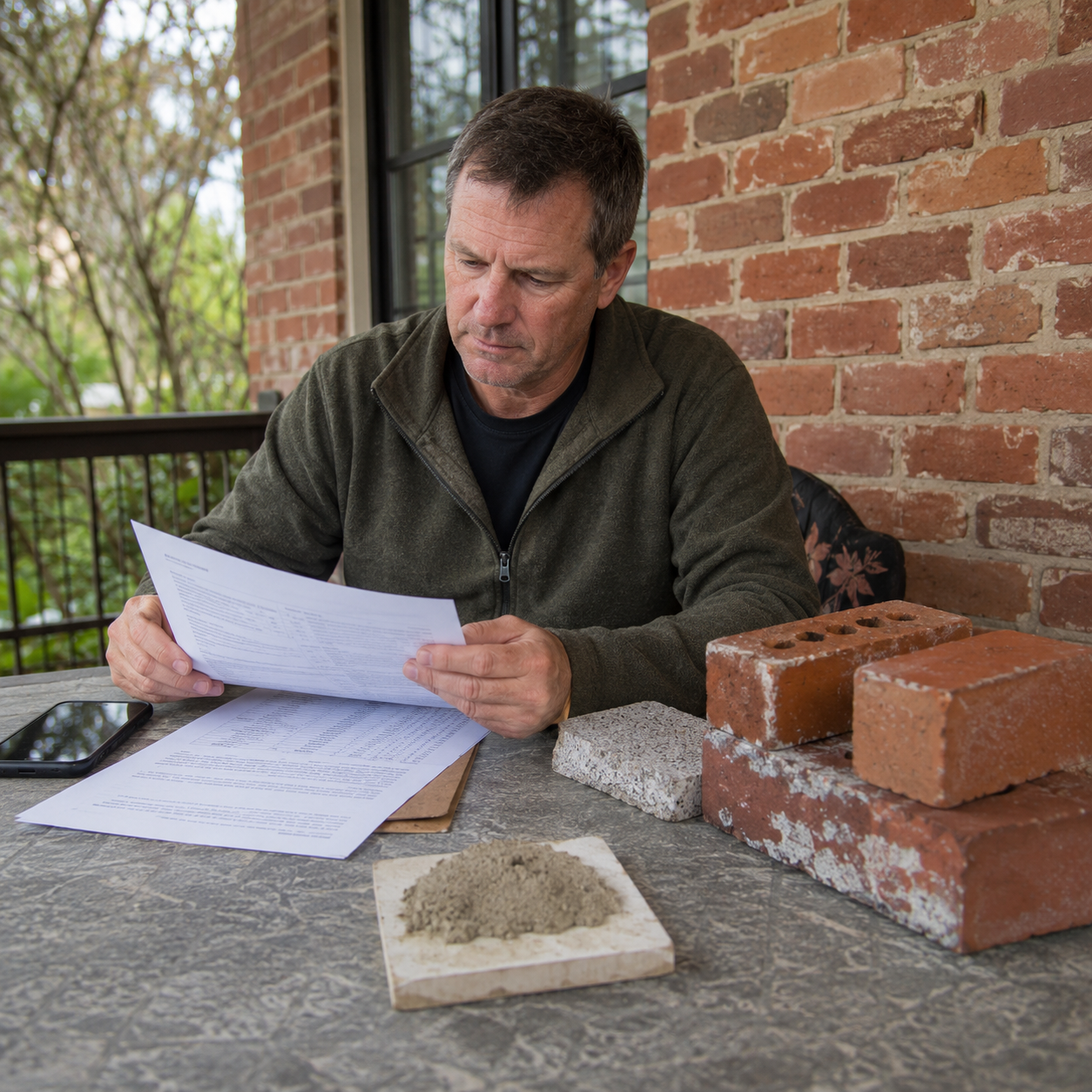
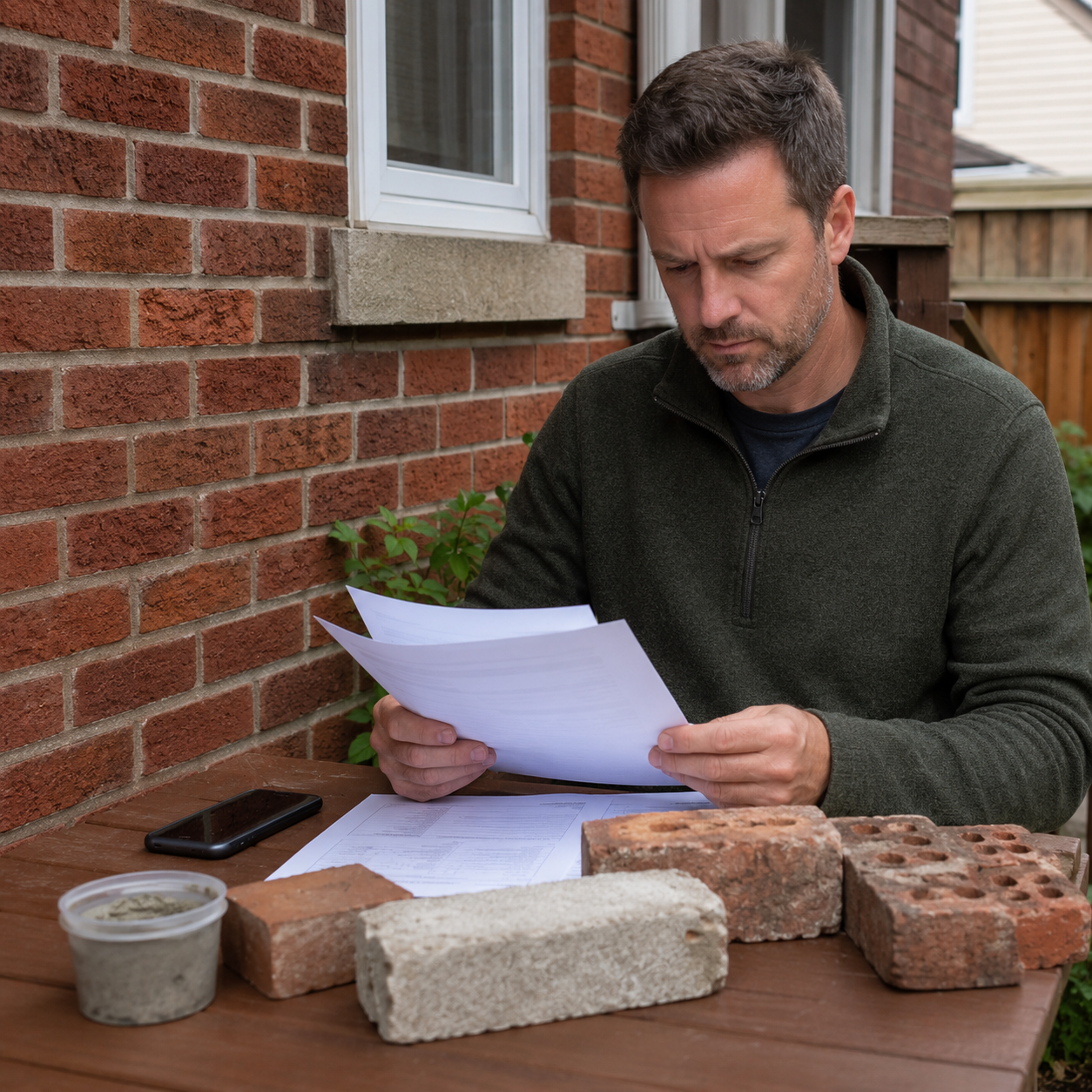
Check the Estimate for Scope, Not Just Price
The estimate should explain what will be repaired, how it will be repaired, and what is included. Price matters, but it should not be the only factor when booking masonry repair.
A clear estimate should include:
- The repair area.
- The type of repair being recommended.
- The materials involved.
- Whether damaged material will be removed.
- Whether brick, mortar, stone, or concrete matching is included.
- Whether access equipment is included.
- Whether cleanup and debris removal are included.
- Whether related moisture issues are being addressed.
- Any exclusions or conditions that could change the scope.
Be careful with quotes that only say “masonry repair” without details. That phrase can mean brick replacement, repointing, parging repair, chimney repair, stone repair, concrete work, or a mix of services. Otto’s Masonry’s masonry services in Toronto page shows how broad masonry repair can be, which is why clarity of scope matters.
Check for Red Flags Before You Book
Red flags usually show up in the way the repair is explained. A contractor does not need to use complicated language, but they should be able to explain the issue clearly.
Be cautious if a contractor:
- Gives a price without asking enough about the damage.
- Cannot explain what may have caused the problem.
- Only recommends patching without checking moisture or movement.
- Refuses to provide a written scope.
- Pushes for a quick decision before you compare options.
- Does not discuss material matching when appearance matters.
- Suggests covering damaged masonry without removing failed material.
- Dismisses permit or heritage questions for larger work.
- Offers a much lower price without explaining what is included.
A low price is not always wrong, and a higher price is not always better. The stronger estimate is usually the one that clearly explains the problem, method, materials, access, cleanup, and expected result.
When to Book Masonry Repair Soon
You should book masonry repair soon when the damage affects safety, water control, stability, or the home’s ability to handle another winter. Small issues can often be monitored, but active damage should not be ignored.
Book an assessment sooner if you notice:
- Loose bricks or falling masonry pieces.
- Deep mortar loss across a wall or chimney.
- Bulging, leaning, or separated brickwork.
- Water is entering through the exterior masonry.
- Cracks near windows, doors, corners, chimneys, or foundations.
- Concrete steps or porches that feel unsafe.
- Parging failure that keeps returning after patching.
- Damage that worsened after winter.
In these cases, a proper repair plan is better than waiting for the damage to become more obvious. The longer moisture and movement continue, the more likely the repair will become larger.
FAQs About Booking Masonry Repair in Toronto
What should I check before booking masonry repair?
Check the location of the damage, whether it is spreading, whether water is involved, and whether the issue affects brick, mortar, chimney, concrete, parging, or stonework. Photos, timing details, and visible moisture clues can help the contractor better understand the repair.
How do I know if masonry damage is urgent?
Masonry damage is more urgent when bricks are loose, cracks are widening, mortar is deeply missing, the wall is bulging, or water is entering the home. Damage around chimneys, windows, doors, foundations, and steps should also be checked sooner.
Should I take photos before calling a mason?
Yes. Take close-up, mid-range, and wider photos of the damaged area. Photos help show the location, access, surrounding conditions, and whether the issue may involve water, movement, or previous repairs.
Do masonry repairs in Toronto need a permit?
Simple maintenance may not need a permit, but larger structural repairs, material alterations, or work on heritage properties may require review. Homeowners should check the City of Toronto guidance or ask the contractor to explain whether the project may need approval.
Is a missing mortar a serious problem?
Missing mortar can become serious if it allows water into the wall or continues to spread. In Toronto, freeze-thaw cycles can worsen open joints, so worn mortar should be checked before it leads to loose bricks or more serious damage.
Should I repair masonry before winter?
If the damage involves open cracks, missing mortar, loose bricks, water entry, or chimney deterioration, it is better to have it checked before winter. Moisture that freezes inside masonry can expand, worsening damage.
What should a masonry repair estimate include?
A masonry repair estimate should include the repair area, scope, materials, methods, access, cleanup, exclusions, and whether related moisture issues are included in the work. A clear estimate makes it easier to compare contractors fairly.
Final Answer
Before booking masonry repair in Toronto, check where the damage is, whether it is spreading, if water is involved, and which part of the masonry system is affected. Take clear photos, note recent changes, and look for drainage, permit, or heritage concerns before asking for an estimate.
The best repair starts with the right information. When you understand the damage better before calling, it becomes easier to compare quotes, ask useful questions, and choose a repair plan that solves the real problem rather than just covering the surface.