
Quick Answer
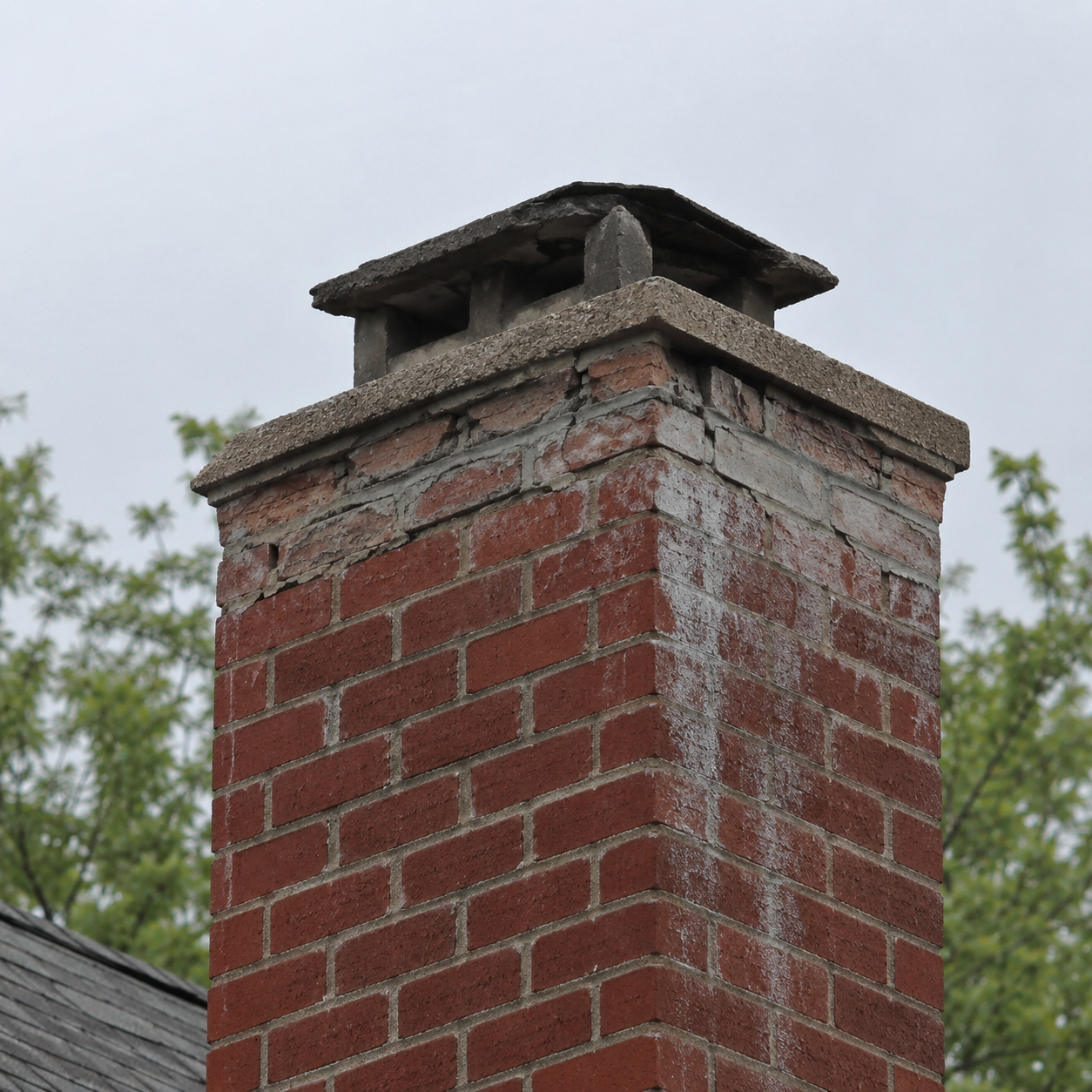
Chimney cap problems can lead to masonry damage when rain, snow, ice, and debris enter the chimney or soak the brickwork from the top. In Toronto, damaged, missing, cracked, loose, or poorly fitted chimney caps can contribute to spalling brick, failing mortar joints, chimney leaks, rust staining, freeze-thaw damage, and eventually larger chimney repair needs. The cap should be checked early because it helps protect one of the most exposed parts of the home.
A chimney cap may look like a small part of the chimney, but it plays an important role in protecting the masonry below it. It helps keep rain, snow, animals, leaves, and debris from entering the flue or from sitting directly on vulnerable areas of the chimney.
When a chimney cap is missing, damaged, loose, poorly fitted, or no longer properly draining water, moisture can enter the chimney system. Over time, that moisture can damage brick, mortar, crowns, flashing areas, and nearby interior surfaces.
This guide explains the chimney cap problems that lead to masonry damage, why they matter for Toronto homes, which warning signs homeowners should watch for, and when a cap issue may indicate a larger chimney repair is needed.
Why Chimney Caps Matter on Toronto Homes
Chimney caps matter because chimneys are exposed to the weather on all sides. Unlike a wall that may be partly protected by roof overhangs, a chimney often takes direct rain, snow, wind, ice, and temperature changes above the roofline.
Toronto homes also deal with repeated freeze-thaw cycles. Water can enter small cracks, open joints, or cap gaps during rain or snowmelt. When temperatures drop, trapped water freezes and expands. This can push apart mortar joints, crack brick faces, loosen chimney masonry, and worsen existing damage.
A good chimney cap helps reduce direct water entry from the top. It does not solve every chimney problem on its own, but it can help protect the flue opening, crown area, upper brickwork, and nearby mortar joints.
For larger chimney repairs, rebuilds, or structural changes, homeowners should be aware that local rules may apply. The Ontario Building Code provides general building code information for Ontario, and the City of Toronto explains when building permits may be required. Simple maintenance may not require a permit, but major chimney rebuilding or structural work should be checked with the appropriate authorities before starting.
Common Signs of Chimney Cap Problems
Chimney cap problems often show up as moisture damage, loose materials, staining, debris, or visible movement near the top of the chimney. Some signs are easy to see from the ground, while others need a safe roof-level inspection.
Homeowners should watch for:
- A missing chimney cap.
- A cap that looks loose, tilted, rusted, or shifted.
- Cracks in the cap, crown, or top masonry area.
- Water stains on the brick near the top of the chimney.
- Spalling brick faces near the chimney stack.
- Mortar joints that are cracked, recessed, sandy, or missing.
- Rust staining from a metal cap or screen.
- Leaves, twigs, nesting material, or debris near the flue.
- Damp smells near the fireplace.
- Water stains on ceilings, walls, or fireplace areas.
- Pieces of brick, mortar, or cap material found near the roofline or ground.
One sign alone may not confirm a major chimney issue. But when a cap problem occurs alongside water stains, spalling brick, failing mortar, or interior dampness, the chimney should be inspected before the damage spreads.
Problem 1: A Missing Chimney Cap
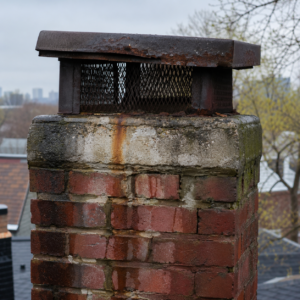
A missing chimney cap leaves the flue and upper chimney more exposed to rain, snow, animals, debris, and ice. This is one of the clearest chimney cap problems because there is no protective cover at the top.
Without a cap, water can enter directly into the chimney opening. Leaves and debris can also collect inside, which may affect airflow or hold moisture. Birds, squirrels, and other small animals may also try to enter, especially if the flue opening is uncovered.
For masonry, the main issue is repeated moisture. Water entering from the top can affect the flue, crown area, mortar joints, brickwork, and interior fireplace area. Over time, this can contribute to chimney leaks, odours, brick spalling, and mortar deterioration.
If the cap is missing, the chimney should be checked for existing damage before a new cap is installed. Installing a cap over already-damaged masonry may reduce future water entry, but it will not repair cracked brick, failed mortar joints, or a damaged crown.
Problem 2: A Cracked or Damaged Chimney Cap
A cracked chimney cap can allow water to enter through gaps or sit in areas where it should drain away. Even small cracks can become larger after repeated freeze-thaw cycles.
Cracks may form because of age, weather exposure, rusting metal, movement, poor installation, impact damage, or freeze-thaw stress. Once cracks open, water can move into the cap area and nearby masonry.
A damaged cap may cause:
- Water is entering the flue opening.
- Moisture is soaking the crown or top brick courses.
- Mortar deterioration near the upper chimney.
- Spalling bricks close to the cap.
- Rust stains from metal components.
- Interior dampness near the fireplace or chimney chase.
If the cap is cracked, the repair should also include checking the crown and upper masonry. A cap problem often affects the surrounding chimney area, especially if it has been leaking for more than one winter.
Problem 3: A Loose or Poorly Fitted Cap
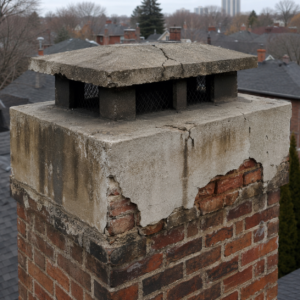
A loose or poorly fitted cap can let wind-driven rain and snow enter around the edges. It may also shift during storms, freeze-thaw movement, or strong winds.
A cap should be secure and sized properly for the chimney opening. If it is too small, tilted, missing fasteners, or sitting unevenly, it may not protect the chimney as intended. Water may run into gaps, collect near the edges, or flow down the brick face.
Loose caps can also pose a safety concern if parts shift or fall off. If the cap appears tilted, rattles in the wind, or has moved from its original position, it should be inspected safely by a professional.
Homeowners should not climb onto the roof to adjust a cap themselves. Chimney work above the roofline involves fall risk, unstable surfaces, and masonry that may already be loose.
Problem 4: Poor Drainage at the Top of the Chimney
Poor drainage at the top of the chimney can cause water to sit on the cap, crown, or upper brickwork. The top of the chimney should be shaped and protected so that water sheds away rather than collecting.
Water sitting near the top can enter hairline cracks, open joints, cap gaps, or crown defects. In Toronto, that trapped water can freeze and expand, causing cracks to widen and brick faces to break down.
Common drainage-related signs include:
- Dark, damp staining near the top of the chimney.
- Moss or algae on the upper masonry.
- Efflorescence or white powdery staining.
- Spalling near the top courses of brick.
- Cracked mortar close to the cap or crown.
- Water marks that return after rain.
This is why the cap, crown, and mortar condition should be reviewed together. A chimney may have a cap, but if water still sits or enters through nearby defects, masonry damage can continue.
Problem 5: Rusted Metal Caps and Screens
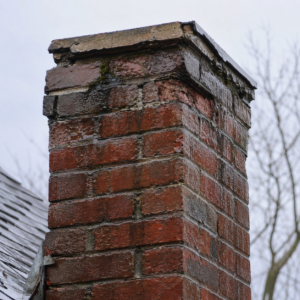
Rusted metal caps and screens can stain masonry, weaken over time, and lose their ability to properly protect the flue opening. Rust may also indicate that moisture has been sitting on or around the cap for a long time.
Rust staining may appear as orange or brown streaks running down the chimney. The cap screen may also break, clog, or separate. If the screen is damaged, leaves, animals, or debris may enter more easily.
Rust is not only an appearance issue. A rusted cap may become loose, develop holes, or fail during heavy weather. If the rust is connected to water collecting near the top of the chimney, the surrounding masonry should also be checked.
Problem 6: Debris, Leaves, and Animal Entry
Debris and animal entry can create chimney moisture problems when a cap is missing, damaged, or poorly screened. Leaves, nesting material, and small debris can retain moisture and impede proper airflow.
Homeowners may notice:
- Scratching or animal sounds near the chimney.
- Leaves or twigs around the fireplace area.
- Musty smells after rain.
- Poor fireplace draft.
- Debris visible near the chimney top.
For fireplaces, fuel-burning appliances, or active flues, safety and ventilation should be handled carefully. If there is any concern about blockage, draft, smoke, or carbon monoxide risk, homeowners should stop using the fireplace or appliance until the chimney is properly checked.
The Government of Canada provides carbon monoxide safety guidance for homes, including the importance of properly maintaining fuel-burning systems. A chimney cap is not a carbon monoxide solution on its own, but chimney blockages and poor venting should always be taken seriously.
How Chimney Cap Problems Damage Masonry
Chimney cap problems damage masonry by allowing water to enter from the top and move into brick, mortar, crown areas, flues, and interior surfaces. The damage may start small but can spread through repeated wetting and freezing.
Moisture from cap problems can lead to:
- Spalling brick: Brick faces flake, chip, or pop off after absorbing water and freezing.
- Mortar failure: Joints crack, crumble, recede, or fall out.
- Loose bricks: Weakened mortar allows bricks to shift.
- Chimney leaks: Water enters the chimney and appears inside the home.
- Rust staining: Metal parts corrode, staining the masonry.
- Crown damage: Cracks near the top allow more water into the chimney.
- Freeze-thaw expansion: Trapped water freezes, expands, and widens cracks.
- Larger rebuilding needs: Long-term water damage can weaken the upper sections of the chimney.
Otto’s Masonry’s chimney repair Toronto page covers common chimney issues, including cracked bricks, failing mortar, chimney crowns and caps, leaks, leaning stacks, and rebuilding when needed.
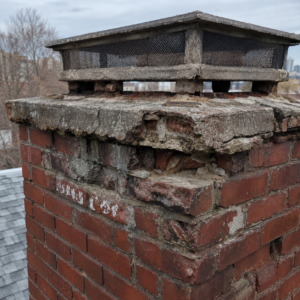
When Cap Repair May Be Enough
Cap repair may be sufficient when the chimney masonry remains stable, and the main problem is limited to the cap itself. This is more likely when the issue is caught early.
Cap repair may be suitable when:
- The cap is loose, but the surrounding masonry is sound.
- The cap has minor damage, but no major water entry has occurred.
- Mortar joints near the top are still firm.
- Brick faces are not badly spalling.
- The crown is not deeply cracked.
- There are no interior water stains.
- The chimney is not leaning or visibly shifting.
In this situation, the repair may involve securing, replacing, or correcting the cap, while also checking the crown, upper mortar joints, and brickwork. The goal is to stop water entry before it creates a larger masonry problem.
When a Larger Chimney Repair May Be Needed
A larger chimney repair may be needed when the cap problem has already caused damage to brick, mortar, crown, flashing, or interior moisture. Replacing the cap alone may not be enough if the masonry below it is already failing.
A larger repair may be needed when:
- Several upper chimney bricks are spalling.
- Mortar joints are deeply cracked, loose, or missing.
- The chimney crown is cracked or breaking apart.
- Water stains appear inside near the fireplace or ceiling.
- The chimney stack is leaning, separating, or visibly loose.
- Rust staining runs down the masonry.
- Previous cap or crown repairs have failed.
- Brick or mortar pieces are falling from the chimney.
If the chimney is badly deteriorated above the roofline, homeowners may need to compare repair with rebuilding. Otto’s guide on chimney repair vs chimney rebuilding in Toronto explains when localized repair may be enough and when a rebuild may be the more practical option.
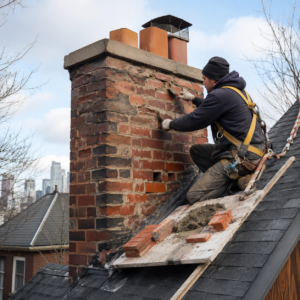
How Cap Problems Connect to Tuckpointing and Brick Repair
Chimney cap problems often lead to tuckpointing and brick repair because water from the top can damage mortar joints and brick faces. The cap may be the entry point, but the visible damage may appear lower on the chimney stack.
When mortar joints become cracked, recessed, sandy, or missing, tuckpointing in Toronto may be needed to restore the joints and reduce water entry. If bricks have spalled, cracked, or loosened, brick repair in Toronto may also be part of the work.
This is why a chimney inspection should not focus only on the cap. It should also look at the crown, upper courses, mortar joints, brick faces, flashing area, and signs of interior moisture.
What Homeowners Can Safely Check Themselves
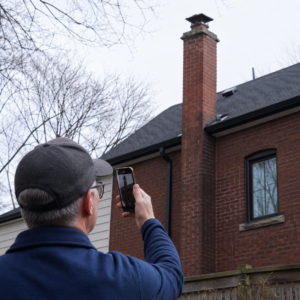
Homeowners can safely check for chimney cap problems from the ground using visual clues, photos, and interior signs. The goal is to notice possible issues without climbing onto the roof.
Check these items:
- Look from the ground to see whether the cap appears missing, tilted, rusted, or shifted.
- Use zoomed photos from a safe location to check the top of the chimney.
- Look for brick spalling near the upper chimney.
- Check for cracked or missing mortar joints.
- Look for rust stains running down the masonry.
- Check for water stains near the fireplace, ceiling, or chimney wall.
- Notice musty smells after rain.
- Look for fallen mortar, brick chips, or cap pieces around the property.
- Note whether the damage looks worse after winter.
Do not climb onto the roof or lean ladders against damaged chimney masonry. If the chimney is already loose, cracked, or shedding material, roof-level inspection should be handled by someone with the right safety equipment and experience.
When to Call a Mason
You should call a mason when a chimney cap is missing, loose, cracked, rusted, poorly fitted, or connected to water stains, spalling brick, failing mortar, leaks, or chimney movement. A cap problem should be addressed before moisture can damage the rest of the chimney.
Call sooner if the chimney is above an active fireplace, if there are interior water stains, if brick or mortar pieces are falling, or if the chimney looks loose or leaning. These signs suggest the issue may be more than a simple cap replacement.
Otto’s Masonry provides masonry services in Toronto, including chimney repair, cap repairs, brick replacement, repointing, tuckpointing, masonry restoration, and chimney rebuilding when needed. A proper repair should address both the cap problem and any masonry damage already caused by water entry.
FAQs About Chimney Cap Problems
Can a missing chimney cap cause masonry damage?
Yes. A missing chimney cap can let rain, snow, animals, and debris enter the chimney. Over time, moisture can damage brick, mortar, crown areas, and interior fireplace surfaces.
How do chimney cap problems cause brick spalling?
Chimney cap problems allow water to enter or sit near the top of the chimney. In Toronto, that moisture can freeze and expand, causing brick faces to flake, crack, or break away.
What are the signs that my chimney cap is damaged?
Signs include a missing, tilted, loose, rusted, cracked, or poorly fitted cap, along with water stains, rust marks, spalling brick, failing mortar, debris in the flue, or damp smells near the fireplace.
Is a chimney cap the same as a chimney crown?
No. A chimney cap usually covers the flue opening, while the chimney crown is the masonry or concrete top surface that helps shed water away from the chimney. Both can affect water protection.
Can I replace a chimney cap myself?
It is safer to have chimney cap work checked by a professional, especially on older Toronto chimneys. Roof access, loose masonry, cap sizing, and existing chimney damage can make the work risky.
Will replacing the chimney cap fix a chimney leak?
It may help if the cap is the primary water entry point. If the leak also involves cracked mortar, damaged brick, crown cracks, flashing issues, or interior moisture paths, more chimney repair may be needed.
When should I call a mason for chimney cap problems?
Call a mason when the cap is missing, loose, cracked, rusted, or connected to spalling brick, failing mortar, water stains, falling masonry pieces, or chimney movement.
Final Answer
Chimney cap problems lead to masonry damage when water, snow, ice, debris, or animals enter the chimney or keep the top masonry wet. In Toronto, that moisture can worsen through freeze-thaw cycles, leading to spalling brick, failing mortar, leaks, rust staining, crown damage, and larger chimney repairs.
The practical takeaway is to treat the chimney cap as part of the chimney’s water-control system. A simple cap issue may be repairable early, but if brick, mortar, crown, or interior leak damage has already begun, the chimney should be inspected as a whole rather than just replacing the cap.