

Quick Answer
You can often make concrete steps safer without replacing the whole entrance by repairing cracks, fixing chipped edges, improving drainage, adding traction, correcting small uneven areas, and addressing loose or deteriorated surfaces. In Toronto, safety upgrades should also consider freeze-thaw damage, water pooling, salt wear, and winter slip risks. Full replacement is usually needed only when the steps are sinking, separating, severely crumbling, structurally weak, or unsafe beyond surface repair.
Concrete steps are among the most used parts of a home, but they are also among the easiest to overlook until they become unsafe. A small crack, chipped edge, low spot, or slippery surface may not seem serious at first. Over time, those issues can create trip hazards, water pooling, ice buildup, and more concrete breakdown.
The good news is that not every damaged entrance needs a full replacement. Some concrete steps can be made safer with targeted repairs and practical improvements. The key is knowing the difference between a step that can be repaired and a step that has deeper movement or structural problems.
This guide explains how Toronto homeowners can make concrete steps safer without replacing the whole entrance, what repair options may help, what warning signs to watch for, and when a larger fix may still be the better choice.
Why Concrete Step Safety Matters in Toronto
Concrete step safety matters in Toronto because exterior steps deal with rain, snow, ice, salt, freeze-thaw cycles, and daily foot traffic. Small surface problems can become larger safety concerns when water freezes, edges break down, or step heights become uneven.
Toronto homes often have front steps, porch steps, side entrance steps, basement walkout steps, and walkway transitions that have been exposed for many years. These steps may have old patches, worn surfaces, cracked edges, poor drainage, or settlement around the base. In winter, the same areas can become slippery or uneven under snow and ice.
The Canadian Centre for Occupational Health and Safety explains that improving walking surfaces, using slip-resistant treatments, and correcting hazards are part of efforts to reduce slips, trips, and falls. While that guidance is written for workplace safety, the same practical idea applies to home entrances: damaged or slippery walking surfaces should be corrected before someone gets hurt.
Water control also matters. The City of Toronto’s basement flooding guidance identifies poor lot grading, drainage problems, overflowing eavestroughs, and leaking or plugged downspouts as common water concerns around homes. Those same water patterns can affect concrete steps when water collects at the entrance, runs under the steps, or freezes on walking surfaces.
Common Concrete Step Safety Problems
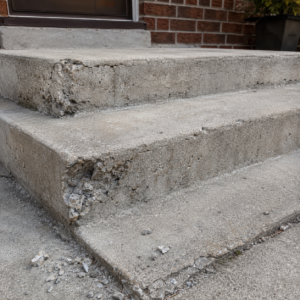
Concrete step safety problems usually come from cracks, uneven surfaces, loose edges, poor traction, water pooling, ice buildup, or movement under the steps. Some issues are small and repairable. Others point to deeper settlement or structural problems.
Homeowners should watch for:
- Cracks across the tread, riser, side, or landing.
- Chipped or broken step edges.
- Loose concrete pieces or crumbling corners.
- Surface scaling, flaking, or rough patches.
- Uneven step heights that affect walking rhythm.
- Steps that tilt, sink, or separate from the porch or walkway.
- Water is pooling on the step surface or at the base.
- Ice is forming repeatedly in the same areas.
- Smooth, worn surfaces with poor grip.
- Old patches that are cracking, lifting, or breaking away.
- Gaps between the steps and nearby brick, concrete, pavers, or foundation surfaces.
A step does not need to be falling apart to be unsafe. A slightly raised patch, uneven tread, or slippery low spot can still create a trip or slip hazard, especially for children, older adults, guests, delivery workers, and anyone carrying groceries or packages.
Start by Finding the Safety Issue, Not Just the Crack
The first step is to identify what makes the entrance unsafe. A crack is only one possible issue. The real concerns may be uneven height, poor traction, weak edges, drainage issues, ice, or movement under the steps.
Ask these questions before choosing a repair:
- Is the crack only on the surface, or does it run through the step?
- Are the step edges solid or crumbling?
- Does water pool on the tread or landing?
- Does ice form in the same spot every winter?
- Are the steps level, or are they sinking or tilting?
- Are the risers uneven enough to affect walking?
- Is the surface too smooth or worn for safe grip?
- Have previous patches failed?
- Is the damage getting worse after winter or heavy rain?
This matters because the safest repair depends on the cause. A chipped edge may be repairable. A slippery surface may need texture improvement. A drainage issue may require water correction. A sinking step may not be solved by patching alone.
Option 1: Repair Cracks Before They Widen
Crack repair can make concrete steps safer when the steps are stable and the cracks are not caused by active movement. Repairing cracks helps reduce trip hazards, limit water entry, and slow freeze-thaw damage.
Crack repair may be useful when:
- The crack is narrow or moderate.
- The step is not sinking, tilting, or pulling away.
- The surrounding concrete is still solid.
- The crack is not widening quickly.
- Water is not flowing through or under the step.
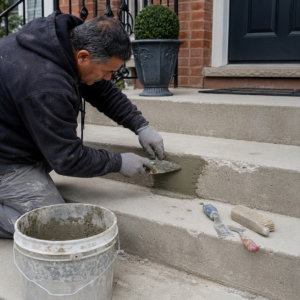
For Toronto homes, crack repair is especially helpful before winter because open cracks can collect water. Once that water freezes, it can expand, worsening the damage. A proper repair should include cleaning loose material, preparing the crack, using suitable repair material, and shaping the surface so it does not become a raised trip point.
If the crack is wide, deep, or connected to sinking, the issue may be more than surface damage. Otto’s Masonry’s guide on concrete step repair vs replacement in Toronto can help homeowners understand when repair is reasonable and when a larger fix may be smarter.
Option 2: Fix Chipped and Crumbling Edges
Chipped and crumbling step edges should be repaired because they compromise footing and can continue to break apart. The front edge of a step is subject to repeated impacts from foot traffic, snow shovels, salt, and freeze-thaw damage.
Edge repair may help when:
- Only the corner or nosing is damaged.
- The step body is still solid.
- The damaged area can be cleaned and shaped properly.
- The repair will not create an uneven walking surface.
- The cause is surface wear rather than major movement.
A safe edge repair should restore a clean walking line without creating a lump, ridge, or weak patch that breaks away quickly. If the edge is deeply crumbling across several steps, the concrete may be too deteriorated for a simple patch.
Option 3: Improve Traction on Smooth or Worn Steps
Improving traction can make concrete steps safer on smooth, worn, or slippery surfaces, or when they are exposed to frequent rain, snow, and ice. Traction upgrades are especially useful when the steps are structurally stable, but the surface does not provide enough grip.
Possible traction improvements include:
- Repairing smooth, worn areas.
- Adding a textured repair surface where appropriate.
- Using slip-resistant coatings suited to exterior concrete.
- Installing properly secured traction strips where suitable.
- Keeping snow, ice, leaves, and debris cleared.
- Using de-icing products carefully to avoid excessive damage to the concrete.
Traction should be improved carefully. Loose mats, peeling strips, or poorly applied coatings can become hazards in their own right. Any product used outside must be suitable for wet, cold, and freeze-thaw conditions.
For homeowners comparing repairs with a larger entrance upgrade, Otto’s Masonry’s interlocking steps vs. concrete steps in Toronto guide may be helpful, as it compares entrance materials, safety, maintenance, and long-term performance.
Option 4: Correct Small Uneven Areas
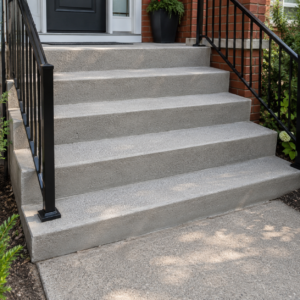
Small uneven areas can sometimes be corrected without replacing the whole entrance, but only if the steps are stable. Uneven step height is a safety concern because it interrupts the normal walking rhythm.
Unevenness may come from:
- Old patch layers.
- Surface scaling.
- Minor settlement.
- Broken edges.
- Walkway movement near the bottom step.
- Concrete wear from age and foot traffic.
Small surface irregularities may be repaired or reshaped if the concrete is solid. But if the steps are sinking, tilting, or separating from the house, the unevenness is likely due to movement beneath the concrete. In that case, surface repair may only hide the problem.
Option 5: Improve Drainage Around the Entrance
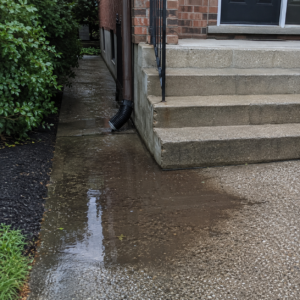
Improving drainage is one of the best ways to make concrete steps safer and reduce future damage. Water creates slippery surfaces, ice buildup, surface scaling, crack widening, base movement, and settlement.
Check for drainage problems such as:
- Water pooling on the landing or treads.
- Downspouts are draining near the steps.
- Walkways sloping toward the entrance.
- Low spots at the bottom step.
- Soil or garden beds holding water beside the steps.
- Overflowing gutters above the entrance.
- Ice forms in the same place each winter.
Drainage fixes may include redirecting downspouts, correcting small grading issues, improving nearby walkway slope, repairing gaps where water enters, or addressing foundation moisture concerns near the entrance. If the step problem is related to water moving toward the foundation, Otto’s Masonry’s basement waterproofing Toronto page can help homeowners understand how drainage and foundation protection are connected.
Option 6: Repair the Landing or Walkway Connection
The entrance may feel unsafe because the problem is not only the steps. The landing, walkway, paver area, or concrete slab at the bottom may have shifted, settled, or pulled away.
Common connection problems include:
- A gap between the bottom step and the walkway.
- A walkway slab that has settled below the bottom step.
- Loose pavers near the entrance.
- Water is pooling where the walkway meets the steps.
- A tripping edge at the base of the stairs.
- Cracks where the steps meet the porch or landing.
Fixing the connection can make the entire entrance safer without replacing it. In some cases, the walkway or paver area needs adjustment more than the steps themselves. Otto’s Masonry’s interlocking brick and pavers Toronto page may be relevant when the entrance connects to pavers, walkways, patios, or outdoor hardscaping.
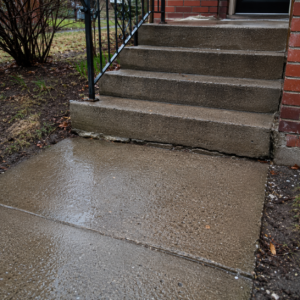
Repair Options for Safer Concrete Steps
Concrete step repair options depend on whether the steps are stable, the severity of the damage, and whether water or movement is still active. A safe repair should improve use, durability, and water control.
Common repair options include:
- Crack repair: Helps close open cracks and reduce water entry.
- Edge repair: Restores chipped or crumbling step nosings.
- Surface repair: Addresses scaling, flaking, and worn areas.
- Resurfacing: May help when the surface is worn but the steps are still stable.
- Traction improvement: Improves grip on smooth or slippery surfaces.
- Drainage correction: Reduces water pooling, ice buildup, and repeated damage.
- Walkway or landing adjustment: Corrects trip hazards where the entrance surfaces meet.
- Partial rebuilding: May be needed when one section is failing, but the full entrance can stay.
Otto’s Masonry provides concrete repair in Toronto for cracked, uneven, sunken, and deteriorated concrete around homes, including concrete steps, porches, walkways, slabs, and entrance areas. The goal is to determine whether the steps can be repaired, resurfaced, restored, or whether replacement is the better long-term option.
When Repair May Be Enough
Repair may be enough when the concrete steps are mostly stable and the safety issues are limited to cracks, edges, surface wear, traction, or minor drainage issues. In these cases, targeted work can often improve the entrance without replacing the full structure.
Repair may be suitable when:
- Cracks are narrow or moderate and not spreading quickly.
- The steps are not sinking or pulling away from the home.
- The damage is mostly on the surface or edges.
- Only one section of the landing or walkway is uneven.
- Drainage problems are clear and correctable.
- Old patches can be removed and repaired properly.
- The step structure still feels solid under normal use.
For example, if a front step has chipped edges, a few narrow cracks, and a low spot that holds water, the repair may involve rebuilding the edges, repairing cracks, preparing the surface, and correcting drainage. The entrance may become safer without replacing every step.
When Full Replacement May Still Be Needed
Full replacement may be needed when the concrete steps are structurally weak, badly settled, unstable, or unsafe beyond surface repair. A repair should not hide a deeper problem that affects safe use.
Replacement may be the better choice when:
- The steps are sinking or tilting.
- The steps are separated from the porch, foundation, or walkway.
- Several treads or risers are uneven.
- Large sections are cracked through or crumbling.
- The base below the steps has failed.
- Water keeps pooling because the structure has shifted.
- Old repairs keep breaking away.
- The entrance feels unsafe for daily use.
Replacement does not always mean the homeowner has to rebuild the entire front area in the same way. Some homeowners compare new concrete steps with interlocking steps, stone details, or a redesigned entrance. The right choice depends on budget, appearance, drainage, access, and how the entrance is used.
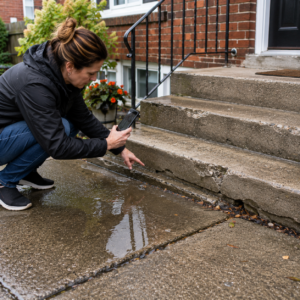
What Homeowners Can Safely Check Themselves
Homeowners can safely inspect concrete steps from ground level and from normal walking positions. The goal is to spot hazards before deciding whether to request an estimate.
Check these items:
- Walk the steps slowly and notice any wobbles, unevenness, or awkward step height.
- Look for cracks that are widening or collecting water.
- Check whether edges are chipped, loose, or crumbling.
- Look for smooth, worn areas that become slippery when wet.
- Check whether water pools after rain or snowmelt.
- Look at the connection between the steps, landing, walkway, and home.
- Check whether downspouts, gutters, or grading send water toward the entrance.
- Take photos after rain and again after winter to track changes.
Do not hammer loose concrete, grind surfaces, lift sections, or apply coatings over wet or crumbling concrete without understanding the cause. If the steps feel unstable or create a trip hazard, limit use where possible until they are assessed.
When to Call a Mason
You should call a mason when concrete steps have cracks, loose edges, uneven surfaces, water pooling, old, failed patches, drainage issues, or settlement that affects safe use. A mason can help determine whether targeted repair, resurfacing, drainage correction, partial rebuilding, or full replacement makes sense.
Call sooner if the steps are used daily, if the damage is at the main entrance, if ice forms repeatedly in winter, or if anyone in the home has mobility concerns. A small entrance hazard can become more serious once snow, darkness, or carrying items make footing harder.
Otto’s Masonry provides masonry services in Toronto, including concrete steps, porches, walkways, slabs, interlocking, stone masonry, parging, retaining walls, and basement waterproofing. If the entrance has several interconnected issues, such as cracked steps, settled pavers, and water draining toward the house, a broader masonry review may be more useful than patching a single spot.
FAQs About Making Concrete Steps Safer
Can concrete steps be made safer without replacing them?
Yes. Concrete steps can often be made safer with crack repair, edge repair, resurfacing, traction improvements, drainage correction, and walkway adjustments if the steps are still stable.
When is concrete step repair enough?
Repair may be enough when the cracks are not spreading quickly, the steps are not sinking, and the damage is limited to surface wear, chipped edges, minor unevenness, or correctable drainage problems.
How can I make concrete steps less slippery?
Concrete steps can be made less slippery by repairing worn surfaces, improving texture, applying appropriate exterior slip-resistant treatments, keeping snow and debris cleared, and correcting water pooling that can freeze.
Are chipped concrete step edges dangerous?
Chipped edges can be dangerous if they compromise footing, create uneven step lines, or continue to crumble. They should be repaired before more concrete breaks away or water gets deeper into the step.
Should I patch cracks in concrete steps before winter?
Open cracks should be checked before winter because water can enter, freeze, and expand. Repairing cracks before freeze-thaw weather may help reduce further damage if the steps are otherwise stable.
When do concrete steps need full replacement?
Concrete steps may need full replacement when they are sinking, tilting, separating from the home, badly crumbling, uneven across several steps, or unsafe for daily use.
Can poor drainage make concrete steps unsafe?
Yes. Poor drainage can cause water pooling, ice buildup, surface scaling, crack widening, settlement, and slippery conditions around concrete steps.
Final Answer
You can often make concrete steps safer without replacing the whole entrance by repairing cracks, restoring chipped edges, improving traction, fixing small, uneven areas, correcting drainage issues, and addressing walkway or landing hazards. This works best when the steps remain stable, and the damage is not due to major settlement or structural failure.
If the steps are sinking, separating, badly crumbling, or unsafe across several areas, replacement may still be the better choice. The practical goal is to fix the safety issue and its cause, not just cover the visible damage.