

Quick Answer
Brick spalling means the face of the brick is flaking, breaking, or popping off, while mortar failure means the joints between the bricks are cracking, crumbling, or falling out. In Toronto, both problems are often linked to moisture and freeze-thaw cycles, but they do not always need the same repair. Spalling usually indicates damaged bricks, while mortar failure usually indicates worn joints that may need repointing or tuckpointing.
Brick spalling and mortar failure are easy to confuse because they often appear in the same wall. A homeowner may see loose material on the ground, damaged brick faces, or gaps between bricks and simply call it “brick damage.” That is understandable, but the difference matters.
If the brick itself is breaking apart, the repair may involve replacing damaged bricks and correcting the moisture source. If the mortar joints are failing but the bricks are still sound, repointing may be the better repair. If both are happening together, the wall may need a more complete masonry repair plan.
This guide explains how to tell brick spalling from mortar failure, why both happen in Toronto homes, what homeowners can safely check, and when it is time to call a mason.
Why This Difference Matters for Toronto Homes
The difference between brick spalling and mortar failure matters because each problem affects a masonry wall differently. Brick spalling damages the brick units themselves. Mortar failure weakens the joints that hold the wall together and helps shed water.
Toronto homes deal with rain, snow, ice, salt exposure, older masonry, and repeated freeze-thaw cycles. When water enters brick or mortar and then freezes, it expands. Over time, that pressure can break brick faces, open mortar joints, loosen masonry, and allow more moisture into the wall.
This is why a quick patch is not always the right answer. Covering damaged brick without addressing the water source may cause further spalling. Filling failed joints without removing weak mortar may not last. Replacing brick while ignoring failing mortar can also leave the wall exposed.
Homeowners planning larger repairs should also understand that some projects may involve building rules. The Ontario Building Code provides building code information for Ontario, while the City of Toronto explains when building permits are required. Simple maintenance may not require a permit, but structural changes, major rebuilds, and certain alterations should be reviewed before work begins.
What Brick Spalling Looks Like
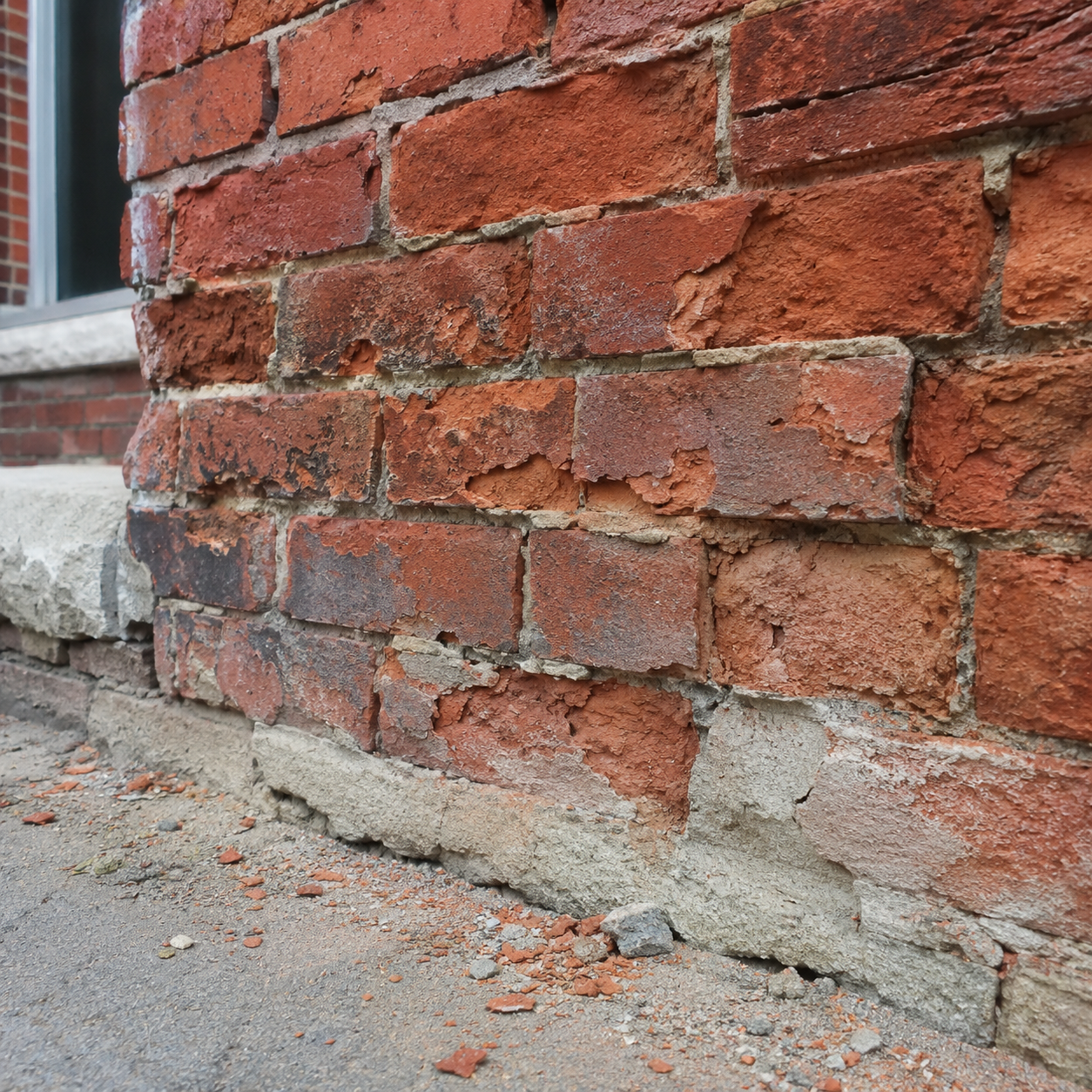
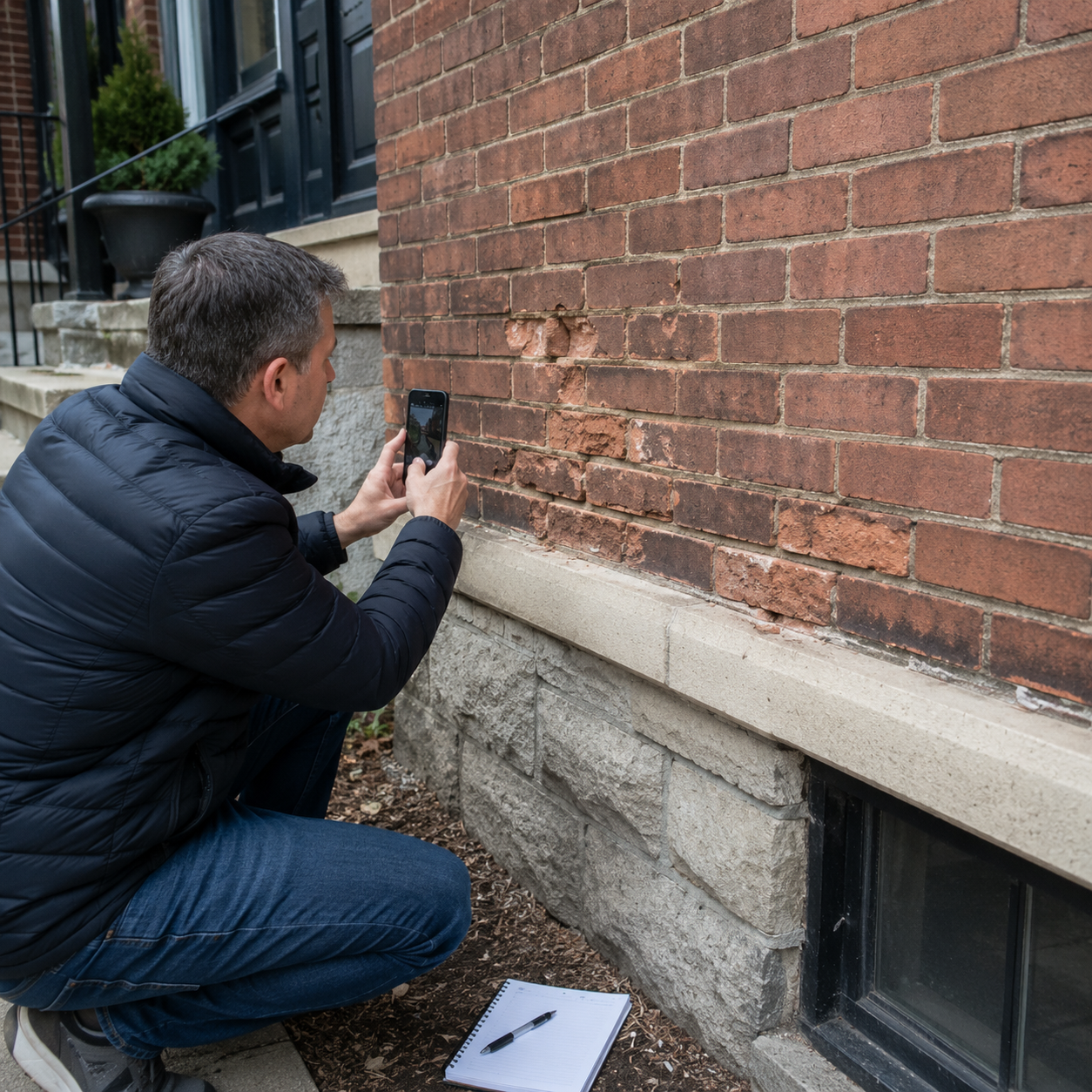
Brick spalling happens when the surface of a brick flakes, chips, cracks, or breaks away. The brick may look like its outer face is peeling off, crumbling, or popping out in layers.
Common signs of brick spalling include:
- Flaking or peeling brick faces.
- Pieces of brick are falling onto the ground.
- Rough, hollowed, or pitted brick surfaces.
- Bricks that look soft, sandy, or broken down.
- Cracks running through individual bricks.
- Damage near grade, steps, chimneys, or water-exposed walls.
- Brick faces that worsen after winter.
Spalling is usually more than just a surface-appearance issue. Once the brick’s protective face breaks away, the remaining brick can absorb more water and deteriorate faster. This is especially important for older Toronto homes, where brickwork may already have decades of exposure to the elements.
If only one or two bricks are affected, selective brick repair in Toronto may be enough. If many bricks are spalling in the same area, the mason should also look for the reason water is entering or sitting on the wall.
What Mortar Failure Looks Like
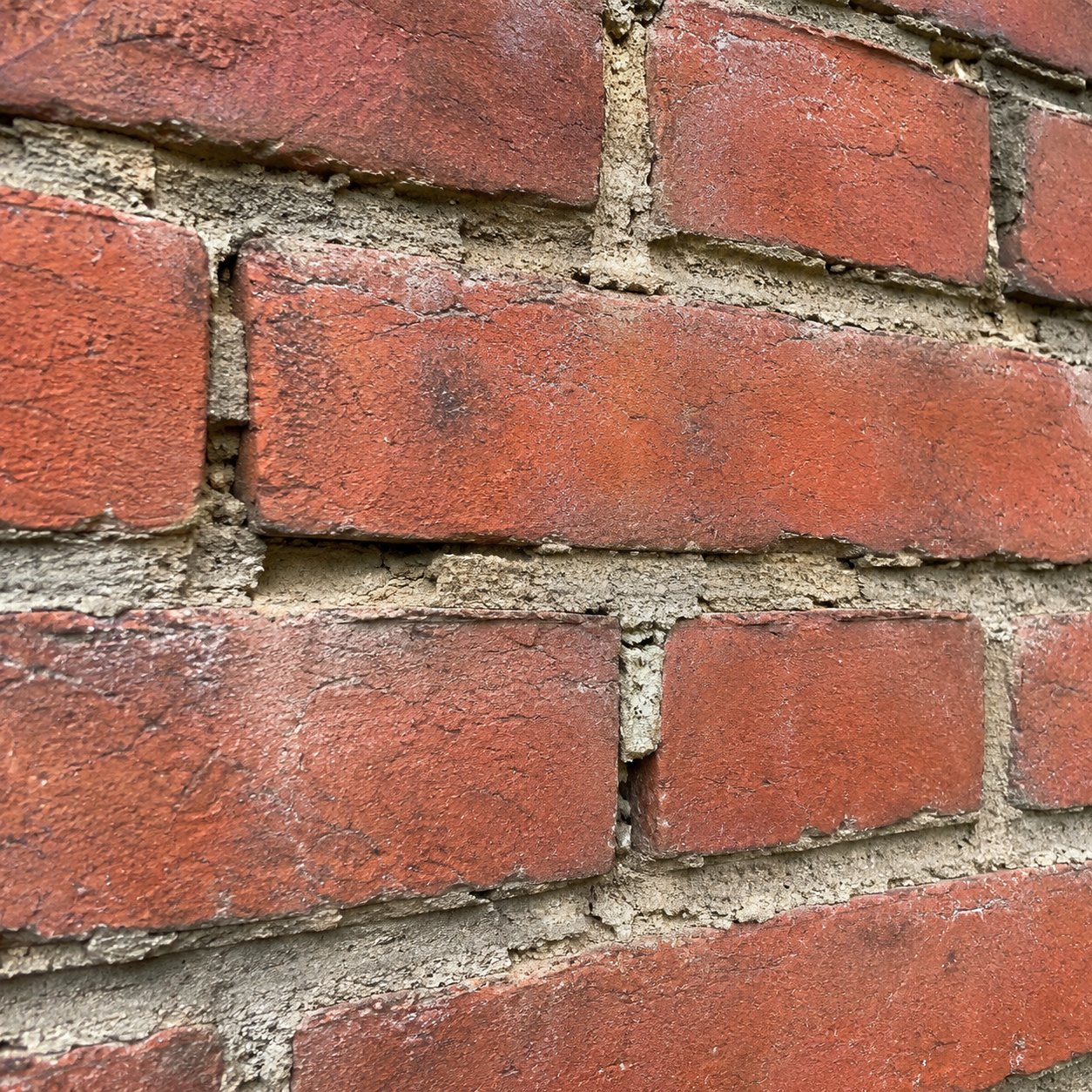
Mortar failure happens when the joints between bricks crack, erode, crumble, loosen, or fall out. The bricks may still be in fair condition, but the joints are no longer doing their job properly.
Common signs of mortar failure include:
- Cracked mortar joints.
- Recessed joints that sit far back from the brick face.
- Loose or sandy mortar.
- Gaps between bricks.
- Mortar pieces falling out after rain, wind, or winter.
- Stair-step cracking along the joints.
- Water staining near joints or inside the home.
Mortar is meant to be the sacrificial part of many brick walls. In simple terms, mortar often wears down before the brick does. That is not always a failure of the whole wall, but it does mean the joints need attention before water can enter deeper into the masonry.
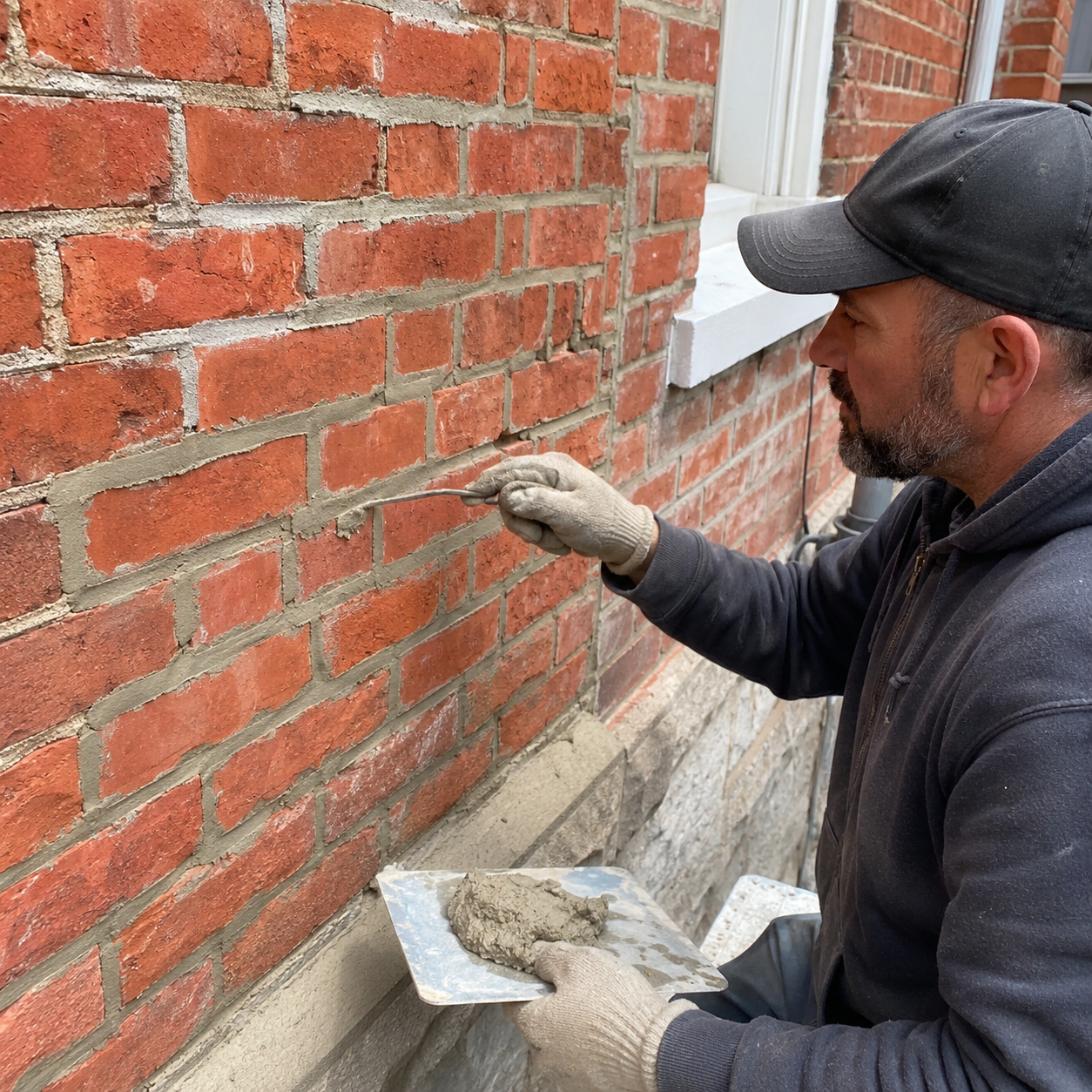
When the bricks are still solid, and the main issue is worn mortar, tuckpointing or repointing in Toronto may be the right repair. This involves removing weak mortar to the proper depth and installing new mortar that is suited to the existing masonry.
Brick Spalling vs Mortar Failure: The Simple Difference
The simple difference is this: brick spalling affects the brick face, while mortar failure affects the joints between the bricks. Both can let water in, but they point to different repair needs.
- Brick spalling: the brick itself is breaking, flaking, or losing its face.
- Mortar failure: the material between the bricks is cracking, crumbling, or missing.
- Both together: the wall may have moisture, age, movement, or previous repair problems that need a closer look.
A good way to check is to look at what is falling apart. If red or brown brick pieces are on the ground, the brick may be spalling. If grey, tan, or sandy joint material is falling out, the mortar may be failing. If both are present, the repair should not focus on only one part of the wall.
Location also matters. Spalling near grade may be linked to splashback, salt, or trapped moisture. Mortar failure high on a chimney may be tied to weather exposure, crown problems, or lack of protection at the top. Cracks around windows or doors may point to movement or lintel-related issues rather than ordinary aging.
Why Brick Spalling Happens
Brick spalling usually occurs when moisture enters the brick and breaks down the face over time. Freeze-thaw cycles are a major concern in Toronto because trapped water expands when it freezes.
Common causes of brick spalling include:
- Freeze-thaw damage: water enters the brick, freezes, expands, and pushes the surface apart.
- Poor drainage: water repeatedly hits or sits against the wall.
- Salt exposure: salt near walkways, steps, and driveways can worsen masonry deterioration.
- Hard or incompatible repairs: overly hard mortar or patching can trap moisture and damage older brick.
- Leaky gutters or downspouts: rainwater can keep the brick saturated.
- Chimney exposure: chimneys are exposed to weather on all sides, so brick faces can fail more quickly.
- Old brick deterioration: some bricks simply become more vulnerable after years of weather exposure.
The City of Toronto notes that poor drainage, foundation cracks, overflowing eavestroughs, and leaking or plugged downspouts can contribute to water entering homes. Those same moisture patterns can also affect exterior masonry when water is directed toward brick walls, lower foundations, steps, and chimneys. Homeowners can review the City’s basement flooding guidance for practical water management in homes.
Why Mortar Failure Happens
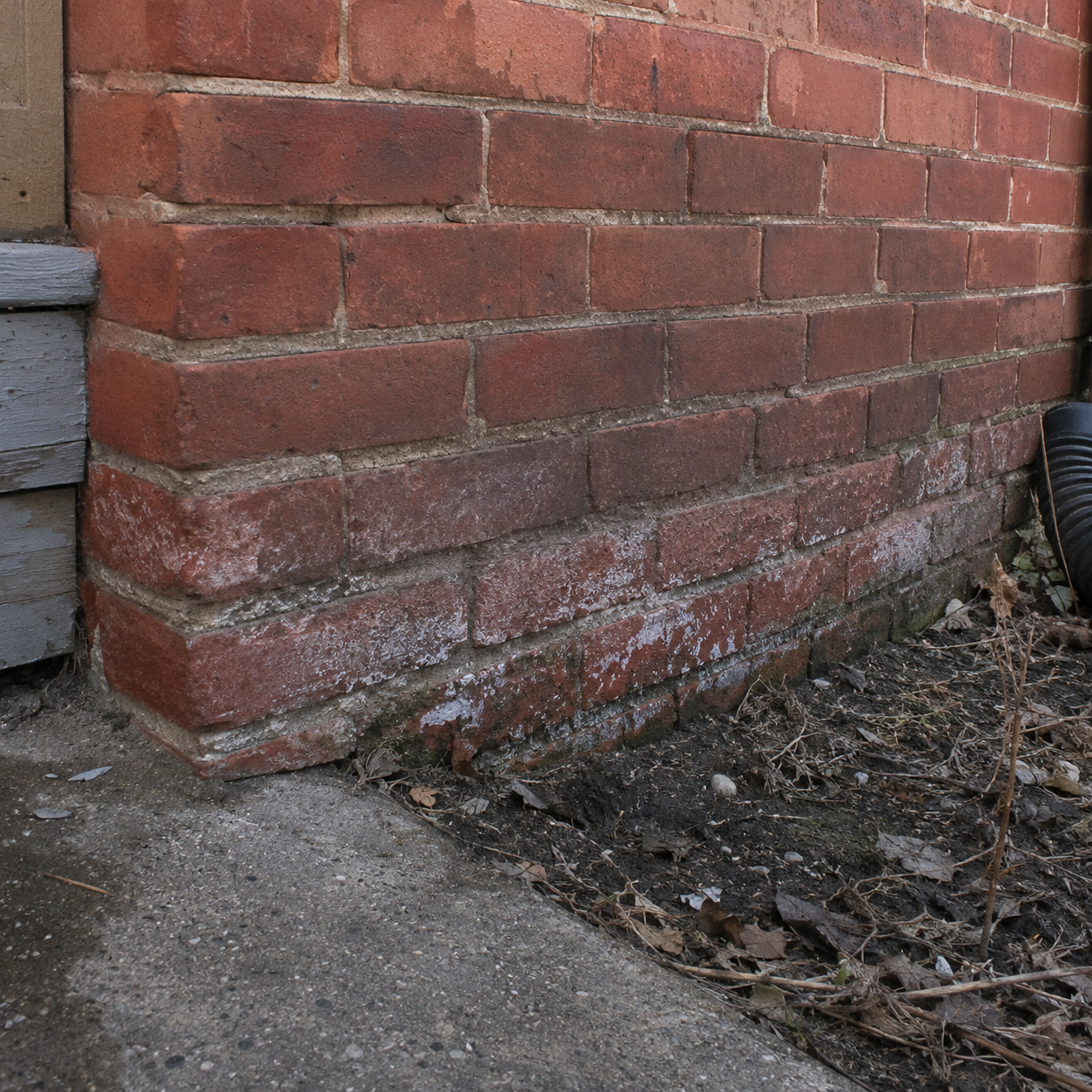
Mortar failure usually happens when joints age, absorb water, crack, erode, or are repaired with the wrong material. In many Toronto homes, mortar joints may wear down because they have been exposed to decades of weather.
Common causes of mortar failure include:
- Normal aging of mortar joints.
- Repeated wetting and drying.
- Freeze-thaw expansion inside open joints.
- Poor previous repointing work.
- Mortar that is too hard for older brick.
- Wall movement or settlement.
- Chimney crown, cap, or flashing problems that keep joints wet.
Mortar failure can start small. A few shallow cracks may not seem urgent, but open joints give water a path into the wall. Once water gets behind the brick face, it can cause increased mortar loss, spalling, interior dampness, or loose masonry.
On older and heritage-style properties, mortar compatibility matters. Parks Canada’s Standards and Guidelines for the Conservation of Historic Places in Canada are a useful reference for understanding why conservation work should respect existing materials and character. For homeowners, the practical point is simple: older brickwork should not be repaired with a one-size-fits-all mortar approach.
Repair Options for Brick Spalling
Brick spalling repair usually focuses on removing damaged bricks, replacing them with suitable matching bricks, and correcting the moisture condition that caused the damage. If the water source remains, new damage may appear later.
Repair options may include:
- Selective brick replacement: used when individual bricks are damaged, but the surrounding wall is stable.
- Wider wall repair: used when many bricks in the same area are deteriorating.
- Chimney brick replacement: used when exposed chimney bricks are spalling or loose.
- Drainage correction: used when water is collecting near the wall, steps, or foundation.
- Flashing, cap, or crown repair: used when chimney or roofline moisture is contributing to damage.
- Material matching: used to help the replacement brick blend with the existing wall.
Spalled bricks should not simply be covered with surface patching if the brick has lost its face or continues to absorb water. A patch may hide the issue for a short time, but it usually does not restore the brick’s original strength or weather resistance.
Repair Options for Mortar Failure
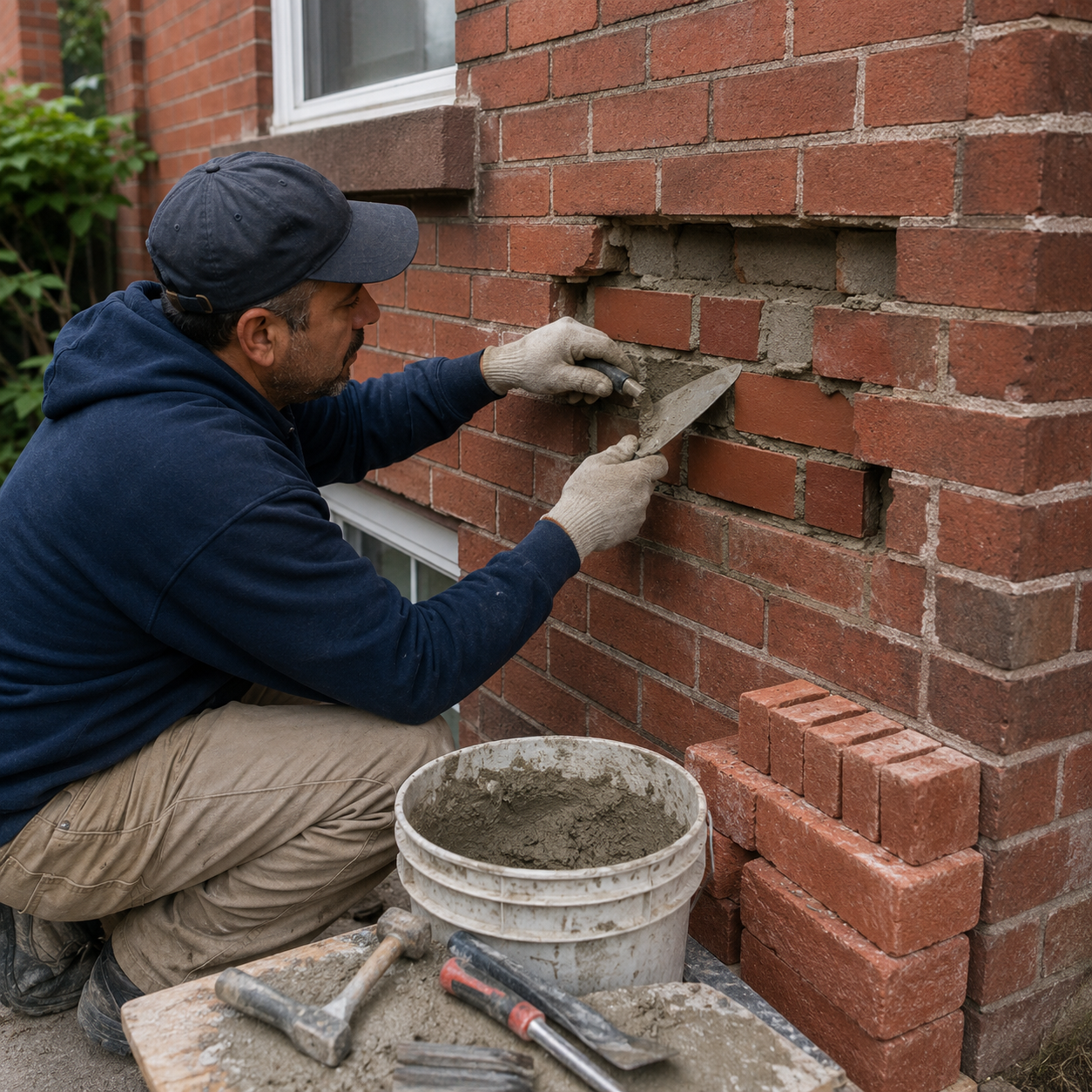
Mortar failure is often repaired by repointing or tuckpointing, but the existing weak mortar must be properly removed before new mortar is installed. Simply smearing new material over old joints is not a proper long-term repair.
Repair options may include:
- Repointing: removing deteriorated mortar and replacing it with new mortar.
- Tuckpointing: a more finished joint repair that can improve appearance and weather protection.
- Mortar colour matching: used when the repair area needs to blend with existing masonry.
- Mortar strength matching: important for older brick, so the repair does not damage surrounding materials.
- Joint profile repair: shaping the joint so it sheds water properly.
- Chimney repointing: used when chimney joints are cracked, recessed, or missing.
If mortar failure is caught early, repointing can help protect the wall before the bricks begin to loosen or spall. If the joints are severely missing and the bricks are already loose, the repair may require more than mortar work.
When Brick Repair May Be Enough
Brick repair may be sufficient when the damage is limited to a small number of bricks and the surrounding mortar joints remain stable. This is common when spalling is isolated and the wall has not shifted or opened up.
Brick repair may be enough when:
- Only a few bricks have lost their face.
- The wall is straight and stable.
- Mortar joints around the area are mostly intact.
- The water source can be corrected.
- No major cracks run through the wall.
- There are no signs of interior water damage.
For example, if salt splashback near a walkway damaged a few lower bricks, selective replacement and better water control may be enough. If a few chimney bricks are damaged but the chimney is otherwise stable, targeted repair may also be suitable.
When Tuckpointing May Be Enough
Tuckpointing or repointing may be enough when the bricks are still sound, but the mortar joints are cracked, recessed, or missing. This is often the case on older brick walls in Toronto, where mortar has worn down over time.
Tuckpointing may be enough when:
- The bricks are not badly spalling or loose.
- The main damage is in the joints.
- The wall is not bulging or leaning.
- Open joints are allowing water into the wall.
- The mortar is sandy, cracked, or recessed.
- The damage is caught before the brick faces fail.
This is why it is important not to wait too long. A failed mortar can lead to brick damage later. Repointing at the right time may help prevent the need for a larger brick replacement project.
When a Larger Masonry Repair May Be Needed
A larger masonry repair may be needed when brick spalling and mortar failure appear together, the wall is moving, or water has been entering the masonry for a long time. In that case, repairing only one symptom may not solve the problem.
A larger repair may be needed when:
- Many bricks are spalling in one area.
- Mortar is missing deeply along a large section of the wall.
- Bricks are loose or shifting.
- The wall is bulging, leaning, or separating.
- Cracks are stair-stepped or widening.
- Damage keeps returning after patch repairs.
- Water stains appear inside the home.
- A chimney has spalling bricks, missing mortar, and visible movement.
Chimneys deserve extra attention because they are exposed to heavy weather. If the issue is above the roofline, homeowners may find Otto’s guide on chimney repair vs chimney rebuilding in Toronto helpful when comparing smaller repairs with larger rebuilds.
What Homeowners Can Safely Check
Homeowners can safely do a ground-level visual check before calling a mason. The goal is to identify what seems to be failing without pulling apart the wall or climbing into unsafe areas.
Check these items:
- Are the brick faces flaking, or are the joints falling out?
- Are brick pieces or mortar pieces on the ground?
- Does the damage get worse after winter or heavy rain?
- Are gutters, downspouts, or roof edges sending water toward the wall?
- Is the damage near grade, steps, chimneys, windows, or doors?
- Are there interior water stains near the same wall?
- Are cracks widening or spreading across several bricks?
- Has the same area been patched before?
Take clear photos from close-up, mid-range, and wider angles. If possible, take another set after rain or after winter to see whether the damage is changing. This helps a mason understand whether the issue is active, moisture-related, or mostly surface-level.
When to Call a Mason
You should call a mason when brick spalling or mortar failure is spreading, is connected to water entry, affects a chimney, or shows signs of movement. Waiting too long can turn a small repair into a larger restoration.
Call a mason if you notice:
- Several spalling bricks in the same area.
- Deeply missing mortar joints.
- Loose bricks or falling masonry pieces.
- Stair-step cracks or widening cracks.
- Damage around a chimney, window, door, foundation, or corner.
- Water stains inside the home.
- Repeated patch failure.
- Damage that worsens after every winter.
Otto’s Masonry provides masonry services in Toronto, including brick repair, tuckpointing, chimney repair, stone masonry, concrete repair, parging, and related exterior masonry work. For seasonal context, Otto’s article on winter damage and spring masonry repairs also explains why damage often becomes more visible after freeze-thaw weather.
FAQs About Brick Spalling and Mortar Failure
What is the difference between brick spalling and mortar failure?
Brick spalling means the brick face is flaking, cracking, or breaking away. Mortar failure means the joints between bricks are cracked, recessed, sandy, loose, or missing.
Is brick spalling more serious than mortar failure?
Brick spalling can be serious because the brick itself is breaking down. Mortar failure can also become serious if open joints allow water into the wall, leading to loose bricks, spalling, or interior moisture.
Can failed mortar cause brick spalling?
Yes. A failed mortar can let water enter the wall. In Toronto, that trapped moisture can freeze, expand, and contribute to brick spalling over time.
Can spalled bricks be repaired without replacing them?
Minor surface wear may be monitored, but badly spalled bricks usually need replacement. Covering a broken brick face with patching often does not solve the moisture or durability problem.
When does mortar failure need tuckpointing?
Mortar failure may need tuckpointing when joints are cracked, recessed, loose, sandy, or missing, but the surrounding bricks are still sound. Proper tuckpointing removes weak mortar before installing new mortar.
Why does brick spalling happen more after winter?
Brick spalling often worsens after winter because water inside the brick or mortar can freeze and expand. This pressure can break brick faces and open mortar joints during repeated freeze-thaw cycles.
Should I repair brick spalling or mortar failure first?
The repair order depends on the condition of the wall. If bricks are badly damaged, they may need to be replaced. If mortar joints are open and letting water in, repointing may be needed. When both are present, the mason should address the full moisture and masonry problem.
Final Answer
Brick spalling and mortar failure are different problems, but they are often connected. Spalling means the brick face is breaking down, while mortar failure means the joints between the bricks are cracking, crumbling, or falling out.
For Toronto homeowners, the practical takeaway is to look at what is failing and whether moisture is involved. If only the joints are worn, tuckpointing may be enough. If the brick faces are breaking apart, brick replacement may be needed. If both are happening together, a broader masonry repair plan is usually the safer choice.