

Quick Answer
Brick damage is usually cosmetic when it affects only the surface, such as light staining, small chips, or minor weathering that does not change the wall’s stability. It may be structural when you see stair-step cracks, bulging walls, loose bricks, deep mortar loss, spreading cracks, or movement around windows, doors, chimneys, or foundations. In Toronto, freeze-thaw cycles and moisture can worsen small brick issues, so damage should be checked early if it is spreading or is tied to water entry.
Brick damage can look simple from the ground, but not every crack or chip means the same thing. Some marks are mostly visual. Others point to water movement, failing mortar, wall movement, poor past repairs, or load-related stress.
The hard part for homeowners is knowing when to monitor the issue and when to take it seriously. A small surface chip on one brick may not be urgent. A wall that is cracking in a stair-step pattern, leaning outward, or shedding mortar after winter should not be treated as a cosmetic problem.
This guide explains how to tell the difference between cosmetic and structural brick damage, what Toronto homeowners should watch for, what can be checked safely, and when it makes sense to call a mason for a closer inspection.
Why Brick Damage Matters More in Toronto Homes
Brick damage matters in Toronto because many homes face repeated exposure to moisture, snow, ice, salt, and freeze-thaw cycles. When water enters small cracks or open mortar joints, it can freeze, expand, and gradually worsen the damage over time.
Older homes in East York, The Beaches, The Annex, Rosedale, Forest Hill, North York, Etobicoke, Scarborough, and other Toronto neighbourhoods often have brick-and-mortar systems that require the right approach to repair. A wall may look solid from a distance, but aging mortar, poor drainage, roof runoff, or incompatible past patching can weaken the masonry behind the surface.
Toronto homeowners should also remember that some masonry work can affect structure, openings, chimneys, or exterior walls. The City of Toronto explains when building permits may be required, especially for structural or material changes. The Ontario Building Code regulation also includes construction requirements related to masonry and building safety. Homeowners do not need to study the code, but they should know that brickwork is not always just decorative.
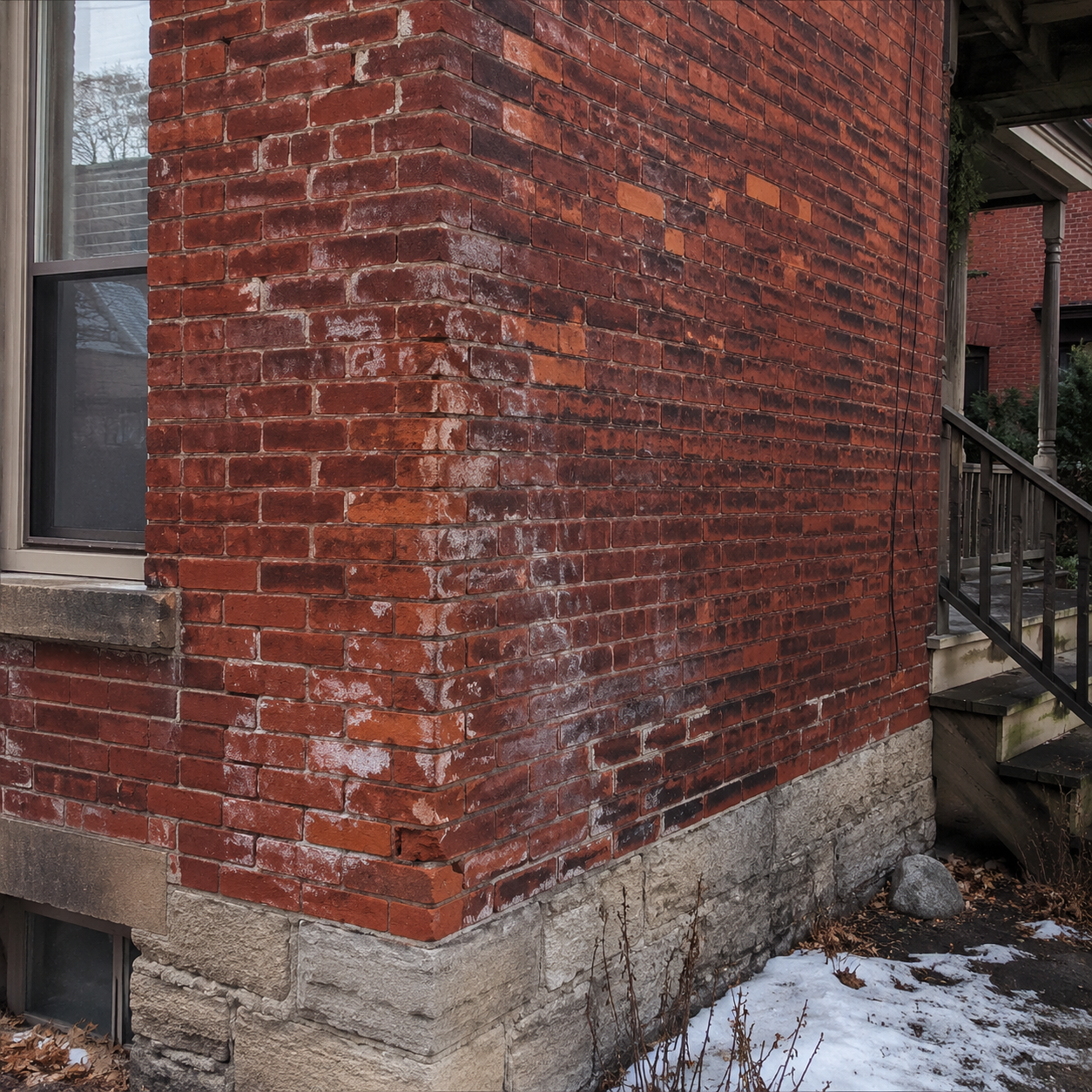
What Cosmetic Brick Damage Usually Looks Like
Cosmetic brick damage usually affects appearance more than strength. The wall is still straight, the bricks are not loose, the mortar joints are mostly intact, and the damage is not spreading across a large area.
Common examples of cosmetic brick damage include: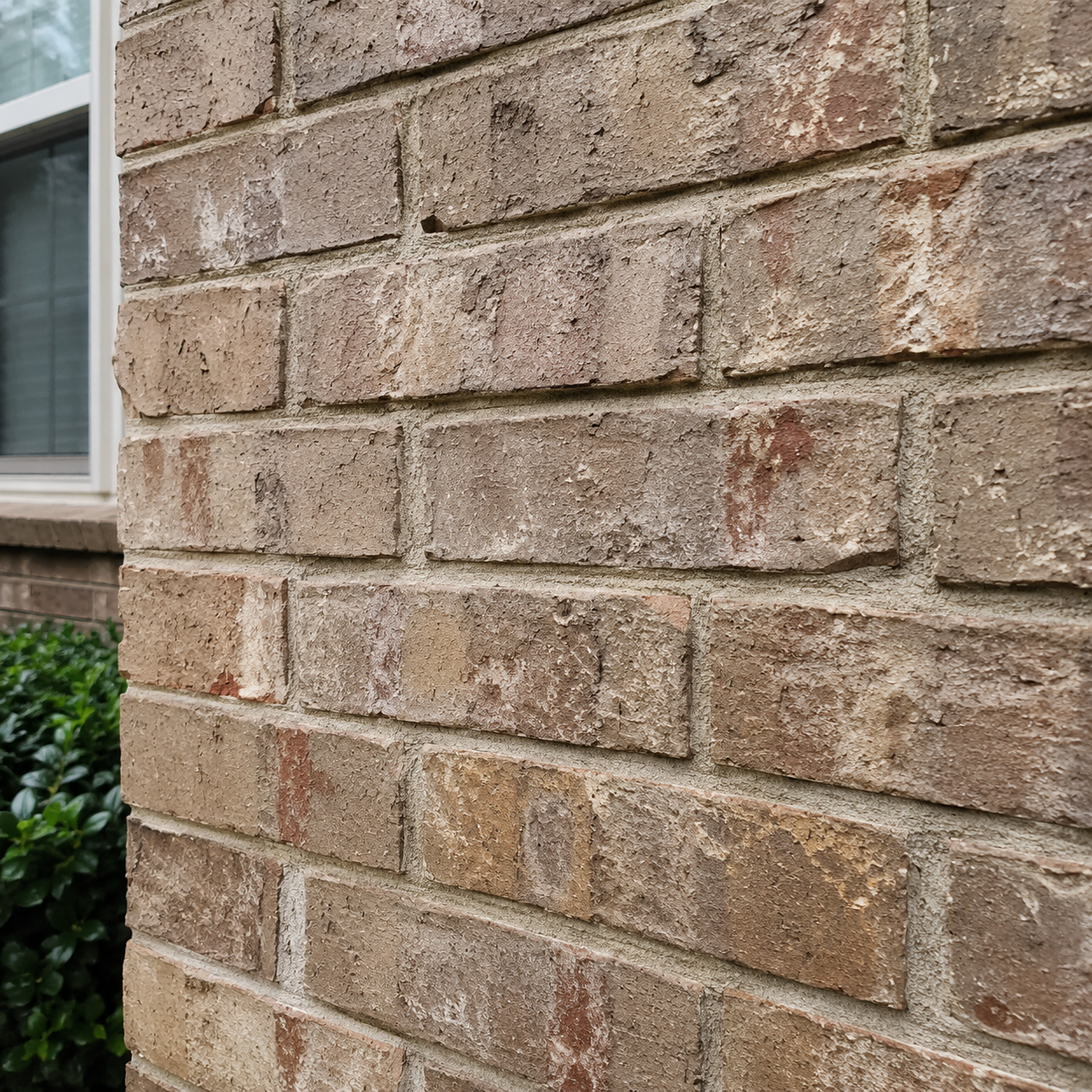
- Light surface staining that does not come with dampness or soft mortar.
- Minor colour changes from weather exposure.
- Small chips on the face or corner of one or two bricks.
- Light hairline cracks in the brick face that are not widening.
- Minor efflorescence that appears as a white powder but does not cause crumbling of the brick.
- Old patched areas that look uneven yet remain stable.
Cosmetic damage is still worth watching. It can be an early sign of moisture exposure, especially if the same area gets worse every winter. Still, cosmetic damage does not usually require major repair unless it affects water shedding, continues to spread, or sits near a more serious issue.
For example, a few light chips on brick near a walkway may be less urgent than cracked mortar around a chimney, even if the chimney damage looks smaller from the ground. The location of the damage matters just as much as the size.
What Structural Brick Damage Usually Looks Like
Structural brick damage usually shows signs of movement, weakness, water entry, or deeper masonry failure. These signs should not be treated as surface problems, as they may compromise the wall’s stability or allow water to penetrate deeper into the home.
Common warning signs include:
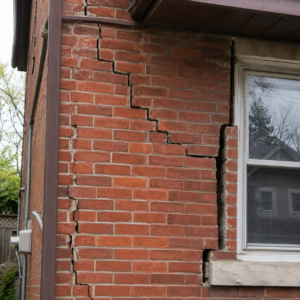
- Stair-step cracks follow the mortar joints.
- Horizontal cracks across a brick wall.
- Bulging, bowing, leaning, or separated wall sections.
- Loose bricks or bricks that move when touched.
- Deep mortar loss, missing joints, or joints that have turned sandy.
- Cracks that continue through multiple brick and mortar joints.
- Cracks near window lintels, door openings, corners, chimneys, or foundations.
- Gaps between brickwork and window frames, door frames, trim, or roofline areas.
- Repeated cracks in the same repaired area.
- Interior water stains or damp smells near the damaged exterior wall.
These signs do not always mean the whole wall needs rebuilding, but they do mean the issue deserves a proper assessment. In some cases, targeted brick repair in Toronto may be enough. In other cases, the wall may need repointing, lintel work, chimney repair, drainage correction, or a larger masonry repair plan.
Cosmetic vs Structural Brick Damage: A Practical Homeowner Guide
The easiest way to compare cosmetic and structural brick damage is to consider four factors: depth, spread, movement, and moisture. Surface marks are usually less serious. Damage that is deep, spreading, moving, or associated with water entry requires more attention.
- Depth: A shallow surface chip is often cosmetic. Deep cracking, broken brick sections, and missing mortar can be more serious.
- Spread: One isolated mark may be minor. Damage running across several bricks, around openings, or through mortar joints may point to a larger issue.
- Movement: A stable wall with a small blemish is different from a wall that is bulging, leaning, or separating.
- Moisture: Dry, stable damage is usually less urgent than damage connected to leaks, staining, damp walls, or freeze-thaw deterioration.
Here is a simple way to think about it:
- Probably cosmetic: light staining, small chips, mild colour fading, or isolated surface marks that are not spreading.
- Needs monitoring: hairline cracks, light efflorescence, small mortar gaps, or older patching that does not appear active.
- Needs inspection: stair-step cracks, bulging walls, loose bricks, deep mortar loss, spreading cracks, repeated water staining, or damage around structural openings.
This guide is not a replacement for an inspection, but it helps homeowners avoid two common mistakes: ignoring serious damage because it looks small, or assuming every mark on the brick means the wall is failing.
Why Brick Damage Happens
Most brick damage comes from moisture, movement, aging mortar, poor drainage, freeze-thaw cycles, salt exposure, or old repairs that used the wrong materials. The visible crack is often only the symptom. The cause determines the right repair.
In Toronto, common causes include:
- Freeze-thaw damage: Water enters small cracks or open joints, freezes, expands, and pushes bricks or mortar apart.
- Failing mortar joints: Mortar wears down before many bricks do. Once joints open, water can enter deeper into the wall.
- Poor water control: Bad grading, missing downspout extensions, roof runoff, or damaged flashing can keep masonry wet.
- Old or incompatible repairs: Hard cement patches on older brick can trap moisture or stress the brick face.
- Lintel movement: Cracks above windows or doors can happen when metal or masonry supports shift, rust, or fail.
- Foundation or wall movement: Stair-step cracks, widening gaps, and wall separation can indicate movement beneath or behind the brickwork.
- Chimney exposure: Chimneys take heavy weather from all sides, so mortar failure, spalling, and leaning can develop faster near the roofline.
When moisture is part of the problem, repair should not only cover the damaged brick. The source of water should also be considered. That may include grading, flashing, caps, crowns, drainage, gutters, or waterproofing, depending on the location of the damage.
Problem Signs Homeowners Should Watch For
Homeowners should watch for changes, not just one-time marks. Brickwork that looks the same year after year may not be urgent. Brickwork that changes after winter, rain, or repairs should be taken more seriously.
Look for these signs:
- Cracks that are wider than before.
- New cracks near old repaired areas.
- Mortar falling out after storms or winter.
- Brick faces flaking, popping, or crumbling.
- White staining that keeps returning.
- Dark, damp areas that do not dry properly.
- Loose bricks near walls, steps, porches, or chimneys.
- Separation around windows, doors, trim, or roofline areas.
- Interior stains near the same exterior wall.
It is especially important to check brickwork after winter and after heavy rain. Toronto’s freeze-thaw cycle can turn small openings into larger repairs when water has a path into the wall. If damage keeps returning in the same location, the issue is probably not only cosmetic.
Repair Options for Cosmetic and Structural Brick Damage
The right repair depends on the type of damage, the cause, and the condition of the surrounding masonry. A good repair should solve the actual problem, not just hide the visible mark.
Common repair options include:
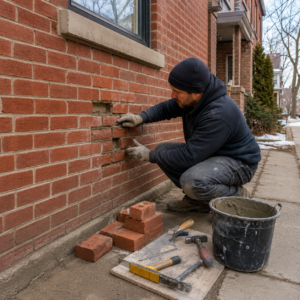
- Cleaning: Useful for some staining, dirt, and light surface buildup when the brick is otherwise sound.
- Selective brick replacement: Used when individual bricks are cracked, spalling, loose, or badly damaged.
- Repointing or tuckpointing: Used when mortar joints are cracked, recessed, missing, or allowing water into the wall. Otto’s Masonry provides tuckpointing and repointing in Toronto for aging mortar and older brick homes.
- Lintel-related repair: Needed when cracking above windows or doors is tied to support movement, rust, or stress around the opening.
- Chimney repair: Needed when cracks, spalling, leaning, or mortar loss appear on chimney brickwork. More details are available on Otto’s chimney repair Toronto page.
- Moisture correction: Needed when damage is connected to gutters, grading, flashing, caps, crowns, or water entry.
- Partial rebuilding: Needed when a section is unstable, badly deteriorated, or no longer safe to repair with small patches.
Small cosmetic damage may only need cleaning, monitoring, or minor repair. Structural damage needs a clearer plan. The repair should address both the visible masonry and the underlying cause of its failure.
When Repair May Be Enough
Repair may be enough when the damage is limited, the wall is stable, and the cause can be corrected without rebuilding a larger section. This is common when homeowners catch brick or mortar issues early.
Repair may be suitable when:
- Only a few bricks are cracked or spalling.
- Mortar joints are worn, but the wall is straight and stable.
- There is no major bulging, leaning, or separation.
- The damage is limited to one area.
- Water entry has a clear and fixable source.
- The same area has not failed repeatedly after previous repairs.
For example, if a small section of mortar is recessed and the brick is still firm, repointing may help protect the wall before water causes more serious damage. If a few brick faces have spalled near grade due to salt or splashback, selective replacement and water control may be sufficient.
The key is timing. Early repair is often simpler than waiting until damaged mortar leads to loose bricks, wider cracks, or interior moisture.
When a Larger Fix May Be Needed
A larger fix may be needed when the wall is moving, the damage is widespread, or the masonry has lost stability. These signs should not be covered with surface patching.
A more serious repair plan may be needed when:
- The wall is bulging, bowing, leaning, or pulling away.
- Cracks are wide, stair-stepped, or spreading.
- Bricks are loose across more than one small area.
- Mortar is missing deeply across a large section.
- Cracks appear above windows, doors, or lintels.
- Damage keeps returning after patch repairs.
- Water stains appear inside the home near the damaged wall.
- A chimney is leaning, shedding brick, or failing near the roofline.
In these cases, the question is not only “Can this be patched?” A better question is “Why is the masonry failing, and what repair will actually hold up?” Sometimes that means brick replacement and repointing. Sometimes it means rebuilding a damaged section, correcting drainage issues, or addressing a support issue before the brickwork is repaired.
What Homeowners Can Safely Check Themselves
Homeowners can safely perform a ground-level visual check, but they should not pull bricks, climb unsafe ladders, chip mortar joints, or test unstable walls. The goal is to gather useful clues without worsening the damage.
Here is a simple checklist:
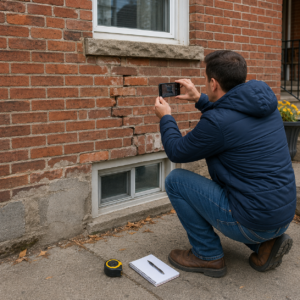
- Take clear photos of the damaged area from the same angle every few months.
- Check whether cracks are growing, widening, or spreading.
- Look for loose mortar pieces on the ground after rain or winter.
- Check whether downspouts, gutters, or roof edges are dumping water near the brickwork.
- Look for damp spots, staining, or peeling finishes on the wall.
- Compare the damaged area with nearby brickwork that looks sound.
- Note whether the issue is near windows, doors, corners, chimneys, steps, porches, or the foundation.
If you are unsure, photos can help a mason understand the issue faster. Include close-ups and wider shots so the location and surrounding conditions are clear.
When to Call a Mason
You should call a mason when the damage is spreading, is connected to water entry, is located around important areas of the building, or shows signs of movement. Waiting too long can turn a limited repair into a larger project.
Call a mason if you notice:
- Stair-step cracks.
- Bulging or leaning brickwork.
- Loose bricks.
- Deeply missing mortar.
- Cracks near windows, doors, chimneys, or foundations.
- Spalling brick that keeps getting worse.
- Repeated repairs that fail again.
- Interior water stains near exterior brick.
Otto’s Masonry handles masonry services in Toronto, including brick repair, tuckpointing, chimney repair, concrete repair, parging, and related exterior masonry work. If the issue is hard to judge from the ground, an inspection can help separate cosmetic wear from structural concern.
Homeowners with older chimneys may also find Otto’s guide on chimney repair vs rebuilding in Toronto useful, especially when trying to understand the difference between limited repair and a larger rebuild.
FAQs About Cosmetic and Structural Brick Damage
How do I know if brick damage is cosmetic?
Brick damage is likely cosmetic when it is limited to light staining, small surface chips, mild colour changes, or isolated hairline marks that are not spreading. The wall should still look straight and stable, with no loose bricks, deep mortar loss, or water entry.
What brick cracks are most concerning?
Stair-step cracks, horizontal cracks, widening cracks, and cracks around windows, doors, chimneys, corners, or foundations are more concerning. These can point to movement, support issues, moisture damage, or deeper masonry failure.
Does spalling brick mean the wall is structurally unsafe?
Not always. A few spalling bricks may be repairable with selective replacement, especially if the wall is stable. Widespread spalling, loose bricks, deep mortar failure, or bulging brickwork should be inspected because the issue may be more serious.
Can damaged mortar become a structural problem?
Yes. Mortar holds the masonry units together and helps shed water. If mortar becomes cracked, recessed, sandy, or missing, water can enter the wall and slowly cause brick damage, movement, or larger repair needs.
Should I repair small cracks in the brick before winter in Toronto?
Small cracks should be checked before winter to see if they are open, spreading, or allowing water into the wall. Toronto freeze-thaw cycles can worsen small gaps when trapped moisture freezes and expands.
Can I patch brick damage myself?
Small cosmetic touch-ups may seem simple, but the wrong material can trap moisture or cause older brick to fail faster. Avoid hard cement patches on older Toronto brickwork unless the repair method is appropriate for the wall.
When should I call a mason for brick damage?
Call a mason when damage is spreading, bricks are loose, mortar is deeply missing, the wall is bulging or leaning, cracks appear around openings, or water stains show inside the home. These signs need more than a surface-level patch.
Final Answer
Brick damage is usually cosmetic when it is shallow, isolated, and not changing. It may be structural when it involves movement, deep cracks, loose bricks, missing mortar, water entry, or damage around windows, doors, chimneys, or foundations.
For Toronto homeowners, the safest approach is to watch for spreading damage and moisture. If the wall is stable, a smaller repair may be enough. If the damage is moving, worsening, or tied to water entry, a proper masonry inspection is the smarter next step.