

Quick Answer
Water gets behind brick walls in older Toronto homes through cracked mortar joints, damaged bricks, poor flashing, clogged or leaking gutters, downspouts that drain too close to the wall, foundation cracks, and poor grading around the home. Once moisture gets into brickwork, Toronto’s freeze-thaw cycles can widen small gaps and cause spalling, mortar failure, interior dampness, or more extensive masonry damage. The key is to find the water path before repairing only the visible brick or mortar damage.
Older brick homes in Toronto often look solid from the street, but brick walls are not meant to ignore water forever. Brick and mortar can absorb moisture, shed moisture, and dry out when they are in good condition. Problems begin when water finds a repeated path behind the wall and cannot dry properly.
Many homeowners first notice the issue as peeling paint inside, damp basement walls, white staining on brick, crumbling mortar, spalling brick faces, musty smells, or a small leak after heavy rain. The visible damage may look like a brick problem, but the cause may be a gutter, downspout, roofline, grading, flashing, window opening, chimney, or foundation issue.
This guide explains how water gets behind brick walls in older Toronto homes, what signs homeowners should watch for, what causes the problem, which repair options may help, and when it is time to call a mason.
Why Older Toronto Brick Homes Are More Vulnerable to Water Problems
Older Toronto brick homes are more vulnerable to water problems because their masonry has already faced decades of rain, snow, ice, repairs, settlement, and freeze-thaw cycles. Over time, mortar joints wear down, brick faces become more absorbent, flashing can fail, and past repairs may stop the wall from drying properly.
Many homes in neighbourhoods such as East York, The Beaches, The Annex, Rosedale, Riverdale, Leslieville, High Park, Etobicoke, Scarborough, and North York have older brick walls built with materials and wall systems that do not behave the same way as those in newer construction. Some walls are solid masonry. Some have cavities. Some have been painted, patched, repointed, sealed, or altered over many years.
Water becomes a bigger concern when the wall cannot dry. A small amount of moisture may not cause damage if it naturally leaves the wall. Repeated wetting, trapped moisture, poor drainage, and freezing temperatures are what turn small defects into bigger problems.
The City of Toronto’s basement flooding guidance lists poor lot grading or drainage, foundation cracks, overflowing eavestroughs, and leaking or plugged downspouts as common water-entry concerns around homes. Those same moisture conditions can also affect nearby brick walls, parging, foundations, chimneys, and lower masonry areas.
Common Signs Water Is Getting Behind Brick Walls
Water behind brick walls often shows up as stains, loose material, dampness, or damage that keeps returning after rain or winter. The signs can appear outside, inside, or both.
Homeowners should watch for:
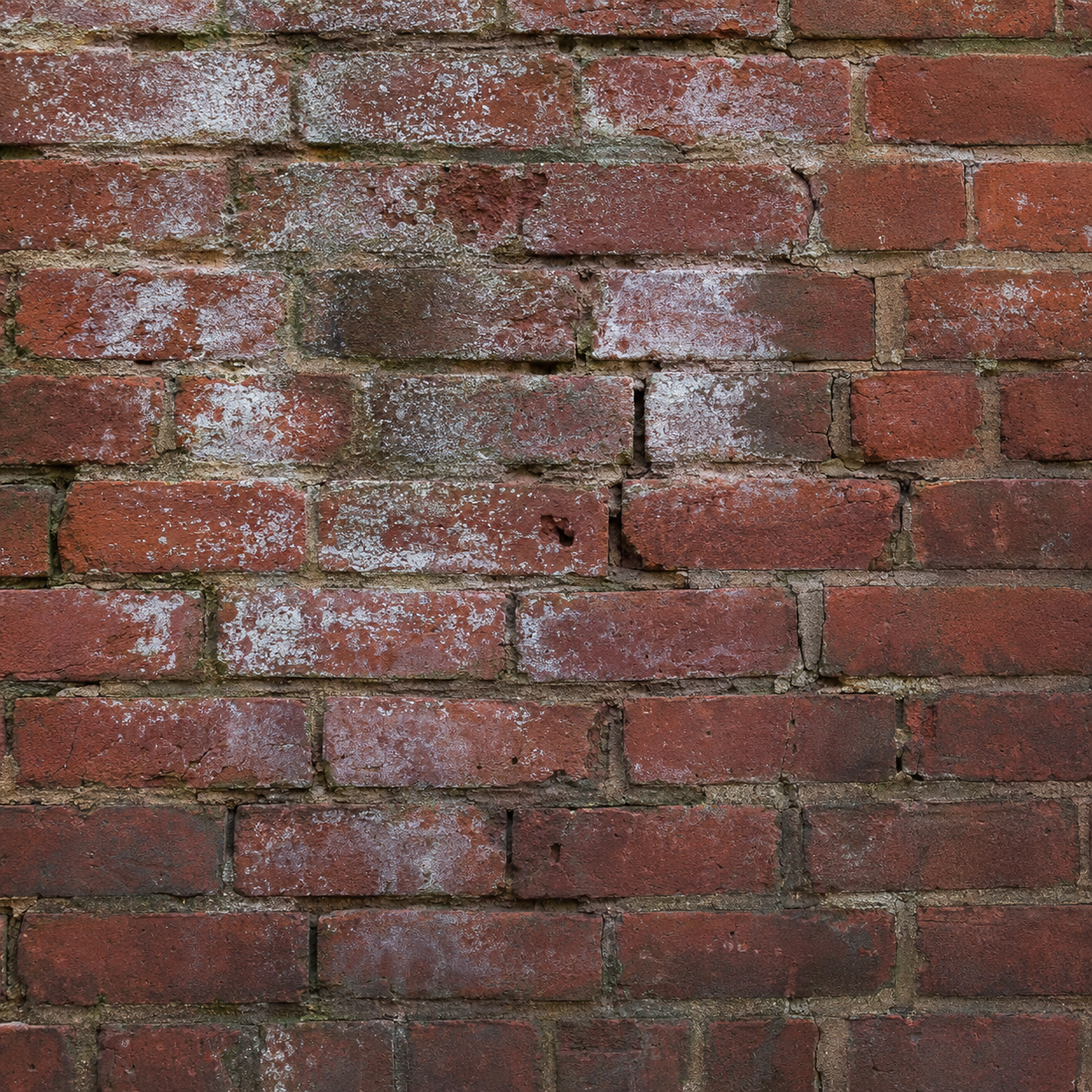
- White powdery staining on brick is often called efflorescence.
- Dark, damp patches that stay wet after rain.
- Spalling brick, where the face flakes, pops, or breaks away.
- Cracked, recessed, sandy, or missing mortar joints.
- Loose bricks or small masonry pieces on the ground.
- Paint or interior plaster peeling near an exterior brick wall.
- Musty smells near basement walls or lower exterior walls.
- Water stains around windows, doors, fireplaces, or ceilings near chimneys.
- Repeated damage in the same area after it was patched.
- Cracks that appear worse after winter.
One sign by itself does not always confirm a major issue. For example, light efflorescence may only mean moisture moved through the masonry and left salts behind. But if efflorescence appears with crumbling mortar, spalling brick, damp interior walls, or repeated staining, it should be checked more carefully.
How Water Gets Behind Brick Walls
Water gets behind brick walls when there is an opening, repeated wetting, poor drainage, failed flashing, or a repair that traps moisture rather than allowing the wall to dry. In older Toronto homes, the water path is often not obvious from the front of the wall.
Common entry points include:
- Cracked mortar joints: Open joints give water a direct path into the wall.
- Spalling brick: Damaged brick faces absorb more water and break down faster.
- Leaky gutters: Overflowing water can repeatedly soak the same area of the wall.
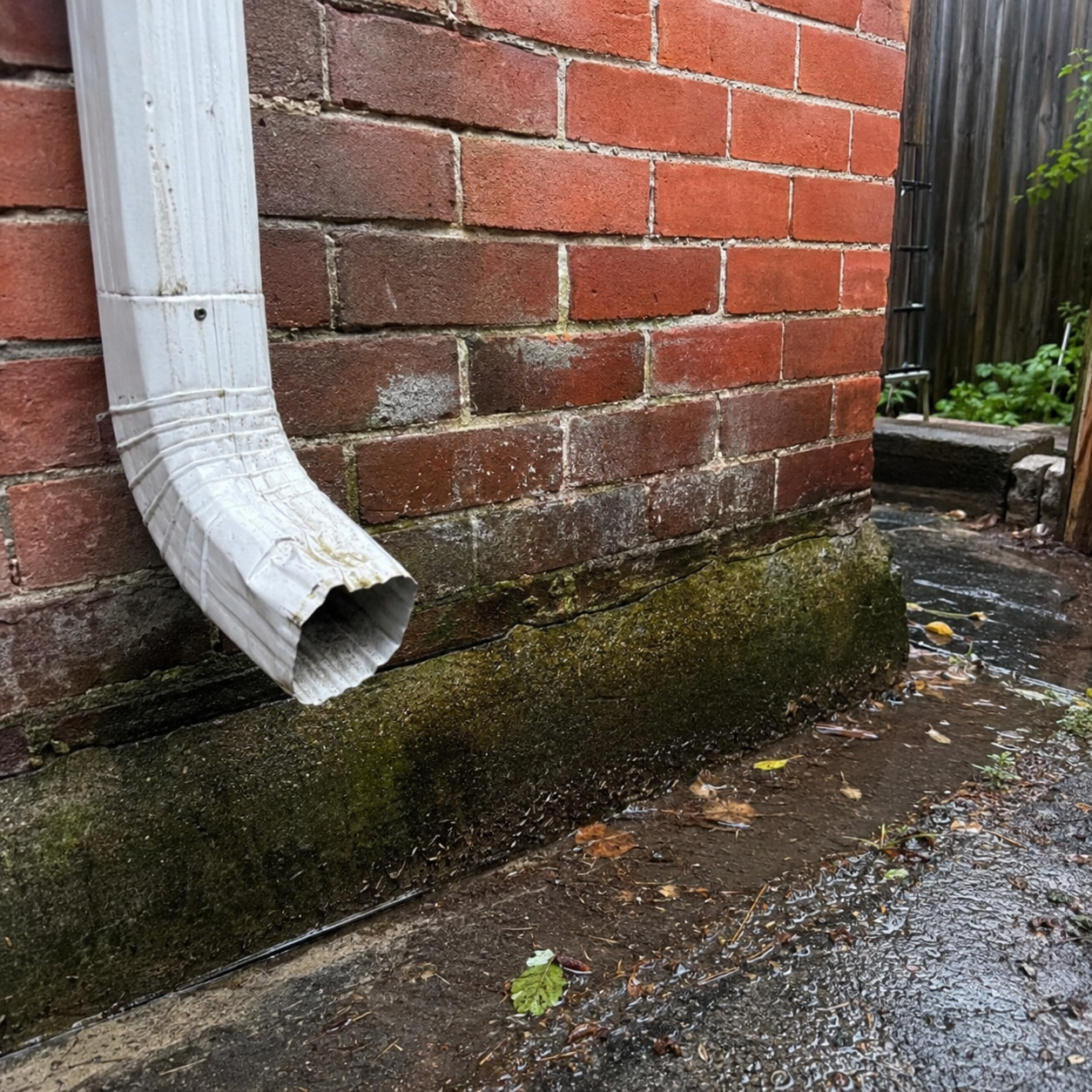
- Short downspouts: Water discharged near the foundation can saturate lower walls.
- Poor grading: Soil or paving that slopes toward the house can hold water against masonry.
- Window and door openings: Failed caulking, lintel movement, sill cracks, or poor drainage can let water enter.
- Chimney problems: A cracked crown, missing cap, open joints, or flashing issues can cause water to enter the chimney and nearby walls.
- Roofline and flashing gaps: Water can enter where masonry meets roofing, walls, or additions.
- Foundation cracks: Water can enter below grade and show up as interior dampness.
- Hard patching or non-breathable coatings: Some repairs can trap moisture inside older brickwork.
The mistake many homeowners make is assuming the wet spot is the source. Water can travel behind brick, along mortar joints, around openings, or into wall cavities before it appears. That is why a proper repair should look for the path water is taking, not only the place where damage is visible.
Cracked Mortar Joints Are One of the Main Water Paths
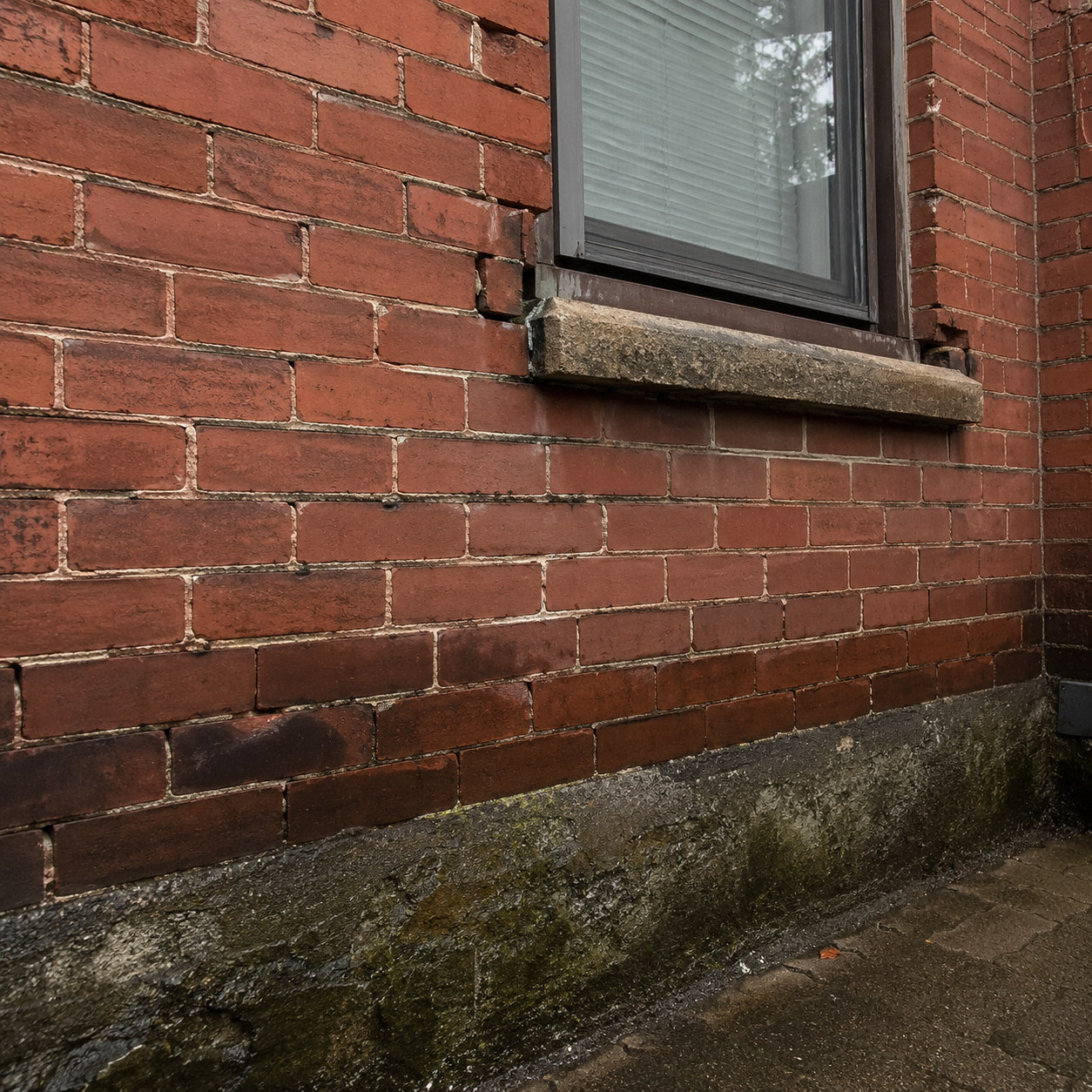
Cracked or missing mortar joints are one of the most common ways water gets behind brick walls. Mortar joints help hold the wall together and shed water away from the brickwork.
When mortar becomes recessed, sandy, cracked, or loose, water can sit in the joints. During winter, that water can freeze and expand. Over time, this can widen the gaps, loosen nearby bricks, and increase moisture inside the wall.
Signs of mortar-related water entry include:
- Joints that are deeper than the brick face.
- Cracks running through horizontal or vertical joints.
- Mortar that rubs away like sand.
- Water stains follow joint lines.
- Small mortar pieces fall out after storms or winter.
- Interior dampness near the same wall area.
If the bricks are still mostly sound, tuckpointing or repointing in Toronto may help close those open joints and improve the wall’s ability to shed water. The repair should first remove any weak mortar. Smearing new mortar over loose joints usually does not solve the issue for long.
Damaged Bricks Can Let More Moisture In
Damaged bricks can let more moisture into a wall because the protective outer face may be cracked, spalled, or broken away. Once the brick’s face fails, the remaining material can absorb water more easily.
Brick damage often appears as:
- Flaking brick faces.
- Chipped or broken corners.
- Cracks through individual bricks.
- Soft or sandy brick surfaces.
- Brick pieces falling to the ground.
- Damage near grade, chimneys, steps, or roofline areas.
In Toronto, spalling often becomes more visible after winter because water inside the brick can freeze and expand. This does not always mean the entire wall is failing, but it does mean that the damaged bricks and the source of moisture should be checked.
When individual bricks have failed, targeted brick repair in Toronto may be enough. If many bricks in one area are breaking down, the wall may need a larger repair plan that includes water management, repointing, or partial rebuilding.
Gutters, Downspouts, and Grading Can Push Water Toward Masonry
Gutters, downspouts, and grading are often responsible for repeated moisture around lower brick walls and foundations. Even good brickwork can deteriorate faster when water is repeatedly splashed against the same area.
Homeowners should check whether:
- Gutters overflow during heavy rain.
- Downspouts discharge too close to the wall.
- Downspout extensions are missing, loose, or pointing toward masonry.
- Soil slopes toward the home instead of away from it.
- Walkways, patios, or driveways direct water toward the foundation.
- Water pools near brick steps, porches, or basement windows.
- Lower brick and parging stay damp long after the rain stops.
These water problems can affect brick walls, basements, parging, and foundations simultaneously. If the lower masonry damage keeps recurring, it is worth checking whether the issue is actually a drainage problem. Otto’s Masonry’s basement waterproofing Toronto page explains how foundation protection, drainage, and exterior moisture control relate to masonry repair.
Windows, Doors, Sills, and Lintels Can Let Water Behind Brick
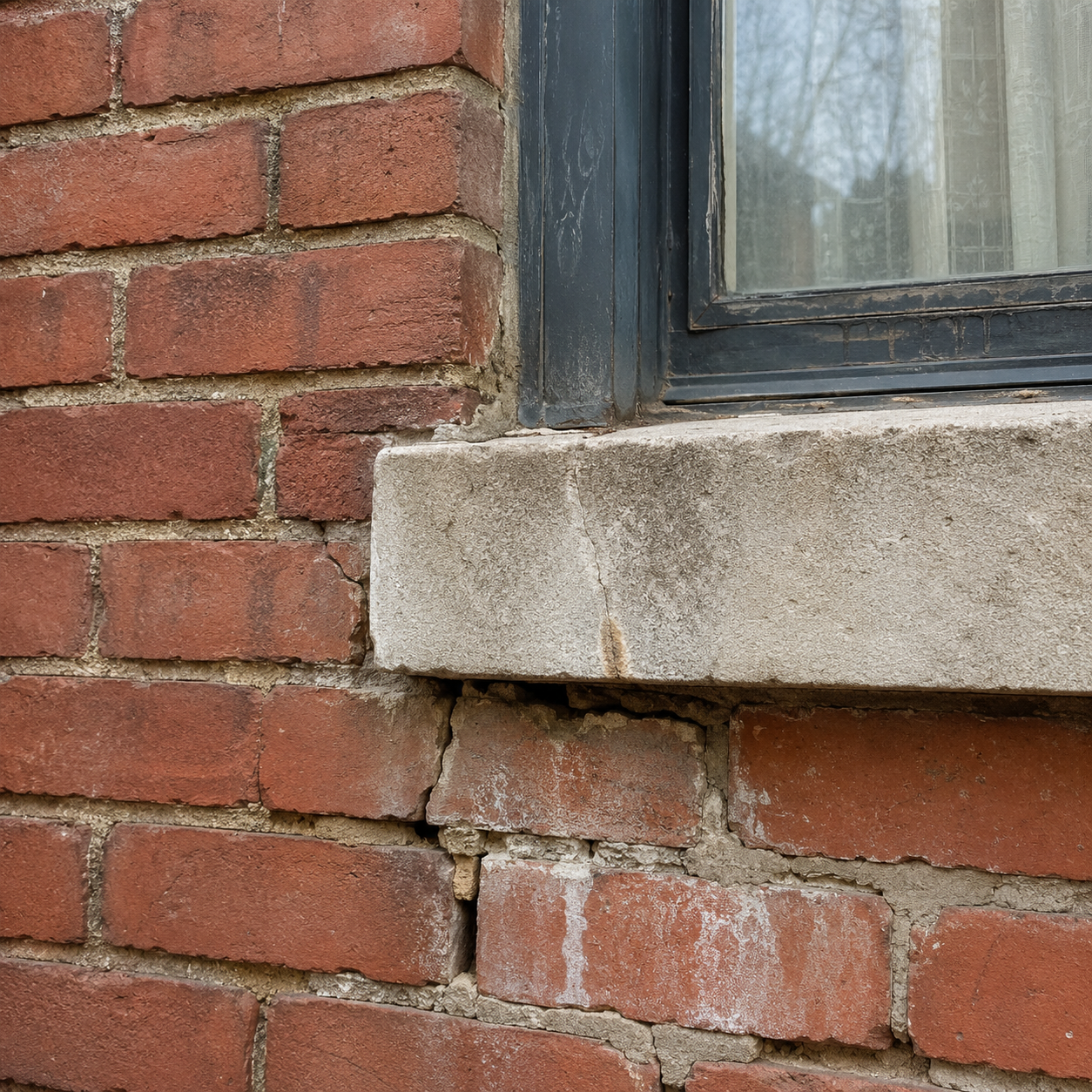
Openings in brick walls are common water-entry points because they interrupt the wall surface. Windows, doors, sills, and lintels all need proper support, drainage, and sealing.
Water may enter around openings when:
- Caulking is cracked, missing, or poorly applied.
- Brick or mortar around the opening is cracked.
- Stone or concrete sills are cracked or sloped poorly.
- Metal lintels have rusted or expanded.
- Gaps form between the frame and the surrounding masonry.
- Old repairs around the opening have failed.
Cracks near windows and doors should not be dismissed as simple cosmetic damage. They can point to movement, rusting lintels, moisture behind the wall, or poor drainage at the opening. If interior stains appear under a window or near a door after rain, the opening and the surrounding masonry should be checked.
Chimneys Are a Common Source of Hidden Water Entry
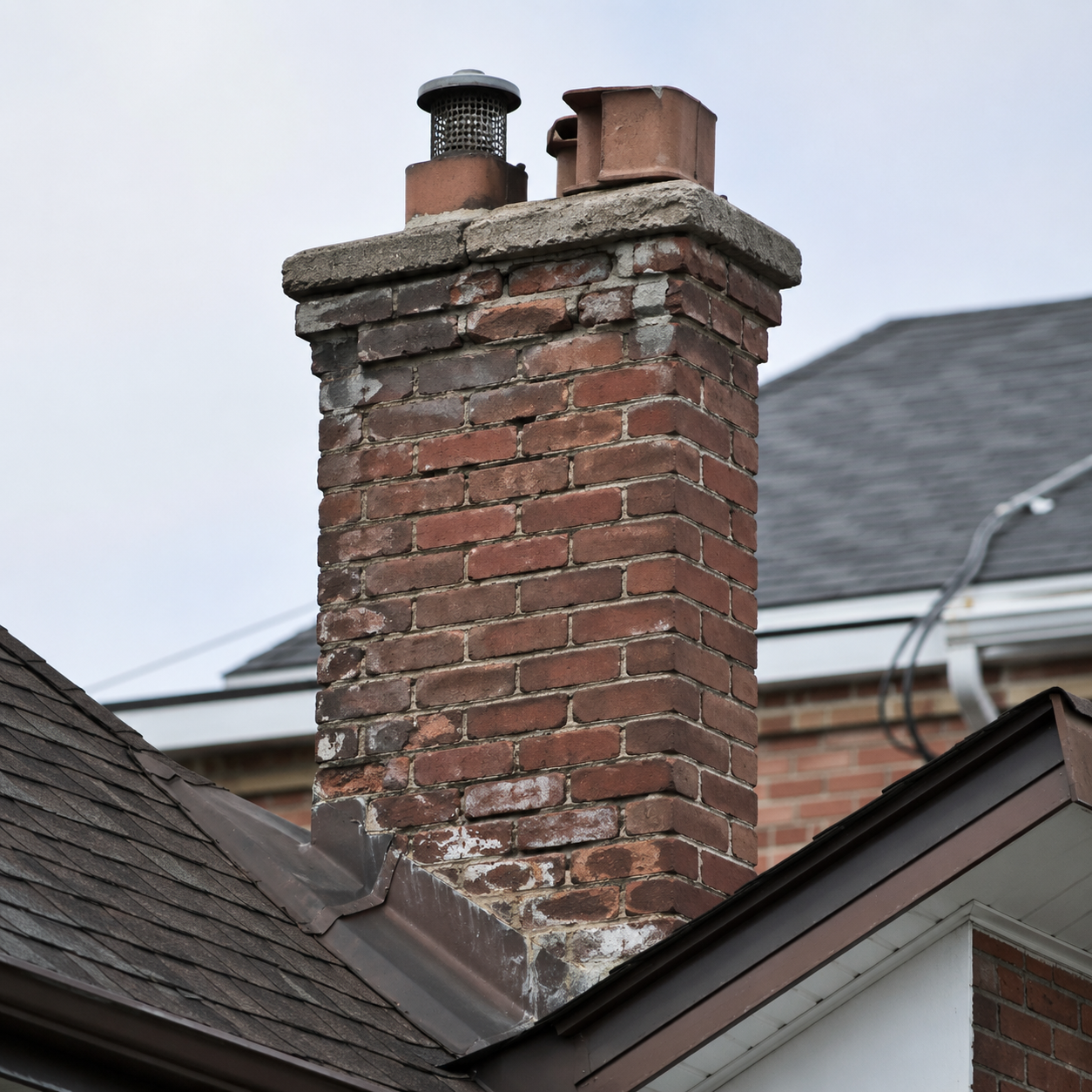
Chimneys are a common source of hidden water entry because they are exposed to rain, snow, wind, ice, and temperature changes from all sides. A chimney can leak at the top, through open mortar joints, through cracked bricks, or where it meets the roof.
Possible chimney water paths include:
- Cracked or missing chimney caps.
- Damaged crown areas.
- Open mortar joints above the roofline.
- Spalling chimney bricks.
- Flashing issues where the chimney meets the roof.
- Loose or deteriorated upper chimney sections.
Chimney water problems may show up as ceiling stains, dampness in the fireplace, brick spalling, mortar loss, or musty smells. If the chimney is involved, the repair may need more than simple repointing. Otto’s Masonry’s chimney repair Toronto page explains repair options for deteriorated mortar, damaged brick, crowns and caps, and weather-related chimney issues.
Paint, Sealers, and Hard Patches Can Trap Moisture
Some older brick walls develop moisture problems after they are painted, sealed, or patched with materials that prevent the wall from drying properly. This does not mean every coating is wrong, but older masonry needs careful treatment.
Traditional brick walls often need to release moisture. If water gets into the wall and a hard or non-breathable surface blocks drying, moisture may stay trapped. Over time, this can lead to spalling, peeling paint, mortar failure, or repeated dampness.
Hard cement patching can also be a problem on older brick if it is stronger and less flexible than the surrounding masonry. Instead of protecting the wall, it can push stress into softer brick or trap moisture at the repair edge.
This is why material compatibility matters. The Ontario Building Code includes provisions related to moisture and masonry construction, but homeowners do not need to read code details to understand the practical point: masonry repairs should help the wall manage water, not trap it inside.
When Repair May Be Enough
Repair may be enough when the water path is limited, the wall is stable, and the damaged area can be corrected without a larger rebuild. Many older Toronto homes only need targeted repair when the issue is caught early.
Repair may be enough when:
- Only a few mortar joints are open or cracked.
- Only a small number of bricks are spalling.
- The wall is straight and stable.
- The moisture source is clear and easy to correct.
- There is no major interior water damage.
- Damage has not spread across a large section of the wall.
- Previous repairs have not repeatedly failed.
For example, a short downspout may be saturating a lower wall area. In that case, the repair may involve improving water discharge, replacing a few damaged bricks, and repointing open joints. If the cause is corrected, the repair is more likely to last.
When a Larger Fix May Be Needed
A larger fix may be needed when water has been getting behind the wall for a long time, the wall is moving, or several masonry problems appear together. Surface patching is not enough if the wall is still taking in water.
A larger repair plan may be needed when:
- Many bricks are spalling in the same area.
- Mortar is severely missing across a large section of the wall.
- The wall is bulging, leaning, or separating.
- Cracks are stair-stepped or widening.
- Interior water stains keep returning.
- Basement dampness appears near damaged masonry.
- A chimney has several moisture-related problems at once.
- Old repairs keep failing in the same location.
In these cases, the repair may need to combine brick replacement, repointing, chimney repair, drainage correction, waterproofing, or partial rebuilding. The right solution depends on where water is entering and how much damage it has caused.
What Homeowners Can Safely Check Themselves
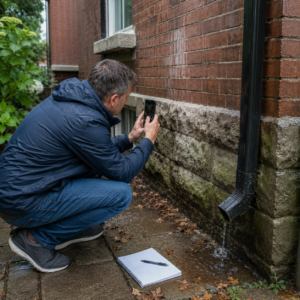
Homeowners can safely do a ground-level visual check before calling a mason. The goal is to collect useful clues without pulling bricks, climbing unsafe ladders, or cutting into the wall.
Check these items:
- Look at the wall after heavy rain and note which areas stay damp.
- Check gutters and downspouts for overflow, leaks, or poor discharge direction.
- Look for missing mortar, spalling brick, and white staining.
- Check whether the soil, patios, or walkways slope toward the house.
- Look around windows and doors for gaps, cracks, or interior stains.
- Check the fireplace, ceiling, or attic area if chimney moisture is suspected.
- Take photos from close-up, mid-range, and wider angles.
- Note whether the damage worsens after winter or heavy rain.
For homes with heritage status or properties in a Heritage Conservation District, homeowners should be careful before making changes to visible exterior masonry. The City of Toronto heritage permit guide explains that designated properties may need a heritage permit before certain changes are made.
When to Call a Mason
You should call a mason when water-related masonry damage is spreading, connected to interior dampness, affecting a chimney, or causing loose brick or deep mortar loss. Moisture problems rarely improve on their own if the water path remains open.
Call a mason if you notice:
- Spalling bricks that keep getting worse.
- Mortar joints that are cracked, recessed, or missing.
- Interior dampness near an exterior brick wall.
- Water stains around windows, doors, ceilings, or fireplaces.
- Bulging, leaning, or separating brickwork.
- Repeated repair failure in the same wall area.
- Chimney leaks, damaged crowns, or open chimney joints.
- Damage near foundations, steps, porches, or lower walls where water collects.
Otto’s Masonry provides masonry services in Toronto, including brick repair, tuckpointing, chimney repair, parging, stone masonry, concrete repair, retaining walls, and basement waterproofing. For the seasonal repair context, Otto’s guide on winter damage and spring repairs for Toronto brick and stone explains why moisture-related masonry damage often becomes more visible after winter.
FAQs About Water Behind Brick Walls
How does water get behind brick walls in older Toronto homes?
Water can get behind brick walls through cracked mortar, spalling bricks, leaking gutters, short downspouts, poor grading, failed flashing, damaged window or door openings, chimney issues, and foundation cracks.
What are the signs of water behind a brick wall?
Common signs include white staining, damp brick, spalling, missing mortar, peeling interior paint, musty smells, water stains, loose bricks, and damage that worsens after rain or during winter.
Can water behind the brick cause structural damage?
Yes. If water keeps entering and freezing inside the wall, it can damage bricks, weaken mortar, loosen masonry, and contribute to movement or larger repair needs over time.
Does tuckpointing stop water from getting behind the brick?
Tuckpointing can help when open or failed mortar joints are the water path. It will not fully solve the problem if water is also entering from gutters, flashing, windows, chimneys, grading, or foundation cracks.
Why do older brick homes in Toronto have more moisture problems?
Older Toronto homes often have aging mortar, weathered brick, past repairs, older drainage conditions, and decades of freeze-thaw exposure. These factors can increase the likelihood of water entry if the masonry is not maintained.
Should I seal my brick wall to stop water?
Sealing is not always the right answer. Some older brick walls need to breathe and dry properly. If moisture is already trapped, the wrong coating or sealer can worsen spalling and dampness.
When should I call a mason for water behind the brick?
Call a mason when dampness keeps returning, brick is spalling, mortar is missing, interior stains appear, chimney leaks are suspected, or damage worsens after winter. The water source should be found before repairing only the surface.
Final Answer
Water gets behind brick walls in older Toronto homes through open mortar joints, damaged bricks, poor drainage, failed flashing, gaps around windows and doors, chimney problems, foundation cracks, and moisture-trapping repairs. The visible damage may be on the brick face, but the real issue is often the path water is taking into or behind the wall.
For homeowners, the smart first step is to look for moisture clues, drainage problems, and damage that worsens after rain or winter. If water entry is ongoing, the repair should address both the damaged masonry and the source of moisture getting behind the wall.