

If you are seeing structural brick issues around your Toronto home, the right contractor is a masonry specialist who can properly inspect the wall, identify the cause of the movement or damage, and recommend the right repair before the problem spreads. Structural brick problems differ from small cosmetic cracks because they can indicate movement, moisture damage, failing mortar, unstable sections, or deeper stress around openings, chimneys, and lower wall areas. For homeowners in Toronto, East York, North York, Rosedale, Forest Hill, The Annex, Etobicoke, The Beaches, and Scarborough, early inspection usually gives you more repair options and better control over cost.
Structural brick damage rarely improves on its own. Once a wall starts shifting, bowing, cracking around key load-bearing areas, or losing support due to failed mortar and brickwork, waiting usually means more repair work later. The right first step is not guessing from the street. It is getting the masonry checked by a contractor who understands how Toronto homes age and how brick failure patterns tend to develop.
What structural brick issues are involved in Toronto homes
Structural brick issues usually mean the masonry is doing more than showing normal age or surface wear. These problems can include step cracking through brick joints, bulging wall sections, movement around windows and doors, leaning chimneys, lower wall displacement, brick separation near porches or foundations, and sections where mortar failure has weakened the wall over time. In many cases, the repair overlaps with brick repair, brick repair and replacement, tuckpointing, chimney repair, or related exterior masonry stabilization.
The important distinction is that structural issues with brick affect how the masonry performs, not just how it looks. A cracked brick face alone may be a small repair. A repeated crack pattern near a window head, a wall pushing outward, or brick that has begun separating from adjacent sections can suggest a more serious condition. That is why inspection matters before anyone starts cutting out bricks or applying a surface patch.
On older Toronto homes, structural brick concerns are often tied to decades of moisture, freeze-thaw wear, aging mortar, and past repairs that did not fully address the cause. A reliable masonry contractor should be able to explain what the damage pattern means and what type of repair is actually appropriate.
Common structural brick problems around Toronto homes
Step cracks running through brick joints
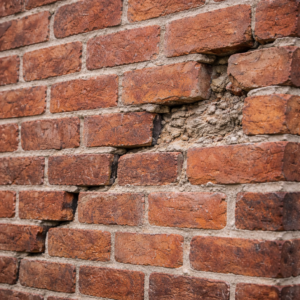
Step cracking often appears as a diagonal crack moving through mortar joints and bricks. Sometimes these points to local movement. Other times, it reflects pressure around openings or stress that has built up over time. The pattern matters, which is why a proper inspection is more useful than guessing from a photo alone.
Bulging or bowing brick walls
A wall that starts pushing outward is a serious warning sign. This can happen when moisture, failed ties, deteriorated mortar, or long-term structural stress weaken the wall’s ability to hold together. Bulging sections usually need more than a cosmetic patch and should be assessed promptly.
Cracking above windows and doors
Brick often starts cracking near windows and doors because those openings create stress points in the wall. In some homes, the issue is tied to aging support elements behind the brick. If the same area keeps cracking or widening, the repair should be based on the cause, not just the visible line in the masonry.
Leaning or unstable chimneys
Chimneys are among the most exposed structural masonry elements of a house. When a chimney starts leaning, shedding bricks, or losing mortar strength, the issue can progress from repairable to unsafe if left too long. Contractors who also handle chimney repair are often better prepared to assess structural masonry at the roof level.
Foundation-level brick movement
Lower wall brickwork sees splashback, salt, snow, and constant moisture exposure. When that area starts cracking, separating, or breaking down, the issue may overlap with parging and foundation coating or basement waterproofing if water is part of the problem.
Mortar loss that weakens the wall system
When mortar joints have receded or broken down badly, the wall can lose both strength and weather resistance. In many cases, tuckpointing is part of the correction, but not every structural problem can be solved with repointing alone. That is why the full wall condition has to be inspected first.
Step-by-step: how we inspect and fix structural brick issues
Initial inspection and quote
We begin by examining the crack pattern, the location of movement, the condition of the surrounding brick and mortar, and any signs of moisture or instability. We also check whether the issue is isolated to one section or extends to other parts of the masonry, such as the chimney, lower wall, or adjacent openings.
After the inspection, we explain what the pattern likely means and the appropriate scope of repair. That may involve targeted brick replacement, rebuilding a damaged section, mortar restoration, stabilization work, or a combination of these repairs. The important part is that the quote reflects the real condition of the masonry, not just the most obvious visible symptom.
Planning, materials, and scheduling
Once the scope is approved, we plan the work based on access, weather, and the structure’s age. On older Toronto homes, matching brick and mortar properly matters because structural repairs should not leave behind obvious visual patching or incompatible materials that create new problems later.
This stage is also where careful contractors stand out. Structural masonry work should be planned methodically, especially when it affects visible front elevations, chimneys, entry areas, or older brick sections where appearance and stability both matter.
On-site work and quality checks
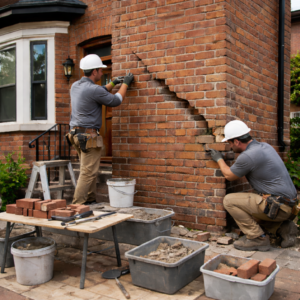
During the work, damaged or unstable material is carefully removed, and the repair is completed using methods suited to the specific issue. If the surrounding masonry is weak, that has to be addressed, too. Before finishing, the repaired section should be checked for stability, consistency, and how well it ties back into the rest of the wall.
Why structural brick issues need a masonry specialist
Structural brick problems are easy to underestimate. A homeowner may see one crack and assume it is minor, while the actual issue is movement or long-term deterioration behind the visible area. A surface patch can hide the symptom for a short time, but it will not solve a wall that is shifting, a chimney that is leaning, or a section where failed mortar has weakened the masonry system.
A masonry specialist is more likely to understand what the crack pattern means, when a repair is enough, and when a section needs a more involved correction. That matters in Toronto homes because the city has many older brick structures, where the right repair depends on age, exposure, past work, and moisture history.
It is also a cost issue. Structural brick damage usually gets more expensive when it is delayed. What starts as a small local repair can turn into broader rebuilding after another season of water intrusion and freeze-thaw stress. If you are unsure about timing, it helps to review when to address masonry issues and how often should you address masonry issues.
Local factors in Toronto that affect structural brick problems
Toronto’s weather is one of the biggest reasons structural brick issues worsen over time. The National Research Council Canada explains that masonry durability is heavily affected by moisture and freeze-thaw cycles, which helps explain why brick-and-mortar damage often accelerates after winter. You can review the NRC Canada freeze-thaw masonry resource here.
The age of Toronto homes also matters. Many homes in areas like East York, The Annex, Rosedale, and Forest Hill have older masonry that needs more careful repair planning and material matching. If a property is designated under heritage rules, exterior masonry changes may require review through the City. The City of Toronto outlines this in the City of Toronto Heritage Permit Guide.
Property safety and upkeep rules matter too. Toronto’s property standards require that exterior walls, chimneys, steps, and related structures be maintained in good repair, which supports prompt action when brick sections become unstable or visibly deteriorated. You can review that here: City of Toronto Property Standards.
Key questions homeowners ask about structural brick issues
How do I know if a brick crack is structural?
No single crack tells the full story on its own. Repeated step cracking, widening gaps, movement near openings, bulging sections, leaning chimneys, or brick separation are stronger warning signs than one small surface crack. The safest way to know is to have the masonry inspected in person.
Can tuckpointing fix structural brick problems?
Sometimes tuckpointing is part of the repair, especially when badly deteriorated mortar has weakened the wall. But not every structural issue is a mortar issue. If the brick has moved, separated, or become unstable, the repair may need more than repointing alone.
Do structural brick issues always mean rebuilding?
No. Some issues can be addressed with targeted repair if they are caught early enough. The problem is assuming that every structural-looking issue is either tiny or catastrophic. The right answer usually sits in the inspection and the actual condition of the masonry.
Who should inspect structural issues in a home’s brickwork?
A masonry contractor with real experience in brick repair, restoration, chimney work, and older Toronto homes is usually the best place to start. It helps if the contractor already handles a wide range of masonry services, because structural issues often overlap with several different repair types.
Should I wait if the crack has not changed much yet?
Usually not. Brick issues tied to moisture and seasonal movement can remain quiet for a while, then worsen quickly after another winter. Early inspection often gives you more choices and a smaller repair scope.
What if my house is older or heritage-style?
Then the repair needs even more care. Older homes often need better mortar compatibility, cleaner brick matching, and more thoughtful repair sequencing. If the property is heritage-designated, you may also need to review City requirements before exterior work begins.
What to expect when you contact us
- You tell us what movement, cracking, or brick damage you have noticed.
- We arrange an inspection or estimate.
- We assess the masonry and determine the type of structural repair needed.
- We provide a clear quote and recommended scope of work.
- We schedule the repair and complete it with care and proper site handling.
The process is straightforward and low-pressure. You get practical advice on what is causing the issue, what should be repaired now, and what could become more expensive if it is delayed. When you are ready to discuss the next step, contact us.
When you should book an inspection for structural brick issues in Toronto
You should book an inspection when you notice step cracks, bulging brickwork, repeated cracking near windows or doors, leaning chimney masonry, loose bricks, deep mortar failure, or any wall section that appears to be shifting. These are all signs that the masonry may be under more-than-normal cosmetic stress.
You should act sooner if the issue affects a front wall, chimney, lower-level foundation brickwork, entry area, or an older visible façade. If you are in Toronto, North York, East York, Etobicoke, The Beaches, Scarborough, Forest Hill, or nearby areas, and the brickwork has begun to show movement or instability, now is the right time to get a clear opinion before the issue worsens.
Who can inspect and repair structural brickwork issues in homes around Toronto?
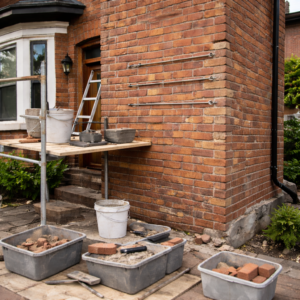
The right contractor to inspect and fix structural brick issues around Toronto homes is a masonry specialist who understands crack patterns, wall movement, mortar failure, chimney instability, and the repair methods needed to properly restore the masonry. We help homeowners across Toronto and nearby neighbourhoods assess brickwork issues, identify the root cause, and carry out repairs that match the home’s condition.
If you are seeing movement, deep cracking, or visible instability in your brickwork, the next step is to have the entire condition assessed properly rather than guessing from the surface. We handle structural brick repairs in Toronto, focusing on clear recommendations, solid workmanship, and repairs that address the root cause. If you want a realistic quote and honest advice, now is a good time to book an estimate.