

Quick Answer
The most common signs your mortar joints are failing include cracks, gaps, sandy or powdery mortar, recessed joints, loose brick, water staining, and mortar pieces falling out. In Toronto, failing mortar joints should be checked early because rain, snow, and freeze-thaw cycles can allow water to penetrate deeper into older brick walls and chimneys. If the brick is still sound, tuckpointing may be enough, but more extensive damage may require brick repair or a larger masonry assessment.
Mortar joints are easy to overlook because they sit between the bricks rather than on the face of the wall. Many homeowners notice brick colour, cracks, or staining first, but the mortar often gives the earliest warning that the wall is starting to weaken.
In a Toronto home, mortar has an important job. It holds the masonry together, helps shed water, allows small movement, and protects the edges of the brick. When mortar starts to crack, shrink, crumble, or fall out, water can more easily enter the wall. Once water gets inside and freezes, small gaps can become bigger masonry problems.
This guide explains the signs your mortar joints are failing, why they happen, what homeowners can safely check, and when tuckpointing, brick repair, chimney repair, or restoration may be needed.
Why Mortar Joints Matter in Toronto Brick Homes
Mortar joints matter because they help protect the wall from moisture while keeping the brickwork stable. When joints fail, the wall becomes more exposed to water, movement, and freeze-thaw damage.
Toronto and GTA homes deal with wet spring weather, summer humidity, fall rain, winter snow, and repeated freezing and thawing. This is hard on masonry, especially older brick homes with original mortar or past repairs that may not match the wall properly.
The City of Toronto provides homeowners with guidance on managing rainwater and melted snow around their properties, including preventing basement flooding and controlling downspouts. This matters because water that repeatedly hits brick walls, chimneys, and foundations can speed up mortar wear. Homeowners can review the City’s basement flooding prevention guidance and mandatory downspout disconnection information to understand why water control around the home matters.
Mortar joint problems are not always urgent on day one, but they should not be ignored. A small gap between bricks can let water enter. A recessed joint can collect moisture. A cracked chimney joint can allow water into the stack. Over time, the damage can spread from the mortar into the brick.
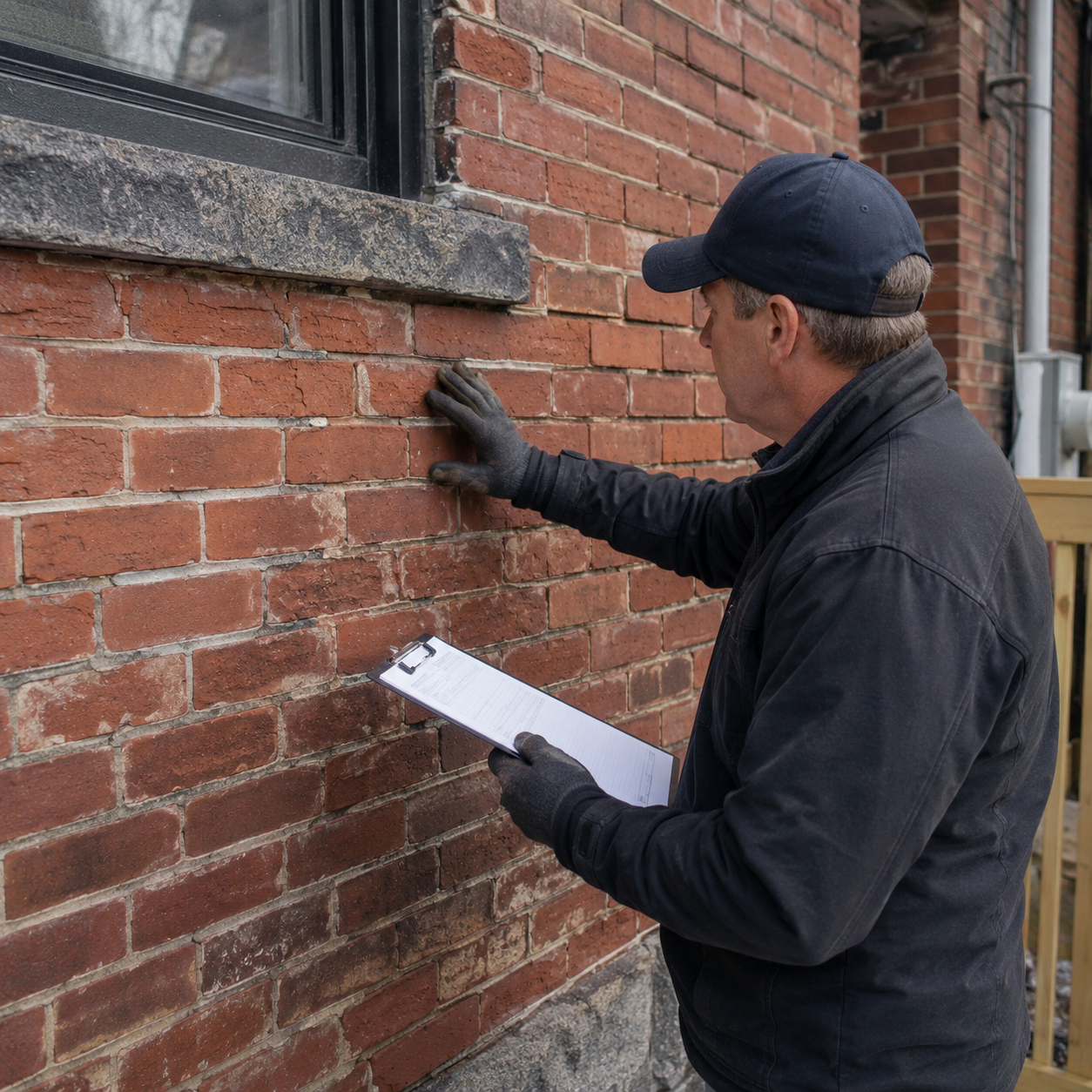
1. Cracks Running Through the Mortar Joints
Cracked mortar is one of the clearest signs that the joints are starting to fail. Cracks may appear as thin lines along horizontal or vertical joints, or as stair-step patterns across the wall.
Small hairline cracks can happen over time, but cracks that widen, spread, or return after patching should be checked more carefully. Mortar cracks can allow water into the wall, especially during Toronto’s wet and freezing seasons.
Watch for:
- Horizontal cracks along bed joints
- Vertical cracks between brick ends
- Stair-step cracks near windows, doors, corners, or foundations
- Cracks around chimney brickwork
- Cracks that appear again after a previous repair
- Cracks paired with damp patches or white staining
A small local crack may only need repointing. A larger stair-step crack may point to movement, moisture, or settlement. The repair should match the cause, not just cover the line.
2. Mortar That Looks Sandy, Powdery, or Crumbly
Sandy or crumbly mortar is a warning sign that the joint is losing strength. If you lightly touch the joint and it turns to powder or falls out, the mortar is no longer doing its job well.
This often happens in older brick homes in Toronto, where mortar has weathered for decades. It can also happen when water repeatedly enters the wall, when a hard previous repair damages softer surrounding material, or when freeze-thaw cycles slowly break down the joint.
Crumbly mortar may show up as:
- Powder on the brick face or ground below the wall
- Loose grains falling from the joint
- Soft mortar that can be scraped easily
- Uneven joint depth across the wall
- Small holes where mortar has washed or fallen away
If the brick is still solid, this is often the stage where tuckpointing in Toronto can help. Proper tuckpointing removes weak mortar and replaces it with compatible new mortar, instead of applying a thin surface patch that may fail quickly.
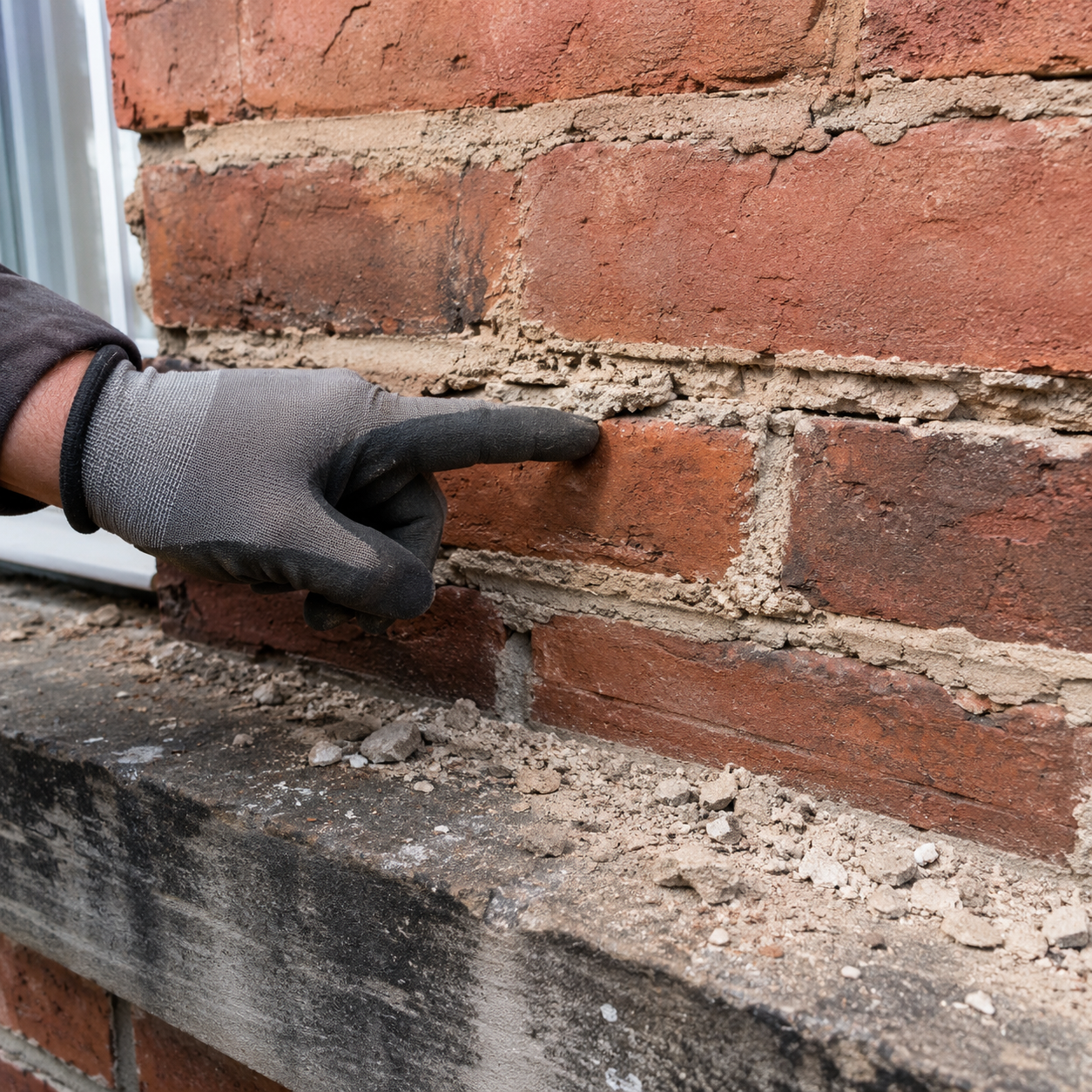
3. Recessed Joints Between the Bricks
Recessed joints happen when the mortar has worn back from the brick face. This leaves the brick’s edges more exposed and can create small channels where water collects.
A slight joint profile may be normal depending on the original masonry style, but a deep recession is different. If the mortar is set far back, uneven, or missing in sections, the wall may be more vulnerable to moisture. In winter, water in recessed joints can freeze and expand, putting more stress on the brick edges.
Recessed joints are common around:
- Older side walls exposed to wind-driven rain
- Chimneys and roofline masonry
- Porch walls and steps
- Lower walls near splashback from walkways or driveways
- Areas below leaking gutters or downspouts
Deeply recessed joints are not just an appearance issue. They can be an early sign that the wall needs repointing before bricks begin to loosen or spall.
4. Gaps, Holes, or Missing Mortar
Missing mortar is a stronger warning sign because it means the joint has opened enough for water, air, insects, or debris to enter. In many cases, gaps start small but grow as water and weather continue to work into the wall.
Gaps may appear between individual bricks, around windows and doors, along porch walls, or near chimney brickwork. On older homes, they may show up where previous repairs have separated from the original mortar.
Look for:
- Open lines between bricks
- Small holes in mortar joints
- Loose mortar pieces on steps, walkways, or roof areas
- Drafts or dampness near interior walls
- Wider gaps near sills, lintels, chimneys, or corners
Open joints should usually be handled before winter. Once snow, ice, and freezing rain get into the wall, the damage can spread beyond the original gap.

5. Loose Brick or Brick Movement
A loose brick can mean the mortar joints are no longer holding the wall properly. This is more serious than surface cracking because it may affect stability, safety, and water resistance.
Loose bricks are often found near chimneys, porch edges, steps, retaining areas, and walls where mortar has been missing for a long time. Sometimes the brick moves slightly when touched. In other cases, the wall looks uneven, bowed, or separated in one area.
Warning signs include:
- A brick that shifts or sounds hollow
- Brick edges that no longer line up with nearby courses
- Loose brick around a chimney top
- Gaps around individual bricks
- Cracks that surround a loose section
- Pieces of mortar or brick falling from the wall
If bricks are loose, do not try to remove or reset them yourself. The surrounding wall may also be weak. A mason can check whether the area needs repointing, selective brick repair, or a more detailed assessment.
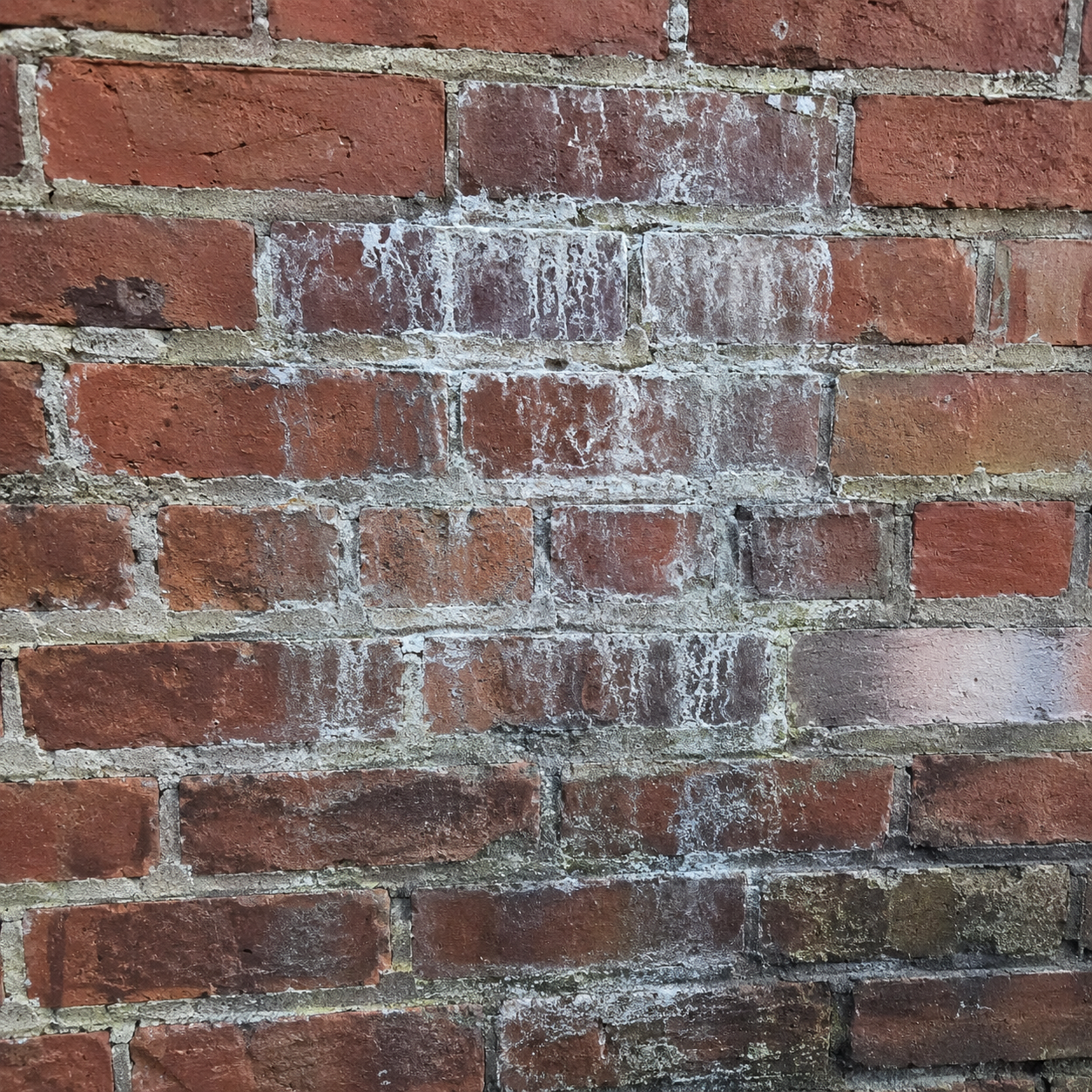
6. Water Staining, Damp Areas, or White Deposits
Water staining near mortar joints can mean moisture is entering or moving through the masonry. White deposits, often called efflorescence, may appear when moisture carries salts to the surface.
The white stain itself may not be the main problem. The bigger concern is why moisture is moving through the wall. If the stain returns after cleaning, the source of water has likely not been corrected.
Moisture-related signs include:
- White powdery staining on or below mortar joints
- Dark, damp patches after rain
- Staining around chimneys, sills, or lower brick walls
- Interior dampness near exterior masonry
- Mortar joints that stay wet longer than the nearby areas
- Recurring stains after cleaning or patching
Water should be handled at the source where possible. Gutters, downspouts, roof runoff, grading, sills, caps, and flashing can all affect how much moisture reaches the wall. If moisture is entering near a chimney, chimney repair in Toronto may be part of the solution.
7. Failed Past Mortar Repairs
Past repairs can fail when they were only surface patches, when the wrong mortar was used, or when the cause of the damage was not corrected. Older Toronto homes often show layers of repairs from different decades, and not all of them age well.
Failed mortar repairs may look like:
- Newer mortar is cracking away from older joints
- Hard, cement-heavy patches beside softer old brick
- Mortar that does not match the surrounding colour or texture
- Surface smears over the brick face
- Patches that fall out after one or two winters
- Damage is spreading around the repaired area
Hard or incompatible mortar can sometimes make the brick take more stress than it should. For older or heritage-sensitive masonry, homeowners can review Parks Canada’s Standards and Guidelines for the Conservation of Historic Places in Canada to understand why compatible repair methods matter for older building materials.
If a visible front facade, older brick wall, or heritage-style property has several failed patches, the better approach may be brick restoration rather than another quick repair.
Why Mortar Joints Fail
Mortar joints usually fail because of age, moisture, freeze-thaw cycles, movement, poor drainage, or incompatible repairs. Often, more than one cause is involved.
Common causes include:
- Natural aging of older mortar
- Repeated wetting and drying
- Water entering through open joints or poor roof runoff control
- Freeze-thaw cycles expand trapped moisture
- Hard mortar used beside softer old brick
- Settlement or small wall movement
- Poor past patching
- The chimney is exposed to the weather from all sides
The cause matters because it affects the repair. If the joint failed from age alone, repointing may be enough. If the joint failed because water is constantly running down the wall, drainage or roofline issues may also need attention.
Repair May Be Enough When…
A smaller repair may be enough when the mortar damage is local, and the surrounding brick is still solid. This is often the best time to act because the repair can stay focused rather than becoming a larger brick replacement project.
Repair may be enough when:
- Only one section has cracked or recessed joints
- The brick faces are still solid
- There are no loose or shifting bricks
- The wall dries normally after rain
- The water source is easy to correct
- Past patching can be removed cleanly
- The damage has not spread into nearby areas
In these cases, repointing or tuckpointing may restore the joint and reduce water entry. It should still be done properly, with deteriorated mortar removed and replaced with compatible material.
A Larger Fix May Be Needed When…
A larger masonry repair may be needed when failing mortar has already compromised the brick, chimney, or wall’s stability. Waiting too long can allow water to move deeper into the masonry.
A larger repair may be needed when:
- Several wall sections have failing joints
- Bricks are loose, cracked, or spalling
- The chimney is deteriorating or leaking
- Cracks keep returning after patching
- The wall is bulging, bowing, or visibly uneven
- Water stains appear inside the home
- Old repairs are damaging the surrounding masonry
If you are unsure whether the issue can wait, this related guide on when to address masonry issues can help explain why timing matters before another wet or freezing season.
What Homeowners Can Safely Check Themselves
Homeowners can safely do a visual check from the ground without scraping, grinding, pressure washing, or pulling out mortar. The goal is to notice early signs and take clear photos before asking for advice.
Check these areas:
- Mortar joints near the bottom of walls
- Joints below windows, sills, and roof edges
- Brickwork around chimneys
- Porch walls, steps, and exposed corners
- Areas below gutters and downspouts
- Old patch repairs
- Any wall section that stays damp after rain
Take one photo from far enough away to show the whole wall, then take close-up photos of the failing joints. Photos after rain can also help show whether water is part of the issue.
Do not seal, paint, or patch failing mortar before the wall is assessed. These steps can hide the problem and, in some cases, trap moisture inside the masonry.
When to Call a Mason
Call a mason when mortar joints are cracked, missing, powdery, deeply recessed, or allowing water into the wall. You should also call sooner if there are loose bricks, chimney damage, spalling, or interior dampness.
A mason can help determine whether the wall needs tuckpointing, selective brick repair, chimney work, or a larger restoration plan. This is especially important for older Toronto homes, where brick-and-mortar compatibility matters.
If the repair may involve structural changes, major alterations, or a heritage property, homeowners should also review the City of Toronto’s building permit guidance before approving larger work.
FAQs About Failing Mortar Joints
What are the signs that mortar joints are failing?
Signs of failing mortar joints include cracks, missing mortar, recessed joints, sandy or powdery texture, loose brick, water staining, white deposits, and mortar pieces falling out. These signs are common on older brick homes and chimneys in Toronto.
When should mortar joints be repaired?
Mortar joints should be repaired when they are cracked, loose, deeply recessed, missing, or allowing water into the wall. In Toronto, it is best to address failing joints before winter freeze-thaw cycles worsen the damage.
Is tuckpointing the same as repairing mortar joints?
Tuckpointing is a common way to repair failing mortar joints. It involves removing deteriorated mortar and replacing it with compatible new mortar so the wall sheds water better and holds together properly.
Can failing mortar joints cause brick damage?
Yes, failing mortar joints can damage brick because open or recessed joints allow water to reach deeper into the wall. Once moisture freezes, it can contribute to spalling, cracking, and loose brick.
Can I patch mortar joints myself?
Small cosmetic patching may look simple, but poor mortar repairs can fail quickly or damage older brick. If the joints are deep, widespread, near a chimney, or linked to water entry, it is safer to have a mason assess the wall.
Why does mortar keep falling out after repairs?
Mortar may keep falling out if the old mortar was not removed properly, the joint was not cleaned, the new mortar was incompatible, or the water source was not corrected. Surface patches often fail faster in Toronto weather.
How often should I check mortar joints?
Toronto homeowners should visually check mortar joints at least twice a year, usually in spring and fall. These checks help catch winter damage, water entry, and failing joints before they spread into larger masonry problems.
Final Answer
Failing mortar joints often show up as cracks, gaps, powdery mortar, recessed joints, loose brick, water staining, or old repairs that keep breaking down. In Toronto, these signs should be checked early because moisture and freeze-thaw weather can turn joint failure into brick damage, chimney problems, or wider wall repairs. If the brick is still sound, tuckpointing may be enough, but loose brick, spalling, leaks, or wall movement may need a broader masonry repair plan.