

Quick Answer
Older Toronto homes need the right mortar because the mortar must work with the age, strength, porosity, and movement of the existing brick or stone. If the replacement mortar is too hard, too dense, or poorly matched, it can trap moisture and force damage into the surrounding masonry. In Toronto’s freeze-thaw climate, compatible mortar helps older walls shed water, dry properly, and avoid avoidable brick damage.
Many older Toronto homes were built with masonry systems that behave differently from newer construction. The brick may be softer, the joints may have aged through decades of weather, and previous repairs may have introduced mortar that does not match the original wall. From the street, the repair might look acceptable for a short time. The real test is whether the wall can withstand moisture, seasonal movement, and freezing temperatures without the bricks being damaged.
This is where mortar selection matters. Mortar is not just the grey or beige material between bricks. It plays a practical role in protecting the wall, managing moisture, allowing small movement, and helping the masonry age in a controlled way. When the wrong mortar is used, the repair can become part of the problem.
This guide explains why older Toronto homes may need more careful mortar selection, what warning signs homeowners should watch for, why hard patch repairs can be risky, and when it makes sense to call a mason for proper assessment.
Why Mortar Matters on Older Toronto Homes
Mortar matters because it is supposed to support the masonry without overpowering the brick or stone. In older homes, this balance can be more important than homeowners realize.
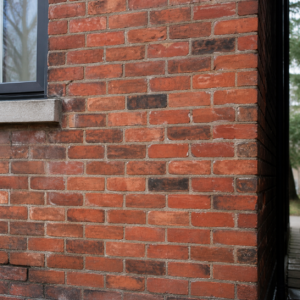
Toronto has many older brick homes in neighbourhoods such as East York, The Annex, Rosedale, Forest Hill, The Beaches, North York, Etobicoke, and Scarborough. These homes may have older brick, weathered mortar, double-brick wall assemblies, chimneys exposed to decades of freeze-thaw damage, and past repairs completed with different materials. Some walls may still perform well. Others may show open joints, spalling brick, moisture staining, or hard patch repairs that stand out from the original work.
The National Research Council Canada’s guidance on repointing mortars for older masonry explains that all parts of repointing, from mortar mix selection to joint preparation, installation, and curing conditions, can affect the long-term performance of older masonry. That is the key point for homeowners: the choice of mortar is not just a colour decision.
The City of Toronto’s Property Standards bylaw also expects exterior walls and their components to be kept in good repair, weather-tight, and free from loose or unsecured materials. In practical terms, failed mortar, loose brick, and moisture-damaged masonry are not just visual concerns. They can affect how well the exterior wall protects the home.
What the Right Mortar Needs to Do
The right mortar should protect the wall, bond properly, allow the masonry to manage moisture, and be compatible with the existing brick or stone. It should not be chosen only because it looks strong or dries quickly.
Good mortar selection considers:
- The age and condition of the brick or stone.
- The strength and hardness of the existing mortar.
- How much moisture the wall is exposed to.
- Whether the wall needs to dry outward after rain or snow.
- The colour, texture, and joint profile of the original work.
- Whether the repair is on a chimney, wall, porch, foundation area, or heritage-style façade.
- How the wall has performed after past repairs.
In many older homes, the goal is not to make the mortar as hard as possible. The goal is to make it suitable for the surrounding masonry. If the mortar is stronger than the brick in the wrong way, the brick may crack, spall, or deteriorate while the hard mortar remains in place.
Problem Signs Homeowners Should Watch For
Older mortar often gives warning signs before the wall has a serious problem. Homeowners should look for cracked, missing, powdery, recessed, mismatched, or overly hard mortar repairs.
Common signs include:
- Mortar joints that are cracked, loose, or falling out.
- Powdery mortar that rubs away easily.
- Joints that are deeply recessed from the brick face.
- Bricks that are flaking, spalling, or breaking along the edges.
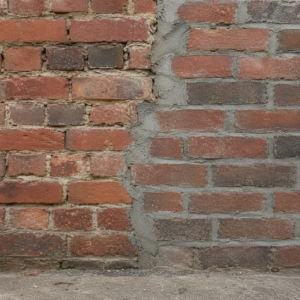
- Patch repairs that are much harder, darker, lighter, or smoother than the original mortar.
- Vertical or stair-step cracking through joints.
- White staining, damp patches, or repeated moisture marks.
- Chimney mortar that looks washed out, cracked, or missing near the top courses.
- Previous repairs keep failing after winter.
If you see failing mortar and damaged brick together, the issue may not be limited to the joints. It may involve water entry, material mismatch, age-related deterioration, or freeze-thaw damage. Otto’s Masonry provides tuckpointing in Toronto for mortar joint repair, repointing, and heritage-style masonry repair where the mortar needs to match the existing wall more carefully.
Why Hard Mortar Can Damage Older Brick
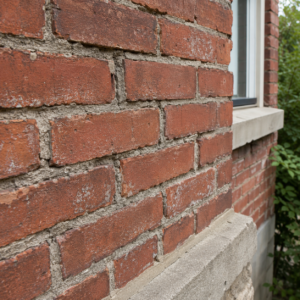
Hard mortar can damage older brick when it is stronger or less breathable than the masonry around it. Instead of allowing small movement and moisture release through the joint, the repair may push stress into the brick face.
This is one of the most common problems with poor older-home masonry repairs. A hard patch may look clean when first installed, but it can behave differently from the original wall. If moisture becomes trapped or the wall shifts due to seasonal changes, the brick may begin to crack or spall while the hard mortar remains intact.
This does not mean every modern mortar is wrong or that every older home always needs lime mortar. That would be too simple. The better answer is that older masonry should be assessed before repair. The right mix depends on the existing brick, existing mortar, exposure, wall condition, and the type of work being done.
The Canada Masonry Design Centre has also discussed that repointing mortar for older masonry in the Canadian climate should be durable, practical to apply, and not compromise the durability of the existing masonry. That balance is exactly why older Toronto homes need more careful mortar decisions than a quick surface patch.
How Toronto Weather Affects Mortar Choice
Toronto’s weather affects mortar choice because masonry must contend with rain, snow, ice, spring thaw, summer heat, and repeated freeze-thaw cycles. Mortar that cannot manage moisture well may fail early or contribute to brick damage.
When water gets into weak joints and freezes, it expands. Over time, this can widen cracks, loosen mortar, and damage brick faces. If the repair mortar is too dense or traps moisture beneath the surface, the wall may remain wet longer and become more vulnerable in freezing weather.
Chimneys, lower brick walls, porches, steps, and foundation-facing masonry are especially exposed. Chimneys take the weather from all sides. Lower walls receive splashback from rain, snowmelt, and salted surfaces. Porch masonry and steps often hold snow and ice. These local conditions matter when choosing how to repair the joints.
Otto’s has covered related seasonal issues in its guide to winter damage and spring repairs for Toronto brick and stone, including how freeze-thaw weather can affect brick, stone, mortar, and other masonry surfaces.
Repair Options for Older Mortar Problems
The right repair option depends on whether the problem is limited to the mortar joints or connected to damaged brick, water entry, chimney deterioration, or broader restoration needs.
- Spot repointing: Used when only a few joints are cracked, recessed, or missing.
- Full section repointing: Better when mortar failure is widespread across a wall, chimney, or porch area.
- Heritage-style mortar matching: Useful when older brick needs a compatible mortar in strength, colour, texture, and permeability.
- Brick replacement with repointing: Needed when damaged mortar appears alongside cracked, loose, or spalling brick.
- Chimney tuckpointing or rebuilding: Needed when upper chimney courses, crowns, caps, or mortar joints are failing.
- Moisture correction: Needed when gutters, downspouts, grading, flashing, or trapped moisture keep damaging the masonry.
If bricks are already cracked, loose, or spalling, mortar repair alone may not be enough. Otto’s brick repair Toronto service may be needed when damaged brickwork and mortar joints must be replaced or restored.
Homeowner Decision Guide
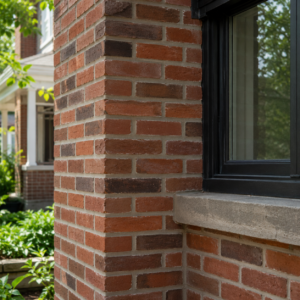
Minor mortar issues may only require targeted repair, but widespread mortar failure, spalling brick, water intrusion, or repeated patch failures can indicate a larger masonry concern. The key is to understand whether the mortar is simply worn or whether the wall is reacting to moisture, poor material choices, or age-related movement.
Targeted mortar repair may be enough when:
- Only a few joints are cracked or missing.
- The surrounding bricks are solid and not flaking.
- The wall is not bulging, leaning, or shifting.
- The damage is not tied to obvious water entry.
- Past repairs have not repeatedly failed in the same area.
A larger repair may be needed when:
- Mortar is failing across a large section of the wall or chimney.
- Bricks are spalling, loose, cracked, or crumbling.
- There are hard patches surrounded by damaged brick.
- Water stains or leaks appear inside or near the wall.
- The chimney has loose upper courses or widespread mortar loss.
- Repairs keep failing after winter.
For older Toronto homes, the question is not only “does the mortar need replacing?” A better question is “what mortar will work with this wall?” That difference can affect how long the repair lasts and whether the surrounding brick stays protected.
What Homeowners Can Safely Check Themselves
Homeowners can safely inspect visible mortar from the ground without scraping, grinding, climbing, or removing brick. A simple visual check can help you decide whether it is time to ask for a professional opinion.
Look for missing mortar, deep gaps, powdery joints, brick flakes, white staining, damp patches, and repairs that look much harder or smoother than the surrounding wall. Check lower walls, porch areas, visible chimneys, garden-facing walls, and areas near downspouts.
Take photos after winter and again after spring rain. If the same area keeps losing mortar, if more brick faces begin to flake, or if patch repairs are failing faster than the rest of the wall, the repair may need more than another surface coat of mortar.
Do not grind out joints or apply new mortar over loose old mortar without understanding the wall. Poor joint preparation can damage brick edges, and the wrong mortar can make future repairs harder.
When to Call a Mason
You should call a mason when mortar is missing, powdery, deeply cracked, repeatedly failing, or appearing alongside damaged brick. It is also wise to call when the repair is on a chimney, an older façade, a porch, a foundation-facing wall, or any area exposed to repeated moisture.
A proper masonry assessment should consider the existing brick, existing mortar, joint depth, wall exposure, drainage, water source, previous repairs, and the desired finish. On older Toronto homes, matching the mortar’s behaviour can be just as important as matching the colour.
If the mortar issue is related to a chimney, Otto’s chimney repair Toronto service may be relevant. Chimneys are often where incompatible mortar, weather exposure, and freeze-thaw damage show up first.
If you are unsure whether your older brick home needs spot repointing, tuckpointing, brick repair, or a broader restoration approach, you can contact Otto’s Masonry to discuss the condition of your masonry and the next practical step.
FAQs About Mortar on Older Toronto Homes
Why do older Toronto homes need different mortar?
Older Toronto homes may have softer brick, older mortar, and masonry assemblies that require moisture management different from that of newer construction. The replacement mortar should be compatible with the existing wall, not simply as hard as possible.
Is hard mortar bad for old brick?
Hard mortar can be a problem if it is stronger or less breathable than the surrounding brick. In older walls, overly hard mortar can contribute to brick cracking, spalling, or moisture trapping.
Do all older homes need lime mortar?
No. Some older masonry may require a lime-based or more compatible mortar, but the correct choice depends on the brick, existing mortar, wall condition, exposure, and repair goal. The wall should be assessed before deciding.
How can I tell if my mortar is failing?
Failing mortar may look cracked, powdery, recessed, loose, missing, or washed out. It may also appear with spalling brick, white staining, damp patches, or repeated winter damage.
Can I repoint old brick myself?
Small cosmetic patches may look simple, but repointing old brick can damage the wall if the joints are removed poorly or the wrong mortar is used. Older masonry should usually be assessed before repair.
Does mortar colour matching matter?
Yes, but colour is only one part of the repair. Strength, texture, joint profile, permeability, and compatibility with the existing brick are also important.
When should old mortar be replaced?
Old mortar should be replaced when it is cracked, missing, powdery, deeply recessed, allows water to enter, or fails over a larger area. It should be repaired before freeze-thaw cycles cause more severe damage to the brick.
Final Answer
Older Toronto homes need the right mortar because the repair must work with the existing brick, not against it. Mortar that is too hard, too dense, poorly matched, or badly installed can trap moisture, stress older brick, and cause further damage over time.
The right mortar choice depends on the age of the masonry, the condition of the wall, the existing mortar, moisture exposure, and the repair goal. If your older Toronto home has cracked joints, powdery mortar, spalling brick, hard patch repairs, or repeated winter damage, a proper masonry assessment can help prevent a small repair from becoming a larger restoration problem.