

If you are looking for masonry services that include tuckpointing in Toronto, the short answer is that tuckpointing is often part of brick repair, chimney repair, brick restoration, wall restoration, and other masonry repairs where mortar joints have started to crack, recede, or fail. Toronto homes experience moisture, freeze-thaw stress, and age-related masonry wear, so failing mortar is one of the most common problems homeowners face. For homeowners in Toronto, East York, North York, Rosedale, Forest Hill, The Annex, Etobicoke, The Beaches, and Scarborough, tuckpointing is often the service that helps stop water entry and prevent larger masonry repairs later.
What tuckpointing involves in Toronto
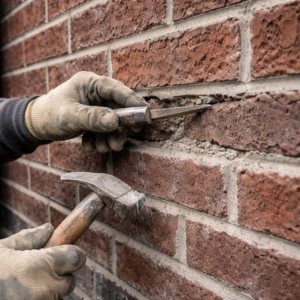
Tuckpointing in Toronto is the process of removing damaged or deteriorated mortar between bricks or stones and replacing it with new mortar that restores the masonry’s strength, appearance, and weather resistance. It is one of the most important maintenance and repair services for brick homes because mortar joints often fail before the bricks themselves do.
In practical terms, tuckpointing is rarely a stand-alone issue with no wider context. When mortar joints are failing, there is usually a reason. Moisture may be getting into the wall. The masonry may have gone through years of freeze-thaw wear. A chimney may be fully exposed above the roofline. A porch wall may be taking on repeated water and salt exposure. That is why tuckpointing is usually part of a broader masonry repair service rather than a completely separate concern.
For Toronto homeowners, this matters because bad mortar does more than affect how the wall looks. Open joints give water more room to enter, which can lead to brick damage, interior moisture problems, accelerated surface wear, and more widespread structural deterioration. Good tuckpointing restores the joints properly and helps the surrounding masonry last longer.
Which masonry services in Toronto commonly include tuckpointing
Brick repair services
Brick repair in Toronto often includes tuckpointing because damaged bricks and damaged mortar usually appear together. When a wall has cracked bricks, spalling surfaces, or weathered sections, the mortar joints around those bricks are often weak as well. Replacing a few bricks without addressing the failed mortar would leave the repair incomplete.
Brick repair and replacement projects
On projects that involve brick repair and replacement, tuckpointing is commonly used to restore the surrounding joints so the new masonry ties in properly with the existing wall. This is especially important on front-facing elevations and older Toronto homes where visible patchwork stands out quickly if the mortar is ignored.
Brick restoration services
Brick restoration frequently includes tuckpointing because it is about bringing aged or worn masonry back to sound condition, not just fixing a single visible defect. If a brick wall, façade, or heritage-style surface has lost mortar strength, tuckpointing is often a key step in the restoration process.
Chimney repair and chimney restoration
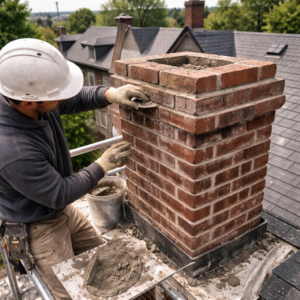
Chimney repair in Toronto often includes tuckpointing because chimneys are exposed on all sides and usually deteriorate faster than lower wall sections. Mortar joints on chimneys break down from rain, snow, wind, and freezing temperatures. In many cases, repointing the joints is a key step in preventing further chimney damage before brick replacement or rebuilding becomes necessary.
Stone masonry repairs
Stone masonry repairs can also include tuckpointing when the mortar joints between stone units begin to crack, wash out, or weaken. While the materials are different, the principle is the same. If the joints fail, water can get in more easily, and the surrounding masonry deteriorates faster.
Retaining wall repairs
Retaining wall repair can include tuckpointing when mortar joints are part of the wall system and have started to break down. This matters because retaining walls deal with moisture pressure, ground movement, and seasonal stress, which means small joint failures can turn into bigger repair issues over time.
Porch, step, and entry masonry repairs
Front porches, steps, and entry walls often need mortar repair as part of broader masonry work. In some cases, that means tuckpointing damaged joints around brick features or adjacent masonry surfaces. These projects may overlap with steps and porches or concrete repair when more than one material is involved.
Common problems tuckpointing helps solve in Toronto
Mortar joints that are cracked, loose, or missing
This is the clearest sign that tuckpointing may be needed. Once joints start to break down, the masonry becomes more susceptible to moisture and movement. In Toronto, that damage often worsens quickly after winter.
Water getting into brick walls or chimneys
Open mortar joints give water an easy entry point. Once moisture gets in, freeze-thaw cycles can begin damaging surrounding bricks and further weaken the wall. Tuckpointing helps close those pathways and improve the wall’s weather resistance.
Brick surfaces are starting to spall or flake
When brickwork starts to break down, damaged mortar is often part of the problem. Repointing the joints alone will not fix every spalled brick, but it is often necessary as part of a complete repair. This is why tuckpointing and brick repair usually go hand in hand.
Chimney wear that keeps returning
Many chimneys are patched once and then start failing again because the underlying mortar deterioration was never properly addressed. On exposed chimneys, proper tuckpointing can make a big difference in how long the repair lasts.
Older walls that look worn and weathered
On older Toronto homes, weak mortar joints can make the whole wall look tired, even when most of the bricks are still usable. In those cases, tuckpointing is often one of the most effective ways to improve both performance and appearance without moving straight to a rebuild.
Step-by-step: how we handle masonry projects that include tuckpointing
Initial inspection and quote
We begin by assessing the full condition of the masonry area, not just the open joints. We look at brick condition, mortar loss, signs of moisture, surrounding wear, structural movement, and the age of the materials. This helps us determine whether tuckpointing is the main solution or one part of a larger repair.
After the inspection, we provide a clear quote and explain what work is needed. That might include tuckpointing alone, or it may include brick replacement, restoration, chimney repair, or another masonry service, depending on what the wall or structure is actually showing.
Planning, materials, and scheduling
Once the scope is approved, we select materials and repair methods that suit the masonry’s age and condition. On older Toronto homes, mortar compatibility matters. The wrong mortar can create performance issues and an obvious visual mismatch, especially on heritage-style or front-facing brickwork.
We also plan the work around the weather and site access. Mortar repairs need the right conditions to cure properly, so good scheduling helps the finished joints perform better over time.
On-site work and quality checks
During the work, failed mortar is removed carefully and replaced with new mortar suited to the project. If brick replacement or other repairs are part of the scope, those are completed in a way that integrates properly with the restored joints. Good tuckpointing should not look rushed or overly patched. It should fit the wall naturally and support the surrounding masonry.
Before finishing, we review the joints, surrounding materials, and overall repair quality so the completed work is sound, consistent, and ready for local weather conditions.
Why choose a Toronto masonry specialist instead of treating tuckpointing as a small patch job
Tuckpointing may look simple from the ground, but poor mortar work fails quickly. If the wrong mortar is used, if the joints are not prepared properly, or if the surrounding masonry damage is ignored, the repair often breaks down sooner than it should. That is why tuckpointing is best handled by a masonry specialist rather than treated like a quick cosmetic fix.
A Toronto masonry specialist understands when tuckpointing is sufficient and when it should be combined with other services such as brick replacement, chimney repair, or restoration. That matters because many masonry issues are connected. A wall with bad joints may also have moisture damage. A chimney with failing mortar may also have damaged bricks. A front porch may have joint loss and movement simultaneously.
There is also a long-term cost point here. Many homeowners wait until mortar loss becomes obvious, then choose the smallest patch possible. In practice, that often leads to more repair work later. If you want a clearer sense of timing, our posts on how often should you address masonry issues and when to address masonry issues are worth reading.
Local factors in Toronto that affect tuckpointing and mortar repair
Toronto’s weather is a major reason mortar joints fail. Freeze-thaw exposure puts steady pressure on porous masonry materials when trapped water freezes and expands. Mortar joints are often the first place where that damage becomes visible.
The age of many Toronto homes also matters. Older brick houses in areas like The Annex, East York, Rosedale, and Forest Hill often have masonry that needs a more careful approach to repointing and restoration. For designated or protected homes, exterior work may also need to comply with the City of Toronto heritage permit guide.
Maintenance standards matter too. Exterior walls, chimneys, steps, and walks need to remain in sound condition, and Toronto owners can review the City’s property standards for exterior walls, chimneys, steps, and walks for general guidance. In practical terms, once mortar starts failing, the better move is usually to inspect it early rather than wait for the surrounding brickwork to start failing too.
Key questions homeowners ask about tuckpointing in Toronto
Is tuckpointing its own service or part of another masonry repair?
It can be both, but in many cases, it is part of a broader masonry repair. If the only issue is deteriorated mortar, tuckpointing may be the main service. If bricks, chimneys, or walls are also damaged, tuckpointing is often part of a larger repair scope.
Does brick repair always include tuckpointing?
Not always, but often. If the surrounding mortar joints are weak or failing, tuckpointing is usually included so the repair is complete. Replacing bricks without restoring bad mortar would usually leave the wall vulnerable.
Can chimney repair include tuckpointing?
Yes. In fact, chimney repair is one of the most common services, including tuckpointing, because chimneys are so exposed to the weather. Mortar joints on chimneys often need repointing before more serious damage sets in.
Does tuckpointing help stop water damage?
Yes, it often does. Open mortar joints allow moisture to enter the wall or chimney more easily, so restoring them helps reduce water entry and the damage that follows. That said, the full source of the moisture should still be assessed if the problem is recurring.
How do I know when tuckpointing is no longer enough?
If the bricks themselves are breaking down, if the wall is moving, or if the chimney or masonry section is unstable, tuckpointing alone may not be enough. In those cases, you may also need brick replacement, restoration, or partial rebuilding.
What time of year is best for tuckpointing in Toronto?
Spring, summer, and fall are usually the best seasons because conditions are more stable for mortar work. If you want a better sense of timing, our article on when is the best time to do masonry repairs explains what homeowners should consider.
What to expect when you contact us
- You tell us what masonry problem you have noticed.
- We arrange an inspection or estimate.
- We assess whether tuckpointing is the main solution or part of a broader repair.
- We provide a clear quote and recommended scope of work.
- We schedule the project and complete the repair with care and proper site handling.
The process is simple and low-pressure. You get honest advice on what the mortar condition is telling us, what should be repaired now, and what could become more expensive if it is ignored. When you are ready to talk through your project, contact us.
When you should book an inspection or quote for tuckpointing in Toronto
You should book an inspection when you see cracked mortar, open joints, sandy or crumbling mortar, water staining near brickwork, chimney joint failure, or older walls that look weathered and loose. These are signs that the mortar is no longer doing its job properly.
You should act sooner if the damage is on a chimney, front wall, porch, retaining wall, or any highly exposed area where moisture and seasonal movement are likely to accelerate deterioration. If you are in Toronto, North York, East York, Etobicoke, The Beaches, Scarborough, Rosedale, or nearby areas, and the mortar has begun to fail, now is the time to get a clear opinion before the repair becomes more extensive.
Which masonry services include tuckpointing in Toronto?
The masonry services most often include tuckpointing in Toronto: brick repair, brick replacement, brick restoration, chimney repair, stone masonry repair, retaining wall repair, and many porch or entry masonry repairs where mortar joints have begun to fail. Tuckpointing is often the service that ties the whole repair together because it restores the joints that help hold the masonry system together and keep moisture out.
If you are dealing with cracked mortar, worn brickwork, chimney deterioration, or visible joint failure on your Toronto home, the next step is to have the overall masonry condition properly assessed. We help homeowners across Toronto and nearby neighbourhoods with tuckpointing and the broader masonry services that often accompany it. If you want clear advice and a practical quote, now is a good time to book an estimate.