

Quick Answer
Common masonry problems in older Toronto brick homes include crumbling mortar, spalling brick, cracked joints, chimney damage, water staining, bulging wall sections, and past repairs done with the wrong materials. These problems often come from age, moisture, freeze-thaw cycles, poor drainage, and repairs that do not match older brick and mortar. Homeowners should watch for early warning signs, as small masonry issues can become major repairs after another Toronto winter.
Older Toronto brick homes have character that newer homes often cannot copy. The brick colour, wall texture, porch details, chimneys, stone accents, and original mortar joints all contribute to the charm of these homes. But older masonry also needs the right care, especially in a city where walls face rain, snow, ice, summer humidity, and repeated freeze-thaw cycles.
Many masonry issues start quietly. A small patch of missing mortar, a few flaking bricks, or a white stain on the wall may not seem urgent. The problem is that masonry damage often grows when water gets inside and cannot dry properly. Once freezing weather arrives, trapped moisture can expand and push brick or mortar apart.
This guide explains the most common masonry problems in older Toronto brick homes, what causes them, what homeowners can safely check, and when a repair, restoration, tuckpointing, or chimney assessment may be needed.
Why Older Toronto Brick Homes Need Careful Masonry Assessment
Older Toronto brick homes need careful masonry assessment because many were built with materials that behave differently from modern brick and mortar. A repair that works for newer masonry may not be the right choice for a century home, an older semi-detached house, a heritage-style facade, or a long-weathered chimney.
Toronto has many established neighbourhoods with older brick homes, including East York, The Beaches, Cabbagetown, The Annex, Leaside, Rosedale, Riverdale, High Park, North York, Etobicoke, and Scarborough. Many of these homes have brick walls that have endured decades of weathering, settlement, patching, paint, salt exposure, and drainage changes.
The important point is that older masonry should not be treated as a surface-only problem. A cracked brick may point to moisture. A loose mortar joint may be part of a wider wall condition. A chimney stain may connect to a cap, crown, flashing, or mortar issue. Before choosing a repair, the wall should be assessed as a system.
For properties with heritage value, homeowners should be extra careful before changing exterior masonry. The City of Toronto provides heritage property application guidance, and Parks Canada’s Standards and Guidelines for the Conservation of Historic Places in Canada can help homeowners understand why careful material conservation matters.
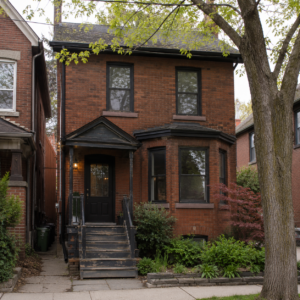
Crumbling or Missing Mortar Joints
Crumbling mortar is one of the most common masonry problems in older Toronto brick homes. Mortar joints are the lines between the bricks, and they help hold the wall together while managing moisture and movement.
Over time, mortar can become soft, sandy, cracked, recessed, or missing. This may happen due to age, water exposure, freeze-thaw cycles, old repairs, or mortar that was incompatible with the original wall. Once the mortar starts failing, water can enter more easily. That water can then affect nearby bricks, interior walls, chimneys, and foundation areas.
Common signs of failing mortar include:
- Joints that look deeply recessed between bricks
- Mortar that turns sandy or powdery when touched
- Small gaps where mortar has fallen out
- Horizontal or stair-step cracks following the joints
- Loose brick around weakened joints
- Water staining near damaged sections
When the brick is still mostly sound, but the joints are failing, tuckpointing in Toronto may be the right repair. Proper tuckpointing removes deteriorated mortar and replaces it with compatible new mortar, rather than simply smearing a thin layer over the surface.
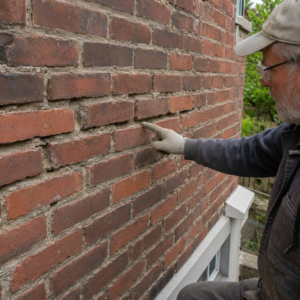
Spalling and Flaking Brick Faces
Spalling happens when the face of the brick flakes, chips, pops, or breaks away. In older Toronto homes, spalling is often connected to trapped moisture and freeze-thaw cycles.
Brick is porous, so it can absorb moisture. If water gets into damaged brick and freezes, it expands. Over time, that pressure can break off the outer face of the brick. Spalling can also happen when hard mortar, paint, non-breathable coatings, poor drainage, or previous repairs trap moisture inside the wall.
Spalling brick can appear as:
- Flaking brick surfaces
- Broken corners or edges
- Soft or powdery brick faces
- Loose brick fragments on the ground
- Rough patches where the original brick face has broken away
- Damage around chimneys, steps, sills, or exposed walls
Small areas of spalling may be repaired by replacing damaged bricks and correcting the moisture source. Larger areas may require more extensive brick repair in Toronto, especially when several bricks are failing along the same wall. The worst mistake is to patch over spalling brick without understanding why the brick failed.
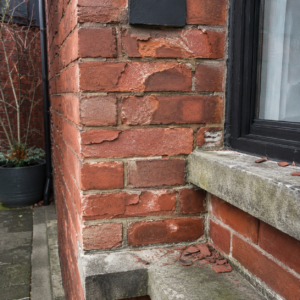
Cracked Bricks and Stair-Step Cracks
Cracked bricks and stair-step cracks can point to movement, settlement, moisture, or pressure around the wall. Not every crack is an emergency, but cracks should not be ignored in an older brick home.
A single cracked brick may be caused by age, impact, trapped moisture, or a previous repair. Stair-step cracks usually follow the mortar joints and may appear around windows, doors, porches, foundations, or wall corners. These cracks can be more concerning because they may suggest movement in the wall or nearby structure.
Homeowners should pay attention to:
- Cracks that widen over time
- Cracks near window or door openings
- Stair-step cracks running through several courses of brick
- Cracks paired with bulging or leaning brickwork
- Cracks that appear after heavy rain, snowmelt, or freeze-thaw weather
- Cracks that return after previous patching
Repair may be simple when the crack is local and the surrounding masonry is stable. A more extensive assessment may be needed when cracks are spreading, recurring, or associated with wall movement. For larger changes to building structure or major repairs, homeowners can review the City of Toronto’s building permit guidance to understand when permit review may apply.
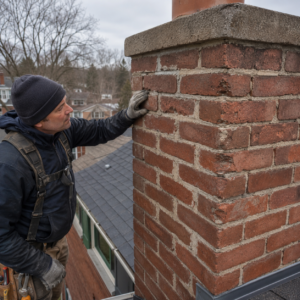
Chimney Deterioration
Chimney deterioration is common in older Toronto brick homes because chimneys are exposed on all sides. They deal with rain, snow, wind, ice, heat, and freeze-thaw cycles more directly than many wall sections.
Older chimneys often show damage before other masonry areas. The top of the chimney may have cracked mortar, loose bricks, spalling faces, a damaged crown, missing cap protection, or staining near the roofline. A small chimney problem can become a water problem if moisture enters and travels downward.
Common chimney masonry problems include:
- Loose or missing bricks
- Cracked or missing mortar joints
- Spalling brick faces
- Leaning or shifting chimney sections
- White staining or dark water stains
- Cracked crowns or cap-related issues
- Watermarks indoors near the chimney area
If a chimney is cracked, loose, leaning, or leaking, a proper chimney repair assessment is safer than a quick patch. Depending on the condition, the repair may involve repointing, brick replacement, crown work, cap review, or partial rebuilding.
White Staining and Moisture Marks
White staining on brick is often efflorescence, which appears when moisture moves through masonry and brings salts to the surface. The stain itself may be mostly cosmetic, but the moisture movement behind it should be taken seriously.
Efflorescence may appear after heavy rain, snowmelt, cleaning, or a season of repeated wetting and drying. It is common near lower walls, chimneys, steps, sills, retaining areas, and places where water is not draining well.
Moisture-related warning signs include:
- White powdery staining on brick faces
- Dark, damp patches that stay wet after rain
- Staining below sills, ledges, or roof edges
- Recurring stains after cleaning
- Damp interior walls near exterior masonry
- Basement moisture near damaged brick or foundation walls
Cleaning the stain may improve the appearance for a while, but it does not solve the water source. Homeowners should check nearby gutters, downspouts, grading, roof edges, sills, and cracks. If lower wall moisture or basement dampness is part of the problem, masonry repair may need to be considered alongside drainage or waterproofing work.
Bulging or Bowing Brick Walls
A bulging brick is a more serious masonry problem because it may suggest that part of the wall is moving, separating, or losing support. Older Toronto brick homes can develop bulging sections when moisture, wall ties, settlement, freeze-thaw pressure, or long-term deterioration affect the wall.
Bulging can sometimes be subtle. A wall may look slightly pushed outward, wavy, or uneven. Mortar joints may crack around the affected area, and bricks may no longer line up cleanly. This is not a problem that can be covered with a patch or coating.
Signs to watch for include:
- A wall section that appears pushed outward
- Brickwork that looks wavy or uneven
- Cracks around the bulging area
- Loose or separated bricks
- Interior cracks or dampness near the same location
- Previous patches that keep opening again
If a wall is bulging, homeowners should avoid pressing on the wall, removing bricks, or covering the area. A mason should inspect the wall and explain whether the issue is local, structural, moisture-related, or connected to wider movement.
Past Repairs Done With the Wrong Materials
Older masonry can be damaged by repairs that use the wrong materials or methods. This is common in homes where quick patching has happened over many years.
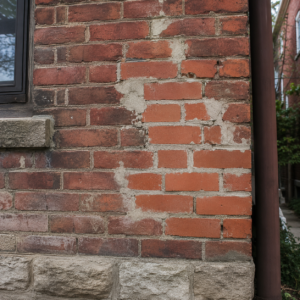
Wrong-material repairs may include hard mortar used on softer brick, mismatched replacement brick, thick surface patching, cement-heavy repairs, paint over damp brick, or coatings that trap moisture. These repairs may look acceptable at first, but they can push damage into the surrounding wall.
Warning signs of poor past repairs include:
- Mortar that is much harder or darker than the surrounding joints
- Replacement bricks that do not match the size, colour, or texture
- Surface patches that are cracking or falling off
- Paint or coating peeling from the brick
- Damage is spreading around an old repair area
- Water stains are returning after the same area was patched
Older homes often benefit from a restoration mindset rather than a patch-only mindset. Brick restoration in Toronto looks at material matching, mortar compatibility, appearance, moisture behaviour, and the overall condition of the wall.
Repair May Be Enough When…
A smaller repair may be enough when the problem is local, the surrounding masonry is stable, and the source of moisture or movement can be corrected. Catching problems early is the best way to avoid larger work.
Repair may be enough when:
- Only a few bricks are cracked or spalling
- Mortar damage is limited to one section
- The chimney has minor joint damage but no major movement
- White staining is limited, and the water source is easy to correct
- Past patch failure is small and can be removed properly
- The wall dries normally after rain
- There is no bulging, leaning, or spreading crack pattern
In these cases, targeted brick repair, repointing, or chimney work may solve the problem without a larger restoration. The repair still needs proper preparation and compatible materials.
A Larger Fix May Be Needed When…
A larger fix may be needed when masonry damage is widespread, recurring, unsafe, or tied to active water entry. Older brick homes often exhibit recurring damage when the root cause has not been addressed.
A larger repair or restoration may be needed when:
- Several areas of the wall have failing mortar
- Many bricks are spalling or loose
- A chimney is leaning, leaking, or badly deteriorated
- Cracks keep returning after patch repairs
- The wall is bulging or visibly moving
- Water stains appear indoors after rain
- Old repairs are damaging the surrounding brick
If you are unsure whether the issue is urgent, this related Otto’s Masonry guide on when to address masonry issues can help you understand why timing matters before another wet or freezing season.
What Homeowners Can Safely Check Themselves
Homeowners can safely do a visual check from the ground without scraping, grinding, pressure washing, or removing materials. The goal is to notice changes early and explain the issue clearly when asking for advice.
Check the following areas:
- Brick faces for flaking, cracking, or missing pieces
- Mortar joints for gaps, powdery texture, or deep recession
- Chimneys for leaning, loose brick, or visible cracks
- Windows and doors for stair-step cracks nearby
- Lower walls for dampness or white staining
- Porches and steps for movement, cracks, or separated masonry
- Gutters and downspouts for water dumping against the brick
- Old repair areas for cracks, staining, or loose patches
Take photos from a distance and close-up photos of the damage. Photos taken after rain can also help show water patterns. Do not apply sealers, paint, or surface patches before the wall is assessed, because these can hide useful clues and sometimes trap moisture.
When to Call a Mason
Call a mason when damage involves loose brick, failing mortar, recurring moisture, chimney deterioration, wall movement, or repairs that keep failing. These issues often need more than a cosmetic fix.
You should call a mason if you notice:
- Mortar falling out between bricks
- Brick faces flaking or breaking apart
- Loose bricks around walls, steps, or chimneys
- Stair-step cracks are spreading across a wall
- A chimney that looks cracked, shifted, or unstable
- White staining that keeps returning
- Water stains inside near the exterior brick
- Bulging, bowing, or uneven brickwork
A mason can help determine whether the home needs tuckpointing, selective brick replacement, chimney repair, restoration, or a larger assessment. For older homes, the best repair is usually the one that respects the original masonry while addressing the actual cause of failure.
FAQs About Masonry Problems in Older Toronto Brick Homes
What are the most common masonry problems in older Toronto brick homes?
The most common masonry problems include crumbling mortar, spalling brick, cracked joints, chimney deterioration, white staining, bulging walls, and poor past repairs. Many of these issues are connected to moisture, age, and freeze-thaw cycles.
Why do old bricks start flaking or breaking apart?
Old bricks often start flaking because moisture enters the brick and expands during freezing weather. Spalling can also be made worse by hard mortar, trapped moisture, paint, coatings, salt exposure, or poor drainage.
When does an older brick home need tuckpointing?
An older brick home may need tuckpointing when mortar joints are cracked, missing, sandy, or deeply recessed. Tuckpointing helps restore the joints and reduce water entry when the surrounding brick is still mostly sound.
Is white staining on the brick serious?
White staining is often a sign that moisture is moving through the masonry and carrying salts to the surface. The stain itself may not be dangerous, but the water source should be checked, especially if the staining keeps returning.
Can old masonry repairs cause new damage?
Yes, old repairs can cause new damage when they use hard mortar, mismatched materials, thick surface patches, or coatings that trap moisture. Poor repairs can shift stress into the surrounding brickwork and cause damage to spread.
Should I repair or restore older brickwork?
Repair may be sufficient for local damage, such as a few cracked bricks or a single section of failed mortar. Restoration may be preferable when the wall is older, highly visible, widely damaged, or requires careful material matching.
How often should I inspect an older brick home?
Older Toronto brick homes should be visually checked at least twice a year, usually in spring and fall. These checks help catch winter damage, water staining, mortar failure, and chimney issues before they become larger repairs.
Final Answer
Common masonry problems in older Toronto brick homes usually come from age, moisture, freeze-thaw weather, failing mortar, chimney exposure, and past repairs that did not match the original masonry. Small issues such as cracked joints, spalling brick, white staining, and loose mortar should be addressed early, as they can worsen after another winter. The right repair should protect the wall, respect the home’s age, and address the cause of the damage rather than just covering the surface.