

If you are trying to find licensed masonry contractors near you in Toronto, the best approach is to look beyond a simple online listing and verify that the contractor is properly set up, qualified for the type of work you need, and able to explain the masonry problem clearly. Homeowners often focus on price first, but licensing, insurance, scope clarity, and real masonry experience matter just as much if you want the repair or build to last.
For homeowners in Toronto, East York, North York, Rosedale, Forest Hill, The Annex, Etobicoke, The Beaches, and Scarborough, the challenge is not just finding someone who says they do masonry. The real challenge is finding a contractor who can properly inspect the wall, chimney, porch, or stonework, explain what is actually happening, and complete the work with the right materials and finish quality.
That matters because masonry problems often look simpler from the outside than they really are. A cracked brick wall may also have failing mortar. A worn chimney may also have structural or moisture-related issues. A front porch repair may connect to steps, concrete, or lower wall masonry at the same time. The right licensed contractor should be able to see that bigger picture.
What “licensed masonry contractor” should mean to a Toronto homeowner
For most homeowners, “licensed” should not just mean the contractor sounds legitimate. It should mean you are dealing with a real business that is properly operating, can clearly explain the scope, and is prepared to stand behind the work. In Ontario, depending on the type of project, business setup, permits, and building-code compliance can all matter. That is why it helps to check more than one thing instead of relying on the word “licensed” alone.
A good masonry contractor should also be able to explain whether your project involves straightforward repair, restoration, construction, or work that may require additional review. For example, a simple brick repair job is different from a larger chimney rebuild, a structural wall issue, or a new masonry feature. The more complex the project, the more important it is that the contractor understands the local requirements that may apply.
In practical homeowner terms, the contractor you hire should be able to show that they are operating professionally, carrying the right insurance, and approaching the work in a way that fits Toronto housing conditions. That combination matters more than a generic claim in an ad or directory profile.
What to verify before hiring a masonry contractor in Toronto
Business legitimacy and contact details
Start with the basics. A real masonry contractor should have a stable business presence, a working contact page, a real service area, and clear information about the work they do. If the company is hard to verify, hard to reach, or vague about location and scope, that is usually not a good sign.
Insurance and business professionalism
A good contractor should be able to confirm that they are insured and operating as a real business. This matters because masonry work often involves ladders, height, tools, debris, and visible structural materials. You want to know you are not hiring casually for something that can significantly affect the home.
Fit for the type of masonry work you need
Not every contractor is equally strong at every type of project. Some are better at tuckpointing, some at chimney repair, some at stone masonry, and some at larger restoration or exterior feature work. It helps when the company’s service pages actually match the job you want done.
Ability to explain the problem clearly
One of the strongest signs of a reliable contractor is their ability to explain what is wrong in plain language. If they immediately push for the biggest repair without showing why, or if they only describe the surface symptom, that is a reason to slow down.
Scope clarity in the quote
A strong quote should tell you what is being repaired, restored, rebuilt, or installed, and why. In masonry, a weak scope is often where weak workmanship starts. If the quote is vague, the work often ends up vague too.
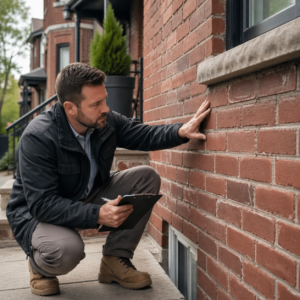
Common masonry projects that homeowners search for licensed contractors to handle
Brick repair and replacement
Many homeowners start looking for a licensed contractor when they notice cracked, spalling, or loose brick. In these cases, the work may involve brick repair and replacement, mortar repair, or wider restoration, depending on the condition of the wall.
Chimney repair
Chimneys are one of the most common high-risk masonry areas because they are exposed on all sides and often deteriorate faster than the rest of the home. A contractor handling chimney work should understand both visible masonry repair and the practical safety concerns that come with elevated exterior structures.
Stone and feature masonry
Some homeowners need a licensed contractor for new-features work, restoration, or design-related masonry, such as fireplaces, accent walls, or natural stone sections. These projects require both finish quality and structural sense.
Foundation and lower wall masonry
Lower wall areas often deal with splashback, moisture, salt, and freeze-thaw exposure. These jobs may also connect to parging and foundation coating or basement waterproofing when the issue is tied to moisture conditions around the base of the home.
Porches, steps, patios, and retaining features
Outdoor masonry projects may look simple, but many of them involve grading, support, edge conditions, and visible finish quality. This is especially true when the work connects to steps and porches, interlocking brick and pavers, or retaining walls.
How to compare masonry contractors the smart way
The smartest way to compare masonry contractors is to compare diagnosis, scope, service fit, and professionalism before you compare price. One contractor may quote a full replacement, while another recommends a targeted repair. One may include surrounding mortar work, while another only prices the most obvious area. Those differences matter because they affect whether the repair will actually solve the problem.
You should also compare how well the contractor understands Toronto housing conditions. Older brick homes, visible chimneys, porches, and heritage-style properties often need more care than a quick modern patch. A contractor who regularly works on these kinds of homes is usually better positioned to recommend the right repair and match the existing materials more closely.
If you are deciding between two or three companies, pay close attention to how they answer questions. Clear answers often signal strong workmanship. Vague answers often signal guesswork. In masonry, that difference shows up quickly once the project begins.
What official requirements and public resources matter in Ontario and Toronto
Depending on the project, Ontario’s Building Code regulation may affect how construction-related masonry work should be approached. Homeowners can review the regulation here: Ontario Building Code regulation. Ontario also publishes current code-change information here: Ontario Building Code updates.
If the property is heritage-designated, exterior masonry changes may require approval through the City of Toronto’s heritage process. Homeowners can review that here: City of Toronto Heritage Permit Guide.
Toronto’s property standards also require exterior walls, chimneys, steps, and related structures to be maintained in good repair. That matters because some masonry issues are not just cosmetic. You can review that here: City of Toronto Property Standards.
For a broader technical context on how Canadian weather affects masonry durability, the National Research Council Canada has published work on moisture content and freeze-thaw behaviour in masonry materials. You can review that here: NRC Canada masonry freeze-thaw resource.
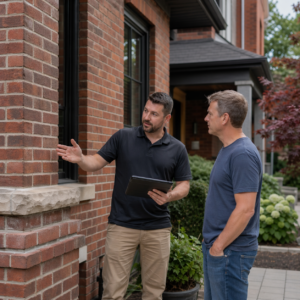
Why licensing and professionalism matter even more in older Toronto homes
Toronto has many older homes, and older masonry is less forgiving than many homeowners expect. The wrong mortar, poor material matching, aggressive cleaning, or overly simplified repair methods can all shorten the wall’s lifespan. That is why professionalism matters even more on heritage-style and older properties.
A better contractor should know when a wall needs gentle restoration rather than aggressive replacement, and when a visible area needs stronger material matching because the finish will be obvious from the street. This is where local experience becomes more than a selling point. It becomes part of the repair quality itself.
That also applies to work around chimneys, front façades, porches, steps, and other prominent masonry features. If the repair is done poorly, you see it every time you come home. If it is done well, it quietly fits the house and lasts.
Key questions homeowners ask about finding licensed masonry contractors
How do I know if a masonry contractor is legitimate?
Start by checking whether they operate as a real business, have a visible service presence, can clearly explain the work, and are willing to discuss insurance and scope professionally.
Should I hire the cheapest contractor if the work seems small?
Not automatically. Small masonry issues often become bigger when they are diagnosed badly. A low quote is not a bargain if the repair has to be redone.
Do I need a contractor that specializes in the exact masonry problem I have?
It helps when the contractor already clearly handles that type of work. A company that regularly works on brick, mortar, chimneys, stone, and visible exterior masonry is usually better at seeing the full condition of the home.
Can a licensed contractor still give a bad recommendation?
Yes, which is why licensing or legitimacy alone is not enough. You still need a clear diagnosis, good communication, and a scope that makes sense for the wall.
What if my home is older or heritage-style?
Then the contractor should be especially careful with material matching, repair method, and whether the City heritage review may apply.
What should I ask during the estimate?
Ask what is causing the damage, whether the issue is isolated or wider, what the quote includes, what materials will be used, and whether the repair is meant to solve the root cause or only the visible symptom.
Is local experience really that important?
Yes. Toronto weather, older housing stock, and visible masonry features all make the local experience more valuable because the contractor is more likely to understand how these walls actually age.
What to expect when you contact us
- You tell us what masonry problem or project you have in mind.
- We arrange an inspection or estimate.
- We assess the masonry and explain what type of work is actually needed.
- We provide a clear quote and recommended scope.
- We schedule the work and complete it with care and proper site handling.
When you are ready to discuss the next step, contact us.
How do I find licensed masonry contractors near me in Toronto?
You can find licensed masonry contractors near you in Toronto by looking for a real business with a clear service fit, professional communication, strong local masonry expertise, and a quote that reflects the actual condition of your home. If you are choosing between several options, the better decision usually comes from comparing scope, diagnosis, and professionalism before you compare price.
If the project affects a visible wall, chimney, porch, or older masonry section, take the time to hire a contractor who can explain the work clearly and demonstrate understanding of Toronto conditions. That is usually what leads to a repair or build that looks right, performs well, and does not need to be redone early.