

If you are looking for companies that handle large-scale brickwork for commercial buildings in Toronto, the most important thing to compare is not just price. It is whether the contractor can define the scope clearly, manage access and sequencing, and make sound repair decisions across a large exterior wall area. Commercial masonry projects usually involve more moving parts than residential work, including building access, tenant impact, safety setup, staged repairs, and the risk of hidden deterioration once damaged areas are exposed.
For property owners, building managers, and decision-makers in Toronto, the right contractor should be able to explain what areas need repair now, what can be staged, what may expand once the wall is opened, and how the work will be planned around the building’s use. A vague quote can look attractive at first, but on a large project, it is usually where delays and extra costs begin.
Large-scale masonry work also needs better judgment. Some buildings need wide-area repointing. Others need selective brick replacement, parapet repair, masonry corrections related to the chimney, or stabilization of sections that are taking on water. The best commercial brickwork contractor is the one that can assess the building honestly and define the right repair path before the project starts.
What large-scale commercial brickwork usually includes
Large-scale commercial brickwork can include wide-area brick repair, selective brick replacement, tuckpointing and repointing, masonry repair for chimneys and parapets, restoration of aging exterior façades, correction of lower wall moisture, and selected stone or concrete work where those materials connect to the same exterior system. On older buildings, the contractor may also need to consider how previous repairs, water exposure, and material matching affect the scope.
Not every commercial project involves new construction or full rebuilding. Many larger jobs are repair and restoration projects where the real challenge is scale. A contractor might need to work across multiple elevations, manage visible public-facing areas, and repair sections in phases so the building can continue to function normally while the masonry work is underway.
This is why commercial brickwork planning should be more disciplined than a simple patch estimate. On a larger building, one poor decision about access, staging, or material scope can multiply into delays across the rest of the project.
What to look for in a commercial brickwork contractor
Clear scope and inspection process
A strong commercial masonry contractor should be able to show how they are reading the wall. That means identifying which areas clearly need repair, which sections may be monitored, and where the visible damage may point to deeper issues. On large buildings, scope clarity is one of the biggest signs of competence.
Ability to handle access and sequencing
Commercial projects often involve multiple elevations, height, active occupancy, and safety planning. Even the best repair method can become a poor project if staging and access are handled badly. A capable contractor should be able to explain how the work can be phased and how disruption will be managed.
Repair judgement, not just production speed
A large project should not be treated like a race. The contractor should be able to determine when the building needs repointing, when selective brick replacement is sufficient, and when a wider wall section requires more attention. Fast production without diagnosis is one of the biggest risks in large masonry work.
Material matching and visible finish quality
Commercial buildings still need to look right when the project is complete. On visible façades, poor brick matching, sloppy joints, and uneven repair sections make the building look neglected even after the work is done.
Step-by-step: how larger brickwork projects should be handled
Initial site review and scope discussion
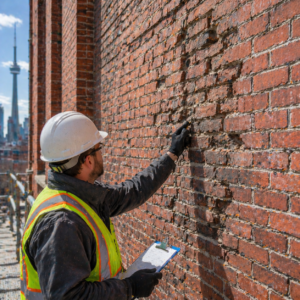
The first step is reviewing the building, the elevations involved, the visible damage patterns, and the access conditions. On a large property, this is where many future problems are either avoided or created. A strong inspection should separate urgent work from staged work and identify where hidden deterioration may affect the quote.
Planning, materials, and scheduling
Once the scope is clearer, material matching, repair sequencing, access setup, and weather timing all need to be planned realistically. A better commercial contractor will also explain what assumptions are built into the quote so the owner understands how the job was priced.
On-site work and quality checks
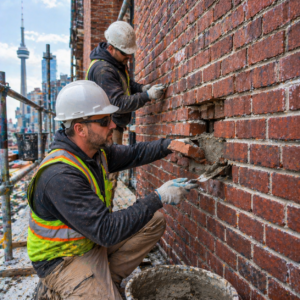
During the work, damaged materials should be removed carefully, repaired sections should tie in properly to the original wall, and the work should be checked continuously so that one weak section is not missed while another is being repaired. On larger projects, quality control matters just as much as production speed.
Why scope definition matters more on large masonry jobs
On a larger building, the lowest bid on paper can quickly become the most expensive path if the scope is vague. A commercial owner or manager should compare what is included, what is assumed, and what could change once the wall is opened up. If that part is unclear, the quote may only look competitive because it has left out the hard parts of the job.
This is also why a more careful contractor may appear less aggressive on price at first. A realistic scope often reflects more honest inspection, more complete repair planning, and a clearer understanding of where the risk sits in the building.
Local factors in Toronto that affect commercial masonry
Toronto’s freeze-thaw climate accelerates masonry wear, especially when moisture enters open joints and exposed brick surfaces. You can review a technical source on masonry durability here: NRC Canada’s freeze-thaw masonry resource.
Older buildings and exposed façades also need to be maintained in good repair. The City’s maintenance standards for exterior walls and related structures are available here: City of Toronto Property Standards.
If the building is heritage-protected, exterior masonry work may also require review. The City outlines that process here: City of Toronto Heritage Permit Guide.
Key questions property owners and managers ask
How do I compare large-scale masonry quotes?
Compare scope, access assumptions, staging, repair method, and material matching, not just the bottom-line number.
Can wide-area brickwork be staged?
Often, yes. That depends on the building, access, safety setup, and the urgency of the damage in each area.
Does the contractor need to handle more than brick alone?
Sometimes. On older buildings, related stone, concrete, parapet, or moisture issues may need to be considered as part of the same project.
Why are some commercial masonry quotes much lower than others?
Often, because the scope is smaller, assumptions are looser, or the contractor is pricing only the obvious visible work rather than the full repair condition.
What to expect when you contact us
- You tell us what type of exterior masonry issue or building project you are dealing with.
- We arrange an inspection or estimate.
- We assess the scope and determine the type of brickwork repair or restoration needed.
- We provide a clear quote and recommended next step.
- We schedule the work based on access, conditions, and project needs.
Which companies handle large-scale brickwork for commercial buildings in Toronto?
The right companies are masonry contractors that can clearly define the scope, manage access and staging, and handle large-area brick repair or restoration without relying on guesswork. If you are comparing options for a larger Toronto brickwork project, the best next step is to get a clear inspection and scope discussion before you compare pricing.