

If you are trying to choose a Toronto bricklayer for high-quality masonry work, the best decision usually comes from looking past price and focusing on diagnosis, finish quality, material matching, and whether the contractor understands the kind of wall or feature you actually have. Good masonry work does not just fix the visible issue. It should fit the home, withstand Toronto weather, and avoid turning a small repair into a recurring one later.
For homeowners in Toronto, East York, North York, Rosedale, Forest Hill, The Annex, Etobicoke, The Beaches, and Scarborough, this matters because masonry is often highly visible. Front walls, chimneys, porches, steps, columns, and older brick façades are all easy to judge with your eyes. If the work is poor, you notice it every time you come home. If it is good, it blends in naturally and simply feels right at home.
That is why choosing a bricklayer is not only about whether someone can lay bricks. It is about whether they can properly assess the condition of the masonry, recommend the right scope, and complete the work with the level of care that makes the finished result look intentional rather than patched.
What high-quality masonry work actually means
High-quality masonry work means the repair or build is structurally sound, visually consistent, and suited to the home’s age and condition. On a Toronto property, that may involve brick repair, brick replacement, tuckpointing, brick restoration, chimney masonry correction, stonework, or visible exterior features such as steps, porches, and retaining elements.
The quality shows up in the details. Mortar joints should look deliberate and consistent. Replacement brick should fit the surrounding wall as closely as possible. The repair should address the cause of the damage, not just the surface symptom. On older homes, the work should also respect the character of the original masonry rather than making the repaired area look obviously newer than everything around it.
That is why a good bricklayer is not just installing material. They are making decisions about proportion, blending, sequencing, and repair scope. Those decisions are what separate high-quality masonry from work that looks rushed or starts failing again too soon.
Why choosing the right bricklayer matters more in Toronto
Toronto has a lot of older brick homes, visible chimneys, exposed front façades, and masonry details that take heavy weather stress. Freeze-thaw conditions, moisture exposure, and long-term wear all make small differences in workmanship matter more. A minor mismatch or weak repair might not seem obvious on day one, but after another season of wetting and freezing, the quality gap often becomes much easier to see.
It also matters because Toronto’s property standards require exterior walls, chimneys, steps, and related structures to be maintained in good repair. That means masonry quality is not just a visual issue. In the wrong condition, it can also become a maintenance and safety issue. You can review that here: City of Toronto Property Standards.
If the property is heritage-designated, exterior masonry changes may also need to go through the City’s heritage review process. The City’s heritage permit guide explains that process and is worth reviewing before visible exterior work begins on those properties. You can review that here: City of Toronto Heritage Permit Guide.
Common signs of high-quality masonry workmanship
Consistent mortar joints
Good mortar work looks even, intentional, and suited to the wall’s style. It should not look smeared, overly thick, or inconsistent from one section to the next.
A brick that matches the surrounding wall
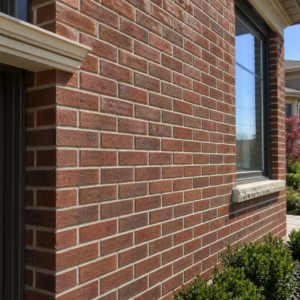
On repair work, the closer the replacement brick fits the original in size, tone, and texture, the better the final result usually looks. Good matching is one of the clearest visible signs that the bricklayer cared about the finish.
Repairs that solve the real problem
A high-quality bricklayer should be able to explain why the wall failed and what needs to be done to prevent the issue from returning too quickly. If the same area keeps reopening, the original repair probably was not strong enough.
Strong finish quality on visible features
Front walls, chimneys, steps, porches, and façade areas should appear balanced and well-integrated with the rest of the home. Poorly aligned repairs or obvious patch sections are usually signs of weaker workmanship.
Clear scope and confident explanation
Another sign of quality appears before the work starts. A contractor who can clearly explain the wall condition and discuss the scope in plain language is more likely to deliver work that reflects the same level of care.
Common problems homeowners hire bricklayers to fix
Cracked or spalling brick
A brick that is cracking, flaking, or losing its face is one of the most common reasons homeowners start calling contractors. The bricklayer’s job is not just to replace the damaged units but to understand why those bricks failed and whether nearby mortar or surrounding sections are also vulnerable.
Open or failing mortar joints
Many projects begin because the mortar is receding, cracking, or washing out. In those cases, good workmanship often depends on the quality of the joint restoration just as much as the appearance of the finished wall.
Chimney deterioration
Chimneys are exposed on all sides and often show masonry wear faster than the rest of the home. Good chimney work requires both safety awareness and finish quality because the repair is highly visible and highly exposed.
Front façade and porch repairs
Visible repairs at the front of the house require especially careful matching because they immediately affect curb appeal. Weak repair work in these areas tends to stand out the most.
Older and heritage-style wall restoration
Older homes often need a bricklayer who understands restoration rather than just straightforward replacement. In these cases, preserving the look of the original masonry matters as much as correcting the damaged area.
Step-by-step: how to compare bricklayers well
Start with the actual wall condition
Before you compare quotes, try to determine whether the issue is primarily brick failure, mortar failure, chimney deterioration, wall wear, or a broader restoration problem. You do not need to diagnose it yourself, but you do want to hear whether the contractor’s explanation makes sense.
Compare the scope before the price
One contractor may be pricing a proper repair while another is pricing only the most obvious visible section. In masonry, price only means something when the scope is clear.
Look at how the contractor talks about matching
If the repair is visible, ask how the brick and mortar will be matched. Strong contractors usually have a practical answer. Weak ones often treat matching like a small detail, even when it matters a lot.
Ask about similar project types
If your issue is chimney-related, ask about chimney work. If it is an older wall, ask about restoration. A contractor who regularly handles the type of project you have is usually a safer choice.
Pay attention to how questions are answered
A strong bricklayer should be able to explain the wall condition without sounding vague or evasive. Good communication often reflects good understanding, and good understanding usually leads to better work.
Why the cheapest quote is often not the best value
The lowest quote often comes from a smaller or weaker scope. That may mean less prep, less mortar work, fewer bricks replaced, or a surface repair that does not address the underlying issue. In the short term, that can look affordable. In the longer term, it often leads to repeat work.
This is especially true in older Toronto homes, where visible quality and material compatibility matter more. A cheap repair that stands out from the rest of the wall or reopens after another winter is rarely a good value. The more visible the masonry, the more likely weak workmanship will bother you every time you see it.
Good value usually comes from a contractor who recommends the right amount of work, not the least. That is a subtle difference, but in masonry it often saves money.
Local Toronto factors that affect bricklaying quality
Toronto’s climate is one of the biggest reasons workmanship quality matters so much. Repeated wetting, freeze-thaw exposure, and long-term exterior wear all make weak repairs easier to spot over time. NRC Canada’s masonry freeze-thaw research is useful here because it explains why moisture behaviour matters so much to brick durability. You can review that here: NRC Canada masonry freeze-thaw resource.
Toronto’s Property Standards chapter is also relevant because it includes standards for exterior walls, stairs, walks, driveways, and heritage property standards. That supports the idea that good masonry is not only about appearance. It is also about maintaining exterior structures properly over time. You can review that here: City of Toronto Property Standards.
If the home is heritage-designated, the City’s heritage permit process may also affect any changes to the exterior brickwork. You can review that here: City of Toronto Heritage Permit Guide.

Key questions homeowners ask when choosing a bricklayer
How do I know if a bricklayer really does high-quality work?
Look for a clear explanation, good material matching, a sensible scope, and finished work that blends into the home naturally instead of standing out as a patch.
Should I choose the contractor with the lowest price?
Not automatically. In masonry, low prices often reflect smaller scopes or weaker repairs rather than true efficiency.
Does older masonry need a different approach?
Yes. Older and heritage-style homes usually need more careful mortar and brick matching than newer properties.
Is experience with my exact project type important?
Usually yes. A contractor who regularly handles chimneys, visible façades, restoration work, or lower wall repairs is more likely to understand your project properly.
What should I ask during the estimate?
Ask what caused the damage, whether the issue is isolated or wider, how the materials will be matched, and what the quote includes.
Can a good bricklayer still recommend a bigger scope than I expected?
Yes, if the wall actually needs it. The important thing is whether they can explain the reasoning clearly and show why the extra scope makes sense.
What to expect when you contact us
- You tell us what masonry issue or project you have in mind.
- We arrange an inspection or estimate.
- We assess the wall, chimney, or feature and explain which type of work best fits.
- We provide a clear quote and recommended scope.
- We complete the work with attention to both durability and finish quality.
When you are ready to discuss the next step, contact us.
How do I choose a Toronto bricklayer for high-quality masonry work?
You choose a Toronto bricklayer for high-quality masonry work by comparing diagnosis, scope, material matching, and visible finish quality instead of price alone. If your home has a visible masonry issue, an older wall, a chimney problem, or a repair that needs to look right from the street, the best next step is to get a clear inspection and compare contractors based on how well they understand the wall, not just how quickly they quote it.