

If your chimney is showing visible wear, cracking, loose bricks, or missing mortar, the biggest question is usually whether it needs restoration or full rebuilding. In Toronto, the right answer depends on how far the damage has spread, how stable the chimney still is, and whether the masonry can still be preserved safely. Some chimneys only need targeted restoration work. Others have deteriorated to the point that they need partial or full rebuilding to solve the problem properly.
For homeowners in Toronto, East York, North York, Rosedale, Forest Hill, The Annex, Etobicoke, The Beaches, and Scarborough, this decision matters because chimneys are one of the most exposed masonry features on a house. They take rain, snow, freeze-thaw cycles, and constant temperature change at the roof level. Once deterioration starts, it can move faster than many homeowners expect.
The most cost-effective choice is not always the smaller repair. It is the service that matches the chimney’s actual condition. A restoration of a chimney that should have been rebuilt often leads to higher costs later. A rebuild on a chimney that could have been restored may be more work than the home really needed. That is why diagnosis matters before the scope is decided.
What chimney restoration means in Toronto
Chimney restoration usually means preserving as much of the existing chimney as possible while correcting the parts that have deteriorated. This may include chimney repair, tuckpointing and mortar restoration, selective brick replacement, crown or cap-related correction, repointing, and surface-level masonry work that improves both performance and appearance.
Restoration is usually the better fit when the chimney is generally stable, and most of the masonry can be saved. If the bricks are weathered but not failing everywhere, if the mortar joints are open but the chimney remains structurally sound, or if a few upper courses are damaged while the rest of the shaft is still in workable condition, restoration may be enough.
This kind of work makes sense when the goal is to stop deterioration early, restore strength, and keep the chimney from moving into a more expensive rebuild. It is often the right choice when the damage is visible but still limited.
What chimney rebuilding means in Toronto
Chimney rebuilding means taking down part of the chimney, or sometimes the entire chimney above a certain point, and reconstructing it properly. This is usually necessary when the masonry has deteriorated to the point that it cannot be reliably restored, when the chimney is leaning or unstable, or when brick-and-mortar failure is widespread enough that patching it would only delay a larger failure.
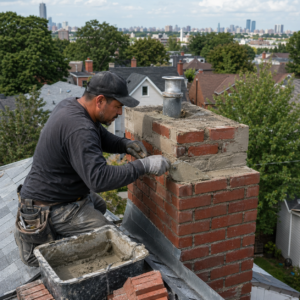
Rebuilding may be partial or full. Some chimneys only need the upper section rebuilt above the roofline because that is the area exposed to the worst weather. Others need deeper rebuilding because the damage extends farther down, or the chimney has lost too much strength overall.
Homeowners sometimes hear “rebuild” and assume it means the most extreme option. That is not always true. In many cases, rebuilding only the failed section is the most sensible and durable repair, especially when the lower chimney remains sound.
How to tell whether your chimney may need restoration or rebuilding
Signs restoration may still be enough
If the chimney is straight, the brick damage is limited, and the main issues are open mortar joints, surface wear, isolated cracked bricks, or minor visible deterioration, restoration may still be the right answer. These are the cases where preserving the existing chimney usually makes more sense than replacing large sections of it.
Signs rebuilding may be the better option
If the chimney is leaning, visibly separating, shedding bricks, showing deep cracks through multiple sections, or deteriorating across a wide area, rebuilding is often the safer option. The same is true when earlier repairs have already failed, and the chimney keeps reopening in the same places.
Signs the problem is more urgent than it looks
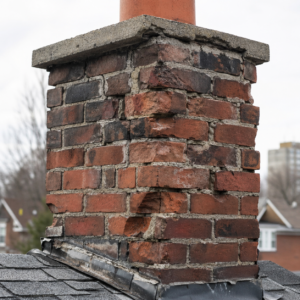
Sometimes the chimney still appears upright from the ground, but the upper courses are loose, the mortar is deeply washed out, or the crown area is allowing water into the structure. In those cases, what looks like a moderate repair can move closer to rebuilding once the chimney is inspected properly.
Common chimney problems we see in Toronto
Open or missing mortar joints
Mortar loss is one of the first clear signs that the chimney is deteriorating. Once the joints open up, water gets in more easily, and the freeze-thaw cycle starts breaking the chimney down faster.
Spalling bricks and surface flaking
Bricks that are cracking, flaking, or breaking apart often suggest long-term moisture exposure. A few isolated bricks may still fall within the scope of restoration. Widespread spalling often pushes the project closer to rebuilding.
Upper chimney deterioration above the roofline
This is common because the upper section takes the worst of the weather. In many homes, the lower chimney is still usable while the exposed upper courses need to be rebuilt.
Previous patch repairs that failed
Some homeowners have already paid for a repair once, only to see the same issues return. That often means the original scope was too small or the chimney had already moved beyond simple restoration.
Visible movement or leaning
Any visible movement should be taken seriously. A chimney that is no longer plumb may not be a candidate for simple restoration at all.
Step-by-step: how we assess chimney restoration vs rebuilding
Initial inspection and quote
We begin by reviewing the visible condition of the chimney, mortar joints, brick faces, and upper courses, and whether the structure appears straight and stable. We also look for evidence of past repair attempts, water entry, and whether the damage is isolated or widespread.
After that, we provide a clear quote and explain whether the chimney is a candidate for restoration, partial rebuilding, or a larger rebuild. This stage matters because homeowners should understand why the recommended service makes sense, not just what it costs.
Planning the right scope
If restoration is still appropriate, the plan focuses on preserving sound masonry and correcting the failed areas. If rebuilding is the better choice, the plan focuses on how much of the chimney needs to come down and be rebuilt so the result is stable and durable rather than just patched.
On-site work and quality checks
During the work, damaged material is removed carefully, and the repaired or rebuilt chimney section is completed with attention to stability, weather exposure, and finish quality. Before completion, the chimney should be reviewed for soundness, alignment, and the fit of the final work with the rest of the house.
Why the wrong scope costs more later
This is where many homeowners lose money. A chimney restoration that should have been a rebuild often becomes a repeat repair. The chimney may look better for a short time, but if the masonry was already too far gone, the same problem usually returns. That means paying once for a smaller repair and again later for the work that should have been done in the first place.
The opposite can also happen. Some chimneys get pushed toward rebuilding too quickly when a targeted restoration would have solved the problem well enough. That is why the contractor’s judgment matters more than the label they use. You are not really buying “restoration” or “rebuilding” as categories. You are buying the right fit for the chimney you actually have.
That is also why a strong quote should clearly explain the decision. Homeowners should know why the chimney can still be saved, or why it cannot.
Local factors in Toronto that make chimney damage worse
Toronto’s freeze-thaw climate is one of the biggest reasons chimney masonry fails. Once water gets into open mortar joints or damaged brick, freezing temperatures can quickly accelerate the breakdown. NRC Canada has published work on moisture content and freeze-thaw cycles in masonry materials, which helps explain why exposed chimneys deteriorate so quickly in Canadian conditions. You can review that here: NRC Canada masonry freeze-thaw resource.
Toronto’s property standards also require exterior walls, chimneys, and related structures to be maintained in good repair. That is relevant because a visibly failing chimney is not just a maintenance issue. It can become a safety issue if bricks or mortar begin falling or if the structure loses stability. You can review that here: City of Toronto Property Standards.
If the home is heritage-designated, exterior chimney work may also need to account for the City’s heritage review process. You can review that here: City of Toronto Heritage Permit Guide.
Key questions homeowners ask about chimney restoration vs rebuilding
How do I know whether my chimney can still be restored?
If the structure remains generally stable and the damage is limited, restoration may still be sufficient. The best way to know is to have the chimney inspected in person.
Does rebuilding always mean the whole chimney comes down?
No. Many chimneys only need partial rebuilding, especially above the roofline, where the damage is usually worse.
Is restoration cheaper than rebuilding?
Usually, yes, but only when the chimney is still a good candidate for restoration. If the structure is too deteriorated, restoration can become a more expensive path because it fails sooner.
What if the chimney had been repaired before, and the same problem came back?
That often suggests the earlier scope was too small or the chimney had already moved beyond a simple restoration approach.
Can a deteriorated chimney become a safety issue?
Yes. Loose bricks, deep cracks, and visible movement should all be taken seriously, especially if the chimney sits above entrances, walkways, or public-facing areas.
Should I wait until next season?
Usually not if the chimney is already visibly failing. Another Toronto winter can push a repairable chimney into a more expensive rebuild.
What to expect when you contact us
- You tell us what chimney damage or wear you have noticed.
- We arrange an inspection or estimate.
- We assess whether the chimney needs restoration, partial rebuilding, or a larger rebuild.
- We provide a clear quote and recommended scope.
- We complete the work with attention to safety, stability, and finish quality.
When you are ready to discuss the next step, contact us.
Chimney restoration vs chimney rebuilding in Toronto: what service do you need?
You need chimney restoration when the masonry is still largely sound, and the damage is limited enough to be corrected without rebuilding major sections. You need chimney rebuilding when the structure has deteriorated too far, become unstable, or has repeated damage that targeted restoration is unlikely to solve properly. The best next step is to have the chimney assessed by a masonry specialist who can explain which option best fits your home’s condition.