

If you are looking to hire experts for brick veneer installation in Toronto, the best contractor is a masonry specialist who understands layout, wall preparation, moisture control, material matching, and how veneer should perform over time on a real home. Brick veneer can completely change the appearance of a property, but the result depends on more than the brick itself. The surface behind it, the transitions around openings, and the quality of the installation all affect whether the project looks finished and lasts.
For homeowners in Toronto, East York, North York, Rosedale, Forest Hill, The Annex, Etobicoke, The Beaches, and Scarborough, brick veneer is often used to upgrade front façades, entry features, accent walls, fireplaces, porches, and selected exterior sections. The strongest results come from a contractor who treats veneer as real masonry work, not as a decorative shortcut.
That distinction matters because brick veneer projects sit in the middle ground between design and performance. They need to look clean and intentional, but also handle moisture, seasonal movement, and visible wear. If the project is installed poorly, the finished wall can look uneven, dated, or patched long before homeowners expect it to.
Many people also assume veneer is the easier version of masonry, so any contractor can do it. That is usually where problems begin. Veneer may use less depth than a full brick wall, but the visible finish quality is often judged more harshly because the whole point of the project is appearance. If the lines are uneven, the corners look awkward, or the wall transitions feel forced, the finished result does not look premium, no matter how expensive the material was.
What brick veneer installation involve in Toronto
Brick veneer installation in Toronto usually means applying a brick-facing system to a prepared wall or structure so the finished area has the look of full brickwork without rebuilding the entire wall. These projects can include exterior feature walls, entry upgrades, porch faces, columns, fireplaces, and selected indoor or outdoor masonry accents. On some properties, veneer work also overlaps with brick accent walls and feature walls, steps and porches, or related stone masonry where multiple finishes are part of the same design plan.
Good veneer work starts with the surface, not the visible brick. The wall needs to be suitable, sound, and properly prepared. The layout has to be planned around corners, edges, windows, doors, and changes in plane. If those details are not handled properly, the veneer may still be attached to the wall, but the final result will not look convincing or durable.
That is why expert installation matters. Brick veneer is not just about attaching a facing material. It is about making the finished section look natural in the home while providing the stability and detail quality expected of masonry work.
On a practical level, this means the contractor should consider more than just pattern and colour. They should be thinking about substrate condition, exposure to rain and snow, freeze-thaw pressure, how the veneer ends at the edges, and whether the feature will still look right after several Toronto winters. That is what separates a strong veneer project from one that starts looking tired or poorly planned too soon.
Why homeowners choose brick veneer instead of full brickwork
Homeowners usually choose brick veneer for the appearance of brick without rebuilding an entire wall or adding the weight and scope of full structural masonry. In many situations, that makes sense. Veneer can be a smart way to upgrade curb appeal, refresh a dated exterior feature, or create a more finished architectural focal point.
It is also useful when the goal is visual improvement rather than structural replacement. A front entry wall, a fireplace surround, or a porch face may not need full-depth brick construction to deliver the look the homeowner wants. Veneer can provide that look more efficiently, as long as the installation is done properly.
That said, veneer is not automatically the right choice for every project. Some surfaces need repair first. Some areas may be better suited to full masonry or a different finish. The value of an expert veneer contractor is that they can tell you whether veneer is actually the right fit for your wall, your home style, and your expectations.
Common residential projects that use brick veneer in Toronto
Front façade upgrades
Many homeowners use brick veneer to improve the front of the home without rebuilding the entire exterior wall. This can create a stronger visual identity and a more custom feel, especially on properties where the original façade looks too plain or dated.
Entry walls, columns, and porch faces
Brick veneer is often used to make the front entrance more visually defined. These areas are highly visible, so alignment, corners, and transition details matter a lot.
Accent walls and feature sections
Some veneer projects focus on a single section of the home rather than the entire façade. This might include a feature wall, a framed entry area, or a focal point in an outdoor space.
Fireplace surrounds
Brick veneer can also be used on indoor or covered features, such as fireplaces, where homeowners want the character of masonry without a full structural rebuild.
Mixed-material exterior updates
Some homes combine veneer with brick repair, porch work, interlocking, or stone features so the whole front elevation feels more finished and consistent.
In Toronto neighbourhoods with a mix of older and newer housing stock, veneer is often used to bring a more cohesive look to an exterior that feels visually disconnected. A house may have updated front door and windows, but still have a plain or worn front wall. A well-designed veneer section can help tie those features together.
What separates expert brick veneer installation from weaker work
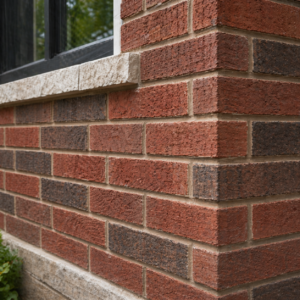
The biggest difference is detail control. Expertly installed brick veneer looks balanced, intentional, and integrated with the home. Weaker work often looks like an added skin. You notice the corners first, then the edges, then the places where the veneer meets trim, concrete, siding, stone, or the surrounding wall.
Good veneer work also respects scale. Brick size, joint spacing, and layout direction should make sense for the wall area. A contractor who forces a pattern without thinking about proportions can leave the feature looking awkward, even if the individual pieces are installed neatly.
Another separator is preparation. Strong contractors spend more time considering what lies behind the veneer and how the wall will perform over time. Weaker contractors tend to focus only on the visible face. That may look acceptable when the project is first finished, but it usually becomes more obvious later when the wall starts showing movement, moisture marks, or inconsistent ageing.
Step-by-step: how we handle brick veneer installation projects
Initial inspection and quote
We begin by reviewing the area where the veneer will be installed and checking whether the surface, layout, and surrounding materials are suitable. We also look at visibility, moisture exposure, and whether any repair work should be completed before installation begins.
After that, we provide a clear quote and explain whether the project is a straightforward veneer install or whether it also involves prep, repair, or related masonry upgrades. That matters because homeowners should know whether they are paying for finished wall treatment only or for the preparation that ensures it lasts.
Planning, materials, and layout
Once the scope is approved, we plan the layout, the corner treatment, the bond pattern, and how the veneer will connect to nearby surfaces. This stage affects how natural the finished work looks. Good planning is what keeps a veneer wall from feeling fake or overly decorative.
We also look at how the veneer fits the home architecturally. Some homes need a simpler and more restrained layout. Others can support a stronger feature wall or a more prominent entrance treatment. The right decision depends on the scale of the home and the area’s visibility.
On-site work and quality checks
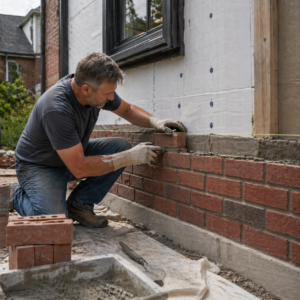
During the work, the wall is prepared properly, and the veneer is installed with attention to alignment, spacing, and overall visual balance. Before finishing, the project should be checked for bond, fit, edge detail, and how well it blends into the rest of the property.
That last stage matters more than many homeowners expect. Veneer should not just be attached correctly. It should also look deliberate from every angle you are likely to see it, especially from the front approach to the house.
Why brick veneer installation should come from a masonry specialist
Brick veneer looks simple once it is complete, but the hard part is making it look intentional and durable. A weak install can leave you with awkward corners, poor transitions, uneven alignment, and a finish that looks more like a shortcut than an upgrade.
A masonry specialist is more likely to understand how the veneer should behave visually and structurally. That matters because homeowners are not just paying for the material. They are paying for a result that improves the home, looks believable, and lasts.
It also matters when the project is highly visible. On a front-facing Toronto home, poor veneer work can be just as noticeable as poor brick repair. In some cases, it is even more noticeable because the whole point of the project was appearance.
Another reason to choose a specialist is the judgment in repairs. Some surfaces are not ready for veneer until underlying issues are handled. A better contractor will tell you that early. A weaker one may install the veneer anyway, leaving you with problems hidden behind an attractive finish.
Local factors in Toronto that affect brick veneer projects
Toronto’s climate affects all exterior masonry-facing systems. Freeze-thaw exposure and moisture still matter, even when the project is purely decorative. The finished installation must be detailed in a way that makes sense for the local climate.
Older homes also need more thoughtful planning. If the veneer is being added to an older façade, porch, or fireplace feature, the design should support the house’s style rather than fight it. On heritage-designated properties, exterior changes may also need review.
Toronto’s property standards for exterior walls and related structures can also shape how surface conditions and visible exterior upgrades should be approached. A veneer project should never be used to hide a failing wall that actually needs repair first.
Key questions homeowners ask about brick veneer installation
Is brick veneer a good option for Toronto homes?
Yes, when it is installed properly on a suitable surface. It can improve curb appeal and add character to the masonry without rebuilding the entire wall.
Can brick veneer be used outside and inside?
Yes. Many projects use veneer on exterior entries and façades, while others use it for fireplaces or indoor feature walls.
Does the veneer look fake compared to the full brick?
It can if the layout, corners, and details are handled poorly. Good installation makes a big difference in how natural the finished work looks.
Can veneer be combined with other masonry work?
Often, yes. Some projects work best when veneer is part of a larger upgrade that includes steps, accent walls, or other masonry elements.
Is brick veneer mostly decorative or structural?
It is mainly decorative, but the installation still needs to be handled with real masonry care if the result is going to last and look right.
How do I know if my wall is suitable for veneer?
The best way is to have it inspected. The contractor should check whether the surface is sound, properly prepared, and appropriate for the type of veneer you want installed.
Can veneer help modernize the look of an older home?
Yes, but it needs to be done carefully. The best result usually comes when the veneer complements the home’s character rather than trying to make it look like a completely different house.
What to expect when you contact us
- Tell us which veneer project or feature area you have in mind.
- We arrange an inspection or estimate.
- We assess the surface and explain what type of installation fits best.
- We provide a clear quote and recommended scope.
- We schedule the work and complete it with care and strong finish detail.
When you are ready to discuss your project, contact us.
Where can I hire experts for brick veneer installation in Toronto?
You can hire experts for brick veneer installation in Toronto through a masonry contractor that understands both layout and long-term performance. If you want a veneer that looks intentional, fits your home’s style, and holds up well over time, the best next step is to get a clear inspection and a quote based on the actual wall and design goals.
If the project is highly visible, such as a front entry, porch face, accent wall, or fireplace feature, it is worth taking the extra time to hire a contractor who can clearly explain the installation and demonstrate an understanding of the difference between decorative surface work and real masonry finish quality. That is usually the difference between a project that quietly improves the home and one that always looks slightly off.