

Quick Answer
Brick repair fixes specific damaged areas, such as cracked bricks, spalling brick faces, loose masonry, or failing mortar joints. Brick restoration is broader and is usually better for older Toronto homes, visible facades, heritage-style brickwork, or walls with widespread wear where appearance, material matching, and long-term moisture control matter. The right choice depends on the home’s age, the extent of the damage, and whether the issue is localized or part of a larger masonry problem.
Many homeowners use the terms “brick repair” and “brick restoration” interchangeably. They are related, but they are not identical. A small section of cracked brick may only need repair. An older front facade with worn mortar, mismatched past repairs, staining, and spalling may need restoration.
In Toronto, this difference matters because many brick homes are older, weather-exposed, and affected by freeze-thaw cycles. A repair that works well for one damaged area may not be enough for a wall with age-related wear or moisture problems across several sections. On the other hand, not every masonry issue needs full restoration. Sometimes the best answer is a targeted repair done properly.
This guide explains the difference between brick repair and brick restoration, when each option makes sense, what Toronto homeowners should check, and how to avoid paying for the wrong level of work.
What Is Brick Repair?
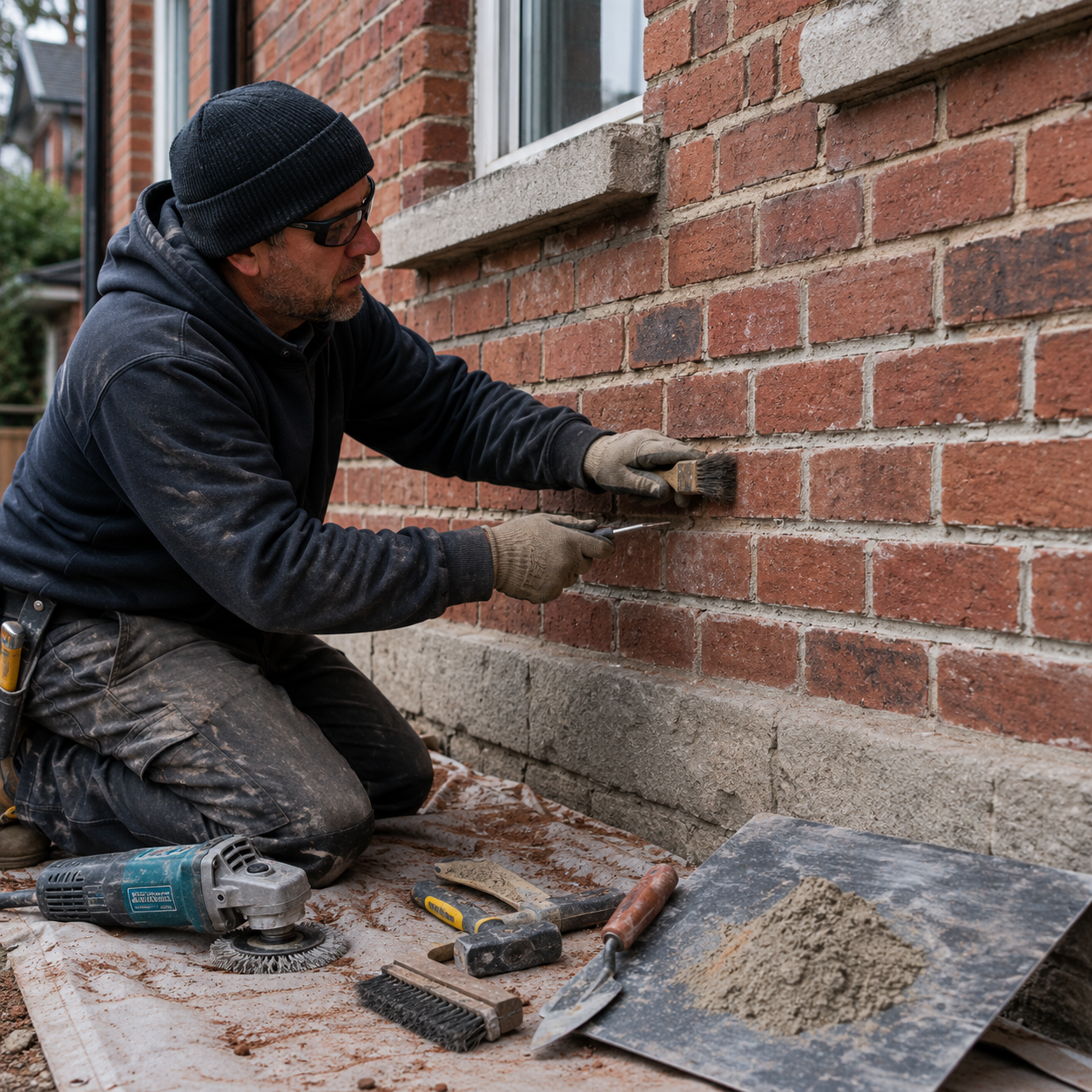
Brick repair focuses on fixing specific damaged areas of masonry. It is usually the right option when the issue is limited, the surrounding wall is stable, and the damaged brick or mortar can be corrected without restoring the entire wall or facade.
Brick repair may include:
- Replacing cracked or broken bricks
- Repairing spalling brick in a local area
- Resetting loose bricks
- Fixing damaged mortar around affected bricks
- Repairing brickwork around steps, porches, windows, or chimneys
- Correcting small areas damaged by water, impact, or freeze-thaw cycles
Good brick repair should still consider the cause of the damage. If a few bricks are spalling because water is hitting the wall from a leaking gutter, replacing those bricks without correcting the source of the leak may only provide temporary results. If brick faces are breaking because the mortar is too hard or moisture is trapped, the repair needs to address both conditions.
For homeowners dealing with cracked brick, loose brick, spalling, or localized damage, brick repair in Toronto is often the starting point.
What Is Brick Restoration?
Brick restoration is a broader approach that focuses on restoring older, worn, or damaged brickwork to a sound, visually consistent condition. It often involves more than replacing a few bricks.
Brick restoration may include:
- Careful brick replacement and blending
- Mortar colour and texture matching
- Repointing or tuckpointing larger sections
- Removing poor past repairs where possible
- Cleaning brickwork with suitable methods
- Addressing moisture patterns and drainage concerns
- Preserving the original character of older or heritage-style masonry
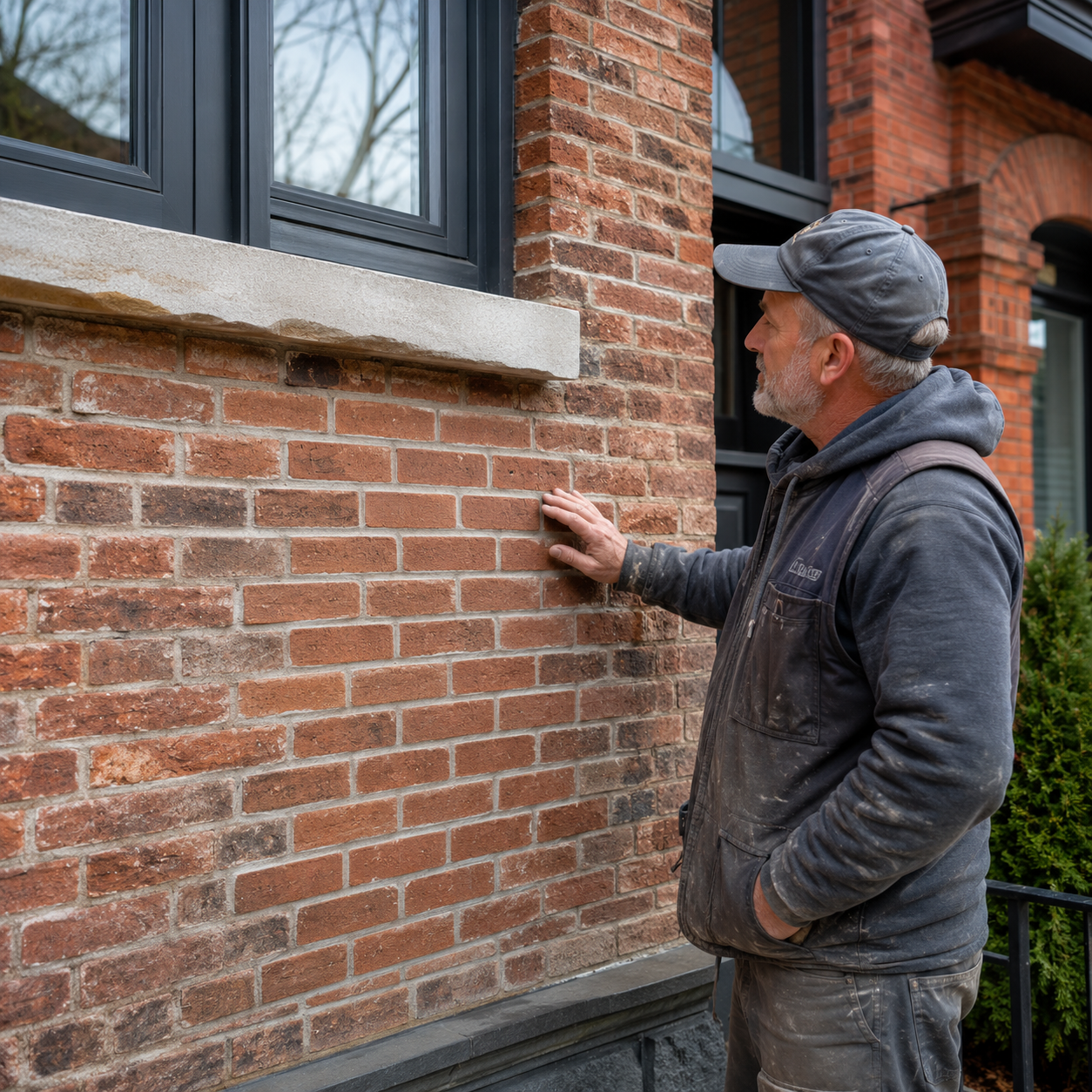
Restoration is often more appropriate for older Toronto brick homes, front facades, historic-looking masonry, chimneys with visible wear, or walls where several problems overlap. The goal is not to make old brick look artificially new. The goal is to keep the masonry sound, compatible, and visually balanced.
If the wall has age, character, and visible material differences, brick restoration in Toronto may be a better fit than a simple spot repair.
Why the Difference Matters for Toronto Homes
The difference matters because Toronto homes often combine older brick, aging mortar, previous patch repairs, weather exposure, and moisture movement. A quick repair may solve a single isolated issue, but it may not be enough when the wall shows broader wear.
Toronto and GTA homes deal with rain, snow, humidity, ice, and freeze-thaw cycles. Water can enter through open mortar joints, cracked brick, damaged chimneys, poor drainage, or failing sills. Once water gets into brick or mortar and freezes, it can expand, causing more cracking, spalling, and joint failure.
Older homes also need careful material judgment. Some older brick is softer than modern brick. If a repair uses the wrong mortar, the surrounding brick can be damaged over time. This is one reason restoration work often focuses on compatibility, not just appearance.
For homes with heritage value, the decision can also involve permits and conservation concerns. The City of Toronto provides heritage property application guidance, and Parks Canada’s Standards and Guidelines for the Conservation of Historic Places in Canada can help homeowners understand why original materials and careful repair methods matter.
Signs Brick Repair May Be Enough
Brick repair may be enough when the damage is local, and the rest of the wall is still in good condition. In these cases, a targeted repair can resolve the issue without escalating into a larger restoration project.
Brick repair may be enough when:
- Only a few bricks are cracked or spalling
- The surrounding mortar is mostly sound
- The wall is not bulging, leaning, or shifting
- The damaged area is small and easy to define
- The cause of the damage can be corrected
- The wall dries normally after rain
- The repair area is not a major visible facade, where blending is critical
A good example is a small section of brick near a walkway where salt, splashback, or impact has damaged a few bricks. If the surrounding wall is sound and the water or exposure issue can be managed, brick repair may be the practical choice.
Another example is a small section of the chimney with a few damaged bricks and a local joint failure. If the chimney is otherwise stable, targeted repair and repointing may be enough. If the chimney shows more extensive deterioration, leaning, or water entry, the scope may need to be broader.
Signs Brick Restoration May Be the Better Choice
Brick restoration may be the better choice when the damage is widespread, visible, recurring, or related to the wall’s age and character. Restoration is also more likely to be needed when previous repairs have made the wall look patchy or caused new damage.
Brick restoration may be better when:
- The front facade has several areas of damaged brick or mortar
- There are many mismatched past repairs
- Mortar joints are failing across a wide area
- Brick colour, texture, and joint style need careful blending
- The home is older, heritage-style, or visually character-defining
- Staining, spalling, and mortar failure appear together
- The wall has been patched several times, but the problems keep returning
Restoration is often more thoughtful than a simple repair because it looks at the wall as a whole. It asks: What should be repaired? What should be retained? What material should be matched? What caused the damage? How can the finished work blend naturally with the existing brick?
This matters most in visible areas such as front walls, porch columns, older chimneys, side walls seen from the street, and masonry details that affect curb appeal.
The Role of Tuckpointing in Repair and Restoration
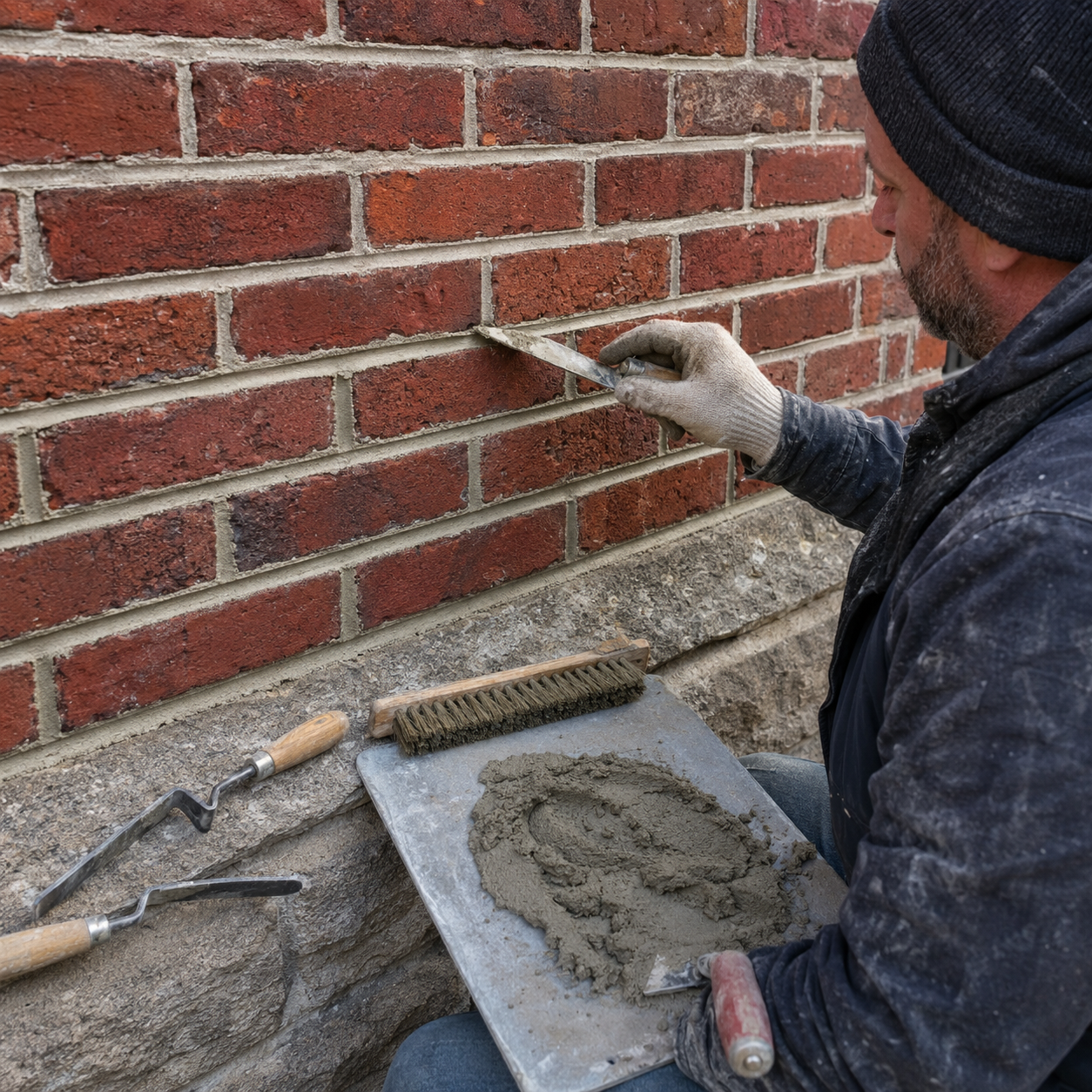
Tuckpointing can be part of both brick repair and brick restoration. It depends on the size and purpose of the work. In a repair project, tuckpointing may be limited to the damaged area. In restoration, it may be used across a larger section of the wall to improve both performance and appearance.
Mortar joints often fail before the bricks do. When joints are cracked, missing, recessed, or powdery, water can enter and damage the surrounding brick. If the brick is still sound, repointing may protect the wall before brick replacement becomes necessary.
Tuckpointing is especially important when:
- Mortar joints are deeply recessed
- Joints are cracked or missing
- The wall has white staining or watermarks
- Brick edges are becoming exposed
- Past mortar repairs are failing
- The wall needs visual blending after brick replacement
For older homes, mortar compatibility matters. If the mortar is too hard for the brick, the brick can become the weak point. That is why tuckpointing in Toronto should be approached as more than filling gaps. It should support the wall’s ability to shed water and move naturally with the material.
How Chimneys Change the Decision
Chimneys often need a closer look because they are more exposed than most wall sections. A chimney can need simple brick repair, broader restoration, partial rebuilding, or related water-control work, depending on its condition.
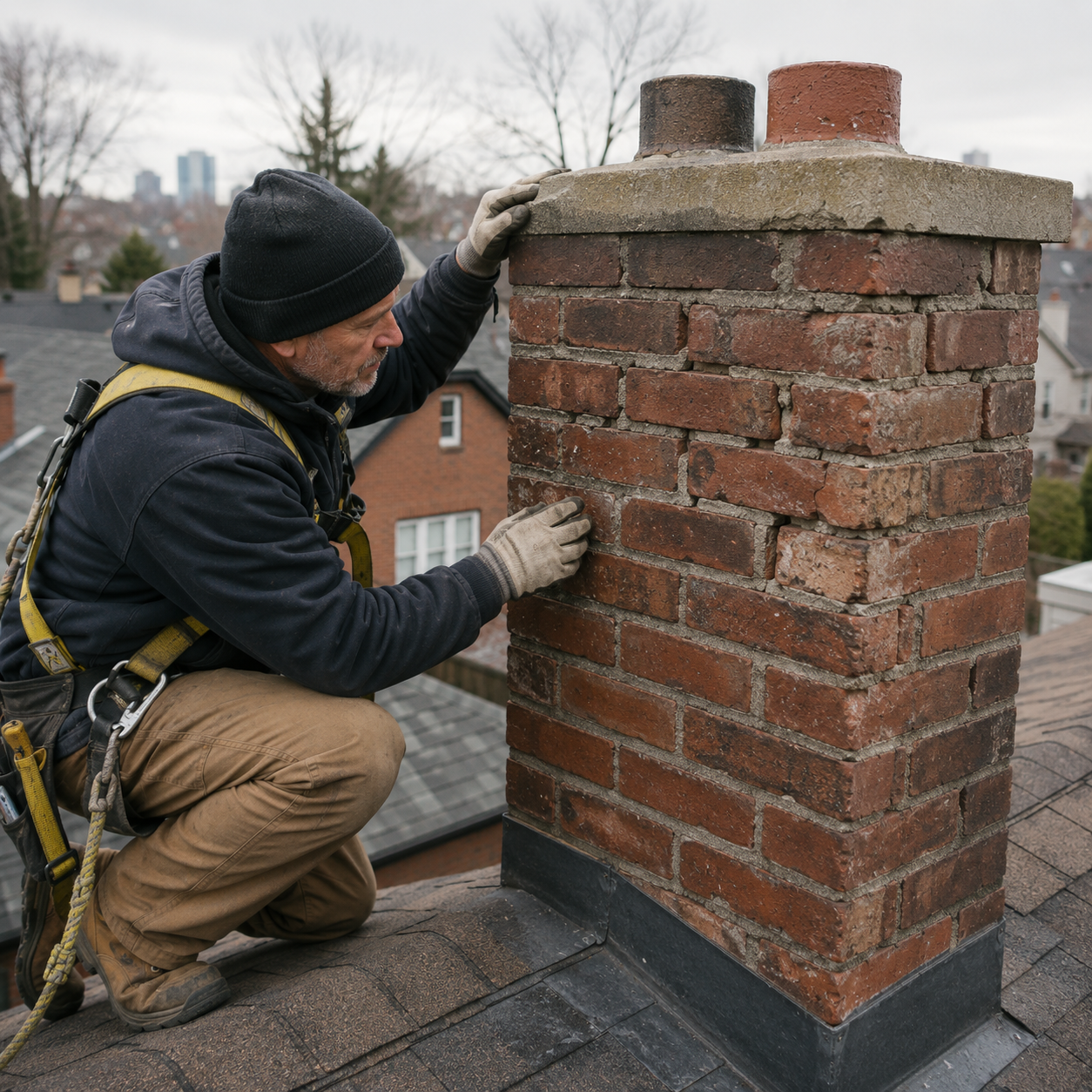
Chimney brickwork is exposed to rain, snow, wind, heat, cold, and freeze-thaw cycles from all sides. This makes chimneys more likely to show loose bricks, cracked mortar, spalling, water staining, leaning, and crown or cap issues.
Brick repair may be sufficient when a chimney has a few damaged bricks or a local joint failure, and the structure is otherwise stable. Restoration or rebuilding may be needed when the chimney has widespread deterioration, poor past repairs, movement, or repeated leaks.
Before choosing a small chimney repair, homeowners should check whether the issue is local or part of a larger water-entry problem. If the chimney is cracked, loose, leaning, or leaking, chimney repair in Toronto should be assessed carefully before winter weather makes the damage worse.
Repair May Be Enough When…
Repair may be sufficient when the issue is clearly limited, and the surrounding masonry remains sound. This is often the most practical and cost-conscious option when the wall does not need a broader visual or structural correction.
Repair may be enough when:
- The damage is isolated to one small section
- Only a few bricks need replacement
- The mortar is mostly intact outside the repair area
- The wall is straight and stable
- The water source has been corrected
- Matching is possible without broader blending work
- The home does not have heritage or facade-sensitive requirements in that area
Choosing repair in these cases can be a smart move. The key is to avoid a surface-only patch. Even a small repair should remove damaged material, use suitable mortar, and consider why the damage happened.
A Larger Restoration May Be Needed When…
A larger restoration may be needed when the wall has repeated, widespread, or highly visible problems. Restoration is also worth considering when a basic repair would leave the wall looking patchy or fail to correct the broader condition.
A larger restoration may be needed when:
- Many bricks across the same wall are spalling or cracked
- Mortar joints are failing across a wide section
- The wall has old, mismatched patches
- The front facade needs careful visual consistency
- The masonry is older or heritage-sensitive
- Damage keeps returning after spot repairs
- Moisture patterns affect several areas of the wall
Restoration may cost more than a small repair, but it can be more sensible when the wall needs a coordinated approach. A patchwork of small repairs can sometimes cost more over time if each one ignores the wall’s overall condition.
What Homeowners Can Safely Check Before Deciding
Homeowners can perform a visual inspection before requesting estimates. The goal is not to fully diagnose the wall, but to determine whether the issue appears local or widespread.
Check these areas:
- How many bricks are cracked, loose, or spalling
- Whether the mortar damage is local or spread across the wall
- Whether previous repairs match the surrounding brickwork
- Whether the wall dries normally after rain
- Whether stains return after cleaning
- Whether the chimney shows cracking, leaning, or missing mortar
- Whether water is being directed toward the wall by gutters, downspouts, or grading
- Whether the wall is highly visible or part of an older facade
Take photos from a distance and close-up photos of the problem areas. Wide photos help show whether damage is isolated or part of a larger pattern. Close-up photos help show the condition of the brick, mortar depth, and previous repairs.
Do not pressure-wash, seal, paint, or patch the wall before the assessment. These steps can hide useful clues and may trap moisture if the wall is already damaged.
When Permits or Heritage Review May Matter
A permit or heritage review may be required when the project goes beyond a minor repair, affects a protected property, changes visible heritage attributes, or involves larger structural work. Homeowners should not guess when working on designated or heritage-sensitive properties.
The City of Toronto explains that building permits are required for many types of construction, demolition, additions, and major alterations. Homeowners can review the City’s building permit information when masonry work may involve more than a basic repair.
For designated heritage properties, the City’s heritage guidance should be checked before exterior masonry changes are approved. Heritage restoration is not only about appearance. It can involve retaining original materials, matching repair methods, and respecting the property’s character.
If your home is not formally designated but still has older or character-defining brickwork, the same careful thinking can still help. Matching brick, mortar, joint profile, and repair method can protect both appearance and long-term performance.
How to Compare Estimates for Repair vs Restoration
Compare estimates by looking at scope, not only price. A brick repair estimate and a brick restoration estimate may have very different costs because they are solving different levels of the problem.
When comparing estimates, ask:
- Is the contractor repairing one area or restoring a larger section?
- Will damaged mortar be removed or only covered?
- Will the replacement brick match the existing wall?
- Will mortar colour, texture, and joint profile be considered?
- Will the source of moisture be addressed?
- Is chimney, sill, flashing, or drainage damage involved?
- Does the estimate include cleanup and debris removal?
- Does the repair protect the surrounding masonry?
A lower repair estimate may be reasonable if the issue is truly small. A higher restoration estimate may be reasonable if the wall needs broader matching, repointing, cleaning, and moisture review. The real mistake is comparing them as if they are the same service.
If you are unsure which service category best fits the issue, reviewing Otto’s full range of masonry services in Toronto can help you separate brick repair, restoration, tuckpointing, chimney work, stone masonry, concrete repair, and waterproofing concerns.
When to Call a Mason
Call a mason when you are unsure whether the damage is local or part of a larger wall condition. A mason can help decide whether brick repair, brick restoration, tuckpointing, chimney repair, or another masonry service is the right fit.
You should call sooner if you notice:
- Loose bricks or falling mortar
- Several spalling bricks in the same area
- Cracks are spreading across the wall
- White staining that keeps returning
- A chimney that is cracked, leaning, or leaking
- Previous patches that keep failing
- Water stains inside near the exterior brick
- A visible front facade that needs careful matching
If the issue looks minor, a mason may recommend targeted brick repair. If the wall is older, highly visible, or widely deteriorated, restoration may be the better long-term decision.
FAQs About Brick Repair vs Brick Restoration
What is the difference between brick repair and brick restoration?
Brick repair fixes specific damage, such as cracked or loose bricks, spalling, or localized mortar failure. Brick restoration is broader, focusing on repairing, matching, and improving older or more visibly worn brickwork overall.
When is brick repair enough?
Brick repair may be enough when the damage is limited to a small area, the surrounding wall is stable, and the water source has been corrected. It is often suitable for a few damaged bricks or local mortar problems.
When does a Toronto home need brick restoration?
A Toronto home may need brick restoration when the wall has widespread damage, mismatched past repairs, failing mortar across a large section, visible facade concerns, or older brickwork that needs careful material matching.
Is brick restoration only for heritage homes?
No, brick restoration is not only for formally designated heritage homes. It can also be useful for older Toronto homes, visible facades, character brickwork, and walls where appearance and material compatibility matter.
Does tuckpointing count as brick repair or restoration?
Tuckpointing can be part of either brick repair or restoration. Small-area tuckpointing may support a repair, while larger repointing and mortar matching may be part of a broader restoration project.
Can brick repair look mismatched?
Yes, brick repair can look mismatched if the replacement brick, mortar colour, joint profile, or texture does not blend with the existing wall. This is why visible facades and older brickwork often need more careful matching.
How do I know which option my home needs?
Look at whether the damage is local or widespread, whether the wall is older or highly visible, and whether past repairs have failed. A mason can assess whether targeted brick repair is enough or whether restoration is the better long-term option.
Final Answer
Brick repair is usually best for local damage, while brick restoration is better for older, visible, widespread, or character-sensitive masonry. Toronto homeowners should choose based on the wall’s condition, not just the repair label. If the damage is isolated, targeted repair may be enough, but if the wall has failing mortar, mismatched patches, recurring moisture, or facade-wide wear, restoration may yield better long-term results.