

Quick Answer
Cheap masonry repairs often cost more later because they may only address visible damage without addressing the underlying causes, such as failing mortar, trapped moisture, poor drainage, or freeze-thaw damage. In Toronto, quick patching can break down after one or two winters if the repair uses the wrong materials or fails to address water entry. A proper masonry repair should address the damaged area, the surrounding masonry, and the conditions that caused the problem.
It is understandable why homeowners look for the lowest price when brick, stone, mortar, or chimney damage appears. Masonry problems can feel sudden, and many repairs look small from the outside. A few missing mortar joints, one cracked brick, a loose step, or a patch of spalling may not seem like a major issue.
The problem is that cheap masonry repairs are often cheap for a reason. They may skip preparation, use the wrong mortar, patch over damaged brick, ignore moisture, or fail to match the surrounding wall. The repair may look acceptable for a short time, but Toronto’s weather can quickly expose weak work. Rain, snow, ice, and freeze-thaw cycles test masonry every year.
This guide explains why low-cost masonry repairs can become more expensive later, what warning signs homeowners should watch for, and how to compare repair options without overpaying or accepting shortcuts that lead to poor results.
Why Cheap Masonry Repairs Are Risky in Toronto
Cheap masonry repairs are risky in Toronto because masonry must withstand moisture, freezing temperatures, seasonal movement, and older building materials. A repair that only improves appearance may fail when water gets behind it or when winter expands trapped moisture inside the brick and mortar.
Toronto and GTA homes often include older clay brick, aging mortar joints, exposed chimneys, concrete steps, stone details, parging, and foundation-area masonry. Many of these materials need repairs that match the original wall’s condition. If the repair material is too hard, too thin, poorly bonded, or applied over damp damage, the wall can continue to deteriorate behind the patch.
A cheap repair may also miss the larger issue. For example, a contractor may fill a cracked mortar joint, but the real cause may be water from a downspout, a failed chimney crown, missing flashing, or a wall that stays damp after rain. If the cause remains, the repair becomes temporary.
Homeowners who are unsure which type of repair applies can review Otto’s main masonry services in Toronto to understand the difference between brick repair, tuckpointing, chimney repair, concrete repair, parging, waterproofing, and restoration work.
The Biggest Problem: Cheap Repairs Often Treat the Symptom
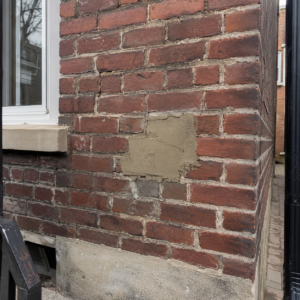
The biggest issue with cheap masonry repairs is that they often treat what is visible, not what is causing the damage. Masonry problems usually have a cause, and that cause needs to be considered before choosing a repair method.
A cracked brick may be caused by trapped moisture. Missing mortar may be due to age, water exposure, poor prior repairs, or freeze-thaw cycles. A leaking chimney may involve damaged mortar, a cracked crown, failed flashing, loose brick, or missing cap protection. A concrete step may crack because of movement, poor drainage, salt exposure, or a weak base.
If the repair only covers the visible crack, the same problem can return. In some cases, it returns worse because the patch can trap water or make the surrounding masonry work harder than it should.
Cheap surface repairs may include:
- Smearing mortar over cracked joints without removing damaged mortar
- Patching spalling brick faces instead of replacing failed brick
- Applying sealers over active moisture problems
- Using hard mortar on softer, older brick
- Filling gaps without checking why they opened
- Covering chimney damage without checking the crown, cap, or flashing area
- Repairing one section while ignoring connected damage nearby
These shortcuts can look neat at first, but masonry is not judged by its appearance on the first day. The real test is whether it holds up through rain, snow, thawing, and repeated seasonal changes.
How Poor Mortar Work Makes Repairs Fail Faster
Poor mortar work can make masonry repairs fail faster because mortar is not just filler between bricks. It helps manage water, movement, bonding, and the wall’s long-term stability.
In older Toronto brick homes, mortar compatibility matters. If a repair uses mortar that is too hard for the surrounding brick, the brick may become the weaker part of the wall. Instead of the joint absorbing movement and weathering, the brick face may crack, spall, or break apart.
Cheap mortar repairs often fail because the damaged mortar is not removed deeply enough. A thin surface skim can separate from the old joint because it has insufficient depth for bonding. The wall may look repointed for a season, but the new material can crack, flake, or fall out after moisture and freezing temperatures affect it.
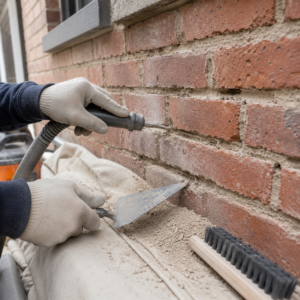
Proper tuckpointing in Toronto usually involves removing deteriorated mortar to a suitable depth, cleaning the joint, applying compatible new mortar, and finishing the joint so it sheds water properly. That takes more time than a quick surface patch, but it gives the repair a better chance of lasting.
Why Water Entry Turns Cheap Repairs Into Expensive Repairs
Water is one of the main reasons cheap masonry repairs become expensive later. If water keeps entering the wall, chimney, steps, or foundation area, the repair may fail no matter how clean it looks on the surface.
Water can enter masonry through:
- Open mortar joints
- Cracked or spalling brick
- Damaged chimney crowns or caps
- Failed flashing near the rooflines
- Poorly sloped sills or ledges
- Downspouts discharging near walls
- Soil or mulch piled against the brick
- Cracked parging or foundation-area masonry
Once water enters and temperatures drop, freezing can expand moisture inside the masonry. Over time, this can push apart brick faces, loosen mortar, and widen cracks. A small repair that could have been handled early may become a larger section of brick replacement or repointing.
The City of Toronto provides homeowners with guidance on managing rainwater and melted snow around properties, including basement flooding prevention and downspout disconnection. These issues matter for masonry because poor drainage can keep walls, foundations, and exterior masonry wetter than they should be.
If the concern includes damp foundation walls, damage to lower brickwork, or recurring moisture near the basement, homeowners may need to consider a solution beyond surface repairs. In some cases, basement waterproofing and moisture control should be reviewed alongside masonry repair.
Cheap Brick Repair Can Damage the Look and Strength of a Wall
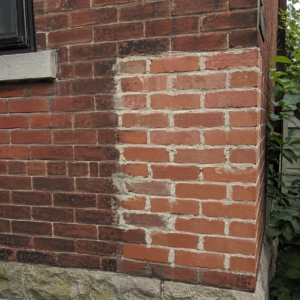
Cheap brick repair can affect both appearance and durability when the replacement brick, mortar colour, joint style, or repair method does not match the existing wall. This is especially noticeable on older Toronto homes where brick colour and texture vary by age and original material.
A poor brick repair may include bricks that are the wrong size, colour, texture, or hardness. It may also use mortar that stands out too much or joints that do not match the surrounding wall. On a side wall, this may be less noticeable. On a front facade, porch, chimney, or heritage-style wall, the mismatch can be obvious.
The bigger concern is performance. If damaged bricks are patched only on the face, the failed material may continue to break apart. If bricks are replaced without addressing the mortar or the nearby water source, the surrounding areas may fail next.
Good brick repair in Toronto should consider the condition of the damaged brick, the surrounding mortar, the moisture pattern, and how the finished work will blend with the wall. That is why the cheapest repair is not always the least expensive repair over time.
Chimney Shortcuts Can Become Safety and Water Problems
Cheap chimney repairs can become costly because chimneys are exposed to weather from all sides and often deteriorate faster than sheltered walls. A small crack, loose brick, or open mortar joint at the top of the chimney can allow water to enter and cause damage to spread downward.
A quick chimney patch may not address:
- Cracked or missing mortar joints
- Loose or spalling chimney bricks
- A damaged chimney crown
- A missing or poor chimney cap
- Flashing issues near the roofline
- Leaning or movement in the chimney stack
- Water is entering the home around the chimney area
Chimneys also create access and safety challenges. A very low quote may not include proper access, careful inspection, or enough repair depth. That can leave the homeowner with a cleaner-looking chimney that still leaks or continues to loosen.
If a chimney has loose bricks, missing mortar, cracks, leaning, or recurring leaks, a thorough chimney repair assessment is usually safer than approving a quick patch based solely on the lowest price.
Cheap Concrete and Step Repairs Can Create Safety Issues
Basic concrete and step repairs can cost more later, as they only address the surface and ignore movement, drainage, salt exposure, or deeper cracking. Exterior steps, porches, landings, and walkways in Toronto are exposed to ice, snow, de-icing salts, rain, and repeated foot traffic.
Surface patching may be enough for small cosmetic defects, but it is not always suitable for cracked, shifting, or unsafe concrete. If the base has moved or water is entering beneath the slab, a thin patch may crack again. If a step has become uneven, loose, or slippery, the issue may be more than appearance.
Cheap concrete repairs can lead to:
- The patch material is separating from the old surface
- Cracks returning after freeze-thaw cycles
- Uneven walking surfaces are getting worse
- Water continues to enter the nearby masonry
- More expensive removal or replacement later
For damaged exterior steps, porches, or slabs, it helps to determine whether the issue requires patching, resurfacing, partial rebuilding, or a more comprehensive concrete repair.
Repair May Be Enough When…
A smaller masonry repair may be enough when the damage is local, the surrounding masonry is still sound, and the cause can be corrected. This is where homeowners can save money without choosing a poor shortcut.
Repair may be enough when:
- Only a few bricks are cracked or spalling
- Mortar damage is limited to one section
- The chimney has local joint failure, but no major movement
- Concrete damage is shallow and does not affect safety
- The wall dries normally after rain
- Drainage issues have been corrected
- The previous repair failure is limited and easy to remove
The key is that the repair should still be done properly. A smaller scope does not mean a weaker repair. It means the work focuses on the actual damaged area without unnecessary replacement.
A Larger Fix May Be Needed When…
A larger masonry fix may be needed when damage is widespread, recurring, unsafe, or connected to ongoing moisture. In these cases, a cheap patch may delay the real repair while allowing the damage to grow.
A larger fix may be needed when:
- Many bricks are loose, cracked, or spalling across the same wall
- Mortar joints are failing over a wide area
- The chimney is leaning, loose, or badly deteriorated
- Water stains appear indoors after rain
- Concrete steps or porch sections have shifted
- Previous patches keep cracking or falling away
- The wall stays damp long after the rain stops
In these situations, homeowners should be cautious about the cheapest quote if it does not explain the cause of the damage. A larger repair may cost more upfront, but it may also prevent repeat work, added water damage, and wider replacement later.
What Homeowners Can Safely Check Before Accepting a Cheap Quote
Homeowners can protect themselves by checking a few basic signs before accepting a low quote for masonry work. You do not need to diagnose the wall yourself, but you should understand whether the quote addresses the full problem.
Before approving work, check:
- Does the contractor explain what caused the damage?
- Does the quote clearly describe the repair area?
- Does it say whether damaged mortar will be removed or only covered?
- Does it mention brick, mortar, stone, or concrete matching where needed?
- Does it include cleanup and debris removal?
- Does it address nearby water sources such as gutters, downspouts, or flashing?
- Does it explain whether the repair is temporary or long-term?
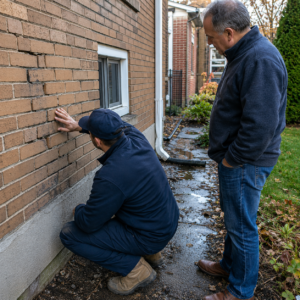
It is also helpful to take photos before the work begins. Take wide photos of the wall and close-up photos of the damage. This helps you compare estimates and keep a record of what was repaired.
For larger renovations or structural changes, homeowners should also review the City of Toronto’s building permit guidance. The City explains that permits are required for construction, demolition, additions, and material alterations to buildings or structures. Minor masonry repair may not always need a permit, but larger structural work, major alterations, or heritage-related work may need review.
How to Compare Masonry Quotes Without Overpaying
The best way to compare masonry quotes is to compare the scope, not only the total price. Two quotes can appear to be for the same repair but involve very different levels of work.
When comparing quotes, ask:
- Are both contractors repairing the same area?
- Is one contractor removing damaged material while another is patching over it?
- Are both using compatible mortar for the wall?
- Are damaged bricks being replaced or only resurfaced?
- Is access equipment included if the work is high or difficult to reach?
- Is cleanup included?
- Is the cause of the damage being addressed?
- Does the quote explain what is excluded?
A higher quote is not automatically better. A lower quote is not automatically wrong. The issue is whether the quote provides sufficient detail to demonstrate that the repair will actually solve the problem. If the cheaper quote omits preparation, depth, matching, access, or moisture control, it may end up costing more later.
When to Call a Mason Instead of Choosing the Quickest Patch
Call a mason when the damage involves water entry, loose masonry, failing mortar, spalling brick, chimney damage, unsafe concrete, or repeated repair failure. These signs usually need more than a surface patch.
You should get a proper masonry opinion when you notice:
- Mortar falling out between bricks
- Brick faces flaking or popping off
- Loose brick around a wall, porch, or chimney
- White staining that keeps returning
- Damp areas inside near exterior masonry
- A chimney that looks cracked, shifted, or unstable
- Concrete steps that feel uneven or unsafe
- A previous repair that failed quickly
If you are unsure whether the issue is urgent, Otto’s Masonry guide on when to address masonry issues can help homeowners understand why waiting too long may increase the need for repairs.
FAQs About Cheap Masonry Repairs
Why do cheap masonry repairs fail?
Cheap masonry repairs often fail because they only cover the surface damage without removing weak material, matching the mortar, or fixing the moisture source. In Toronto, freeze-thaw cycles can quickly expose poor preparation and weak patching.
Is the cheapest masonry quote always a bad choice?
The cheapest masonry quote isn’t necessarily bad, but it should be detailed enough to explain the repair area, method, materials, and cause of the damage. A low quote becomes risky when it is vague or skips important repair steps.
Can a small masonry repair save money?
Yes, a small masonry repair can save money when the damage is local, and the surrounding wall is still sound. The repair still needs proper preparation, compatible materials, and attention to water entry.
Why does patching mortar sometimes fall out?
Mortar patches may fall out when damaged mortar is not removed deeply enough, the joint is not cleaned properly, or the new mortar does not bond well. Thin surface patches often fail more quickly in Toronto’s weather.
Can cheap brick repair cause more damage?
Yes, cheap brick repair can cause more damage if it traps moisture, uses the wrong mortar, ignores spalling brick, or fails to correct the water source. Poor repairs can lead to wider brick replacement later.
Should I repair masonry before winter?
You should repair masonry before winter if there are open joints, loose bricks, spalling, chimney damage, or water entry. These problems can worsen when moisture freezes and expands inside the brick or mortar.
How can I tell if a masonry quote is too vague?
A masonry quote is too vague if it only says “repair wall” or “fix brick” without explaining the repair area, method, materials, preparation, cleanup, or whether the cause of the damage will be addressed.
Final Answer
Cheap masonry repairs often end up costing more later because they can hide visible damage while leaving the underlying cause untouched. In Toronto, weak mortar patches, poor brick matching, ignored moisture, and rushed chimney or concrete repairs can fail after rain, snow, and freeze-thaw cycles. The smarter choice is not always the highest price; it should be a clear repair scope that properly fixes the damaged area and addresses why the masonry failed.