

Quick Answer
Brick cleaning and sealing in Toronto can help when the brick is stained, weathered, or exposed to heavy rain and freeze-thaw cycles, but only when the wall is sound, and the right method is used. It can hurt when harsh washing, aggressive chemicals, or the wrong sealer trap moisture inside older brick and mortar. Before cleaning or sealing, homeowners should check whether the issue is only surface staining or a sign of deeper masonry damage.
Brick cleaning and sealing sounds simple from the outside. A wall looks dirty, so it gets cleaned. A wall absorbs rain, so it gets sealed. In reality, a brick is not a flat painted surface. It is a porous masonry material that needs to handle moisture, drying, heat, cold, and movement over many seasons.
For Toronto and GTA homes, this matters because brickwork is exposed to wet springs, humid summers, fall rain, winter snow, and repeated freeze-thaw cycles. Careful cleaning or a breathable protective treatment can improve the appearance and durability of masonry. A poor method can damage the brick face, weaken mortar, hide warning signs, or trap water where it cannot escape.
This guide explains when brick cleaning and sealing help, when they can make things worse, and what homeowners should check before deciding on the next step.
Why Brick Cleaning and Sealing Matter in Toronto
Toronto brickwork often carries decades of weather exposure, pollution, salt residue, biological growth, and previous repairs. Many older homes also have softer brick and mortar than newer masonry, so a method that works on modern brick may be too harsh for an older wall.
The City of Toronto’s heritage masonry guidance encourages property owners to retain sound and repairable masonry where possible, especially on heritage properties. That same idea applies to many older non-designated homes as well. The goal should not be to make old brick look brand new at any cost. The better goal is to clean, repair, and protect the masonry without removing the character or damaging the material.
For heritage or older brickwork, homeowners can also review the federal Standards and Guidelines for the Conservation of Historic Places in Canada, which support careful decision-making when work affects historic building materials. These standards are useful when a home has original brick, older mortar, or a facade that contributes to the property’s character.
If your wall has cracked brick, loose mortar, or spalling before cleaning begins, the smarter first step is usually a masonry assessment. Cleaning may improve the surface appearance, but it will not fix weak mortar, open joints, moisture entry, or failing brick faces. In those cases, targeted brick repair in Toronto may be needed before any finish treatment is considered.
When Brick Cleaning Can Help
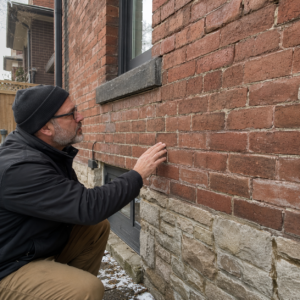
Brick cleaning is most effective when the problem is on the surface and the wall itself is still in good condition. The purpose is to remove dirt, staining, growth, or residue without changing the face of the brick.
Cleaning may be helpful when you notice:
- Dark staining from age, pollution, or runoff
- Light biological growth on shaded brick areas
- Efflorescence, which appears as white mineral staining
- Surface grime near steps, porches, driveways, or walkways
- Old dirt buildup on the brick that is otherwise solid
- Uneven staining after nearby landscaping or drainage changes
The safest cleaning method depends on the brick, mortar, stain type, and age of the wall. Many brick surfaces only need a gentle approach. Others need testing in a small area before any full cleaning begins. This matters because some stains are only on the surface, while others come from water moving through the wall. If water is carrying salts to the surface, cleaning the stain without addressing the moisture source may only give short-term improvement.
For older Toronto homes, cleaning should be conservative. High-pressure washing can remove the fired face of the brick, open up the surface, and make the wall more absorbent. Once that outer face is damaged, the brick may become more vulnerable to future freeze-thaw damage.
When Brick Sealing Can Help
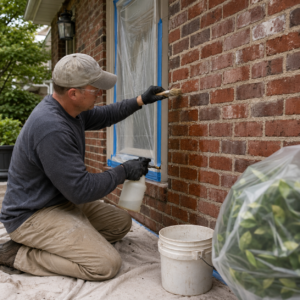
Brick sealing can help when the masonry is sound, moisture exposure is high, and the product allows the wall to breathe. The right sealer should reduce water absorption from the outside while still letting trapped vapour escape.
Sealing may be worth considering when:
- The brick is exposed to heavy wind-driven rain
- The wall has been repaired and needs added moisture resistance
- The brick is near the splashback from driveways, walkways, or grade-level surfaces
- The wall has a history of minor water absorption, but no active structural problem
- The masonry has been cleaned and inspected first
The keyword is “breathable.” Brick walls need to release moisture. A non-breathable film coating can trap water inside the wall, especially if moisture is already entering through the top of a wall, open mortar joints, bad flashing, poor grading, or a cracked chimney crown.
Sealing should also not be treated as a cure-all. If your mortar joints are cracked, recessed, or turning sandy, sealing the brick face will not rebuild them. In many cases, tuckpointing and repointing should come before sealing because the mortar joints are often the main path for water entry.
When Brick Cleaning Can Hurt
Brick cleaning can be damaging when the method is stronger than the masonry can withstand. The most common risk is removing or weakening the brick’s surface, especially in older homes with softer materials.
Cleaning can cause damage when:
- High-pressure washing cuts into the brick face or mortar joints
- Harsh chemicals are used without testing first
- Acid cleaning reacts badly with certain bricks or mortar types
- Water is forced into cracks, open joints, or hidden wall cavities
- Cleaning is done during poor weather conditions
- Paint, coating, or staining is removed too aggressively
A wall can look cleaner after aggressive washing, but still be worse off. If the brick face becomes rough, pitted, or softened, it can absorb more water than before. That creates a bigger problem in Toronto winters because absorbed moisture can freeze, expand, and lead to spalling.
The Masonry Council of Ontario notes that mortar properties, such as workability, bond strength, durability, and freeze-thaw resistance, are important in finished masonry. This is one reason cleaning should not be separated from the mortar’s condition. A clean wall with weak joints remains vulnerable.
When Brick Sealing Can Hurt
Brick sealing can be harmful when it traps moisture, covers up a problem, or uses the wrong product for the wall. A sealer should never be used to hide damage that actually needs repair.
Sealing can make things worse when:
- The wall already has trapped moisture inside it
- Mortar joints are cracked, missing, or deeply recessed
- Brick faces are spalling or flaking
- The product forms a surface film instead of allowing vapour to escape
- The chimney, wall cap, sill, or flashing is leaking from above
- The brick was not cleaned and dried properly before application
Moisture problems often start at weak points. On chimneys, water can enter through a cracked crown, a missing cap, failed mortar, or a roofline flashing issue. On walls, water can enter through open joints, poor sill details, or areas where grade and drainage push moisture toward the masonry. If those problems exist, sealing the visible brick face may trap water rather than address the underlying cause.
If a chimney is part of the concern, a proper chimney repair assessment is usually more useful than applying a sealer first. Chimneys take some of the hardest weather exposure on a home, so hidden water entry can quickly become a bigger masonry issue.
Common Signs Your Brick Needs More Than Cleaning
Some brick problems look like dirt at first, but they are actually signs of moisture movement or masonry breakdown. Cleaning may remove the visible symptom temporarily, but the mark can return if the underlying cause remains.
Look for these signs before deciding on cleaning or sealing:
- Spalling brick: The brick face is flaking, popping, or breaking away.
- Powdery mortar: The joints feel sandy, loose, or easy to scrape out.
- Open joints: Gaps between bricks allow water to enter.
- White staining: Efflorescence can indicate moisture-carrying salts passing through the wall.
- Bulging or movement: A brick that appears pushed outward needs inspection.
- Interior dampness: Stains, musty odours, or damp walls may indicate moisture intrusion.
- Recurring stains: Stains that return after cleaning often mean water is still moving through the masonry.
These signs do not always mean a major repair is needed, but they do mean the wall should be examined more closely. A small mortar issue can often be corrected before it becomes a brick replacement. A moisture problem caught early is usually easier to manage than one left through several winters.
Repair, Clean, Seal, or Restore: How to Choose the Right Step
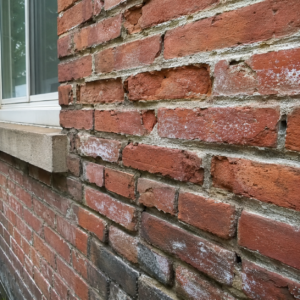
The right choice depends on the condition of the brickwork, not just the appearance of the wall. Cleaning and sealing are finishing or protection steps. They should not replace repair work when the wall is already failing.
Cleaning may be enough when:
- The brick and mortar are solid
- Staining is mostly on the surface
- There are no open joints or spalling bricks
- The wall dries normally after rain
- A gentle cleaning method works in a test area
Tuckpointing may be needed when:
- Mortar is cracked, missing, or recessed
- Water appears to enter through the joints
- Brick is still mostly sound, but the joints are failing
- The wall needs stronger weather protection before winter
Brick repair may be needed when:
- Individual bricks are cracked, loose, or spalling
- Previous patches are failing
- Water damage has affected specific sections
- Brick replacement or careful matching is required
Brick restoration may be needed when:
- The wall is older, highly visible, or character-defining
- Material matching matters for appearance and performance
- Cleaning, repointing, and selective brick repair need to work together
- The property has heritage value or original masonry details
For older homes or visible front facades, brick restoration may be the better lens than simple cleaning. Restoration considers the overall condition of the masonry, including brick type, mortar compatibility, moisture behaviour, and final appearance.
What Homeowners Can Safely Check Before Calling a Mason
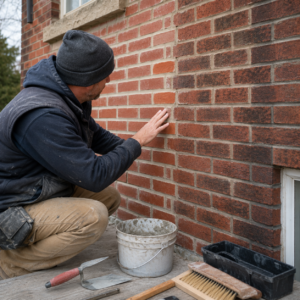
Homeowners can do a basic visual review without scraping, power washing, or applying products. The goal is to notice patterns and avoid making the problem worse.
Before cleaning or sealing, check:
- Whether the stains are random or tied to a water path
- Whether downspouts, gutters, or roof edges are dumping water onto the brick
- Whether the mortar joints look full or recessed
- Whether any brick faces are flaking or soft
- Whether the wall dries after rain or stays damp for a long time
- Whether the problem is worse near the grade, steps, chimney areas, or windowsills
You can also take clear photos of the wall from a distance and of the stains, joints, and damaged areas up close. This makes it easier to explain the issue when asking for advice.
Do not test harsh cleaners on a visible area, grind out mortar casually, or pressure wash old brick to see what happens. These actions can turn a manageable issue into a larger repair.
When to Call a Mason
Call a mason when the issue involves more than surface dirt or when you are unsure whether cleaning will be safe. A masonry professional can check whether the brick, mortar, drainage, and exposure conditions support cleaning, sealing, repair, or restoration.
It is especially wise to call a mason when:
- Brick is spalling, cracked, or loose
- Mortar is missing, powdery, or deeply recessed
- Water stains keep returning after cleaning
- The wall is part of an older or heritage-style home
- The chimney, parapet, porch, or front facade is involved
- You are considering sealing, but do not know if the wall is dry and sound
For larger work, permits or code considerations may also apply, depending on the scope. Homeowners can review the Ontario Building Code regulation for broader building requirements, but a mason or qualified building professional can help interpret what applies to a specific project.
If moisture control is the greater concern, cleaning and sealing may be only one part of the answer. Drainage, grading, wall condition, foundation coatings, and exterior water management may also matter. In that case, reviewing related basement waterproofing and moisture control options may help you determine whether the source is masonry-surface exposure or a broader water-management issue.
Practical Maintenance Tips After Brick Cleaning or Sealing
After the brick has been cleaned or treated, the best maintenance is simple observation and water control. Most masonry problems become serious when water repeatedly enters and cannot dry out.
Helpful steps include:
- Keep gutters and downspouts working properly
- Direct water away from brick walls and foundations
- Watch for returning white staining after rain
- Check mortar joints before winter
- Avoid piling soil, mulch, or snow directly against the brick
- Do not apply paint or sealers without checking breathability
- Inspect chimneys, sills, caps, and exposed ledges regularly
Good maintenance does not mean constantly coating the wall. In many cases, the better choice is to keep water moving away from the masonry and repair small defects early.
FAQs About Brick Cleaning and Sealing in Toronto
Is brick cleaning safe for older Toronto homes?
Brick cleaning can be safe for older Toronto homes when the method is gentle and matched to the brick and mortar. High-pressure washing or harsh chemicals can damage soft brick, so older walls should be tested and inspected before full cleaning.
Should I seal the brick after cleaning it?
You should only seal brick after cleaning if the wall is sound, dry, and suitable for a breathable masonry sealer. Sealing damaged brick or failing mortar can trap moisture and worsen the problem.
Can sealing brick stop water leaks?
Sealing may reduce surface water absorption, but it will not fix leaks caused by cracked mortar, spalling brick, failed flashing, poor drainage, or chimney damage. In Toronto homes, the source of water entry should be found before sealing.
What is the safest way to clean brick?
The safest way to clean brick is usually the gentlest method that removes the stain without damaging the surface. The right approach depends on the brick age, stain type, mortar condition, and whether the wall has existing moisture issues.
Why does white staining come back after brick cleaning?
White staining often returns when moisture continues to move through the wall, carrying salts to the surface. Cleaning removes the visible stain, but the moisture source must be addressed to reduce the risk of it returning.
Can I pressure wash my brick house?
Pressure washing can damage brick and mortar, especially on older Toronto homes. It may remove the protective outer face of the brick, force water into cracks, and increase future freeze-thaw damage.
When should the brick be repaired before cleaning or sealing?
Bricks should be repaired first when there are cracked bricks, spalling faces, loose masonry, missing mortar, open joints, or signs of active moisture entry. Cleaning or sealing over these problems can hide the damage without solving it.
Final Answer
Brick cleaning and sealing in Toronto can help when the wall is structurally sound, the staining is mostly surface-level, and breathable methods are used. It can hurt when aggressive cleaning damages the brick face, or when the wrong sealer traps moisture in older masonry. The safest approach is to inspect the wall first, repair failing brick or mortar where needed, and treat cleaning or sealing as part of a larger masonry maintenance plan.