

Quick Answer
Parging fails on Toronto homes when moisture gets behind the coating, the surface was not prepared properly, or the foundation wall keeps moving through freeze-thaw cycles. In many cases, failed parging is a symptom of a deeper issue, such as trapped water, poor drainage, old concrete or block, or weak bonding to the wall.
The right fix depends on why the parging failed, not just how the surface looks.
Parging is the thin cement-based coating often applied to exposed foundation walls, concrete block, and lower masonry surfaces. It can make a foundation look cleaner, help cover rough surfaces, and protect exposed areas from everyday weather. But when parging starts cracking, flaking, bubbling, or falling off in sheets, homeowners often wonder whether the material was bad or whether something is wrong with the foundation.
The honest answer is that parging usually fails for a reason. Sometimes the old surface was not cleaned properly before the new coat was applied. Sometimes the parging was installed too thin, applied in poor weather, or placed over loose material. Other times, the real issue is moisture. If water is pushing through the wall, running down behind the coating, or sitting at the base of the foundation, even a good-looking parging job may not last.
This guide explains why parging fails on Toronto homes, what signs homeowners should look for, when repair may be enough, and when the wall needs a larger fix before new parging is applied.
Why Parging Matters on Toronto Foundations
Parging matters because it protects and finishes exposed foundation surfaces that are constantly exposed to rain, snow, salt, and freeze-thaw cycles. On many Toronto homes, especially older brick-and-block homes, the lower foundation area takes a lot of abuse from weather and ground-level moisture.
Toronto homes often deal with several exterior conditions at the same time. Snow sits against the foundation in winter. Downspouts may discharge too close to the wall. Soil can settle over time. Walkways may slope toward the house. Once water finds weak spots, it can move behind parging and slowly break the bond between the coating and the wall.
Parging is not the same thing as full waterproofing. It can help protect and improve the surface, but it should not be treated as a cure for serious foundation leaks. If the wall is wet, cracked, unstable, or poorly drained, the underlying issue should be addressed first.
Homeowners should also remember that exterior walls and finishes need to be maintained in good repair. The City of Toronto Property Standards bylaw includes expectations for exterior walls, foundations, and protective finishes. That matters when parging becomes loose, deteriorated, or unsafe.
Common Signs That Parging Is Failing
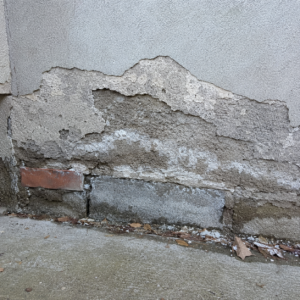
Failed parging usually shows itself through cracking, flaking, hollow areas, loose sections, or visible separation from the wall. Small surface cracks are common over time, but larger or repeated failures should be taken seriously.
Homeowners may notice:
- Hairline cracks are spreading across the parged surface
- Large cracks running vertically or horizontally
- Flaking, peeling, or powdery cement coating
- Bulging areas that sound hollow when tapped lightly
- Parging is falling off in chunks or sheets
- Dark, damp patches along the foundation wall
- White staining or mineral deposits on the surface
- Gaps where the parging meets the ground, walkway, or wall edge
The pattern matters. A small chip near the ground may only need a localized repair. Large areas falling away from the foundation usually mean the parging did not bond well, or moisture is working behind it. If the same area has been patched several times and keeps failing, the problem is probably not just the parging.
Otto’s Masonry provides parging and foundation coating in Toronto for homeowners dealing with cracked, loose, or deteriorated foundation finishes.
Moisture Is One of the Biggest Reasons Parging Fails
Moisture is one of the most common causes of parging failure because water weakens the bond between the coating and the wall. Once moisture gets behind the parging, it can freeze, expand, and push the coating outward.
Water can come from several places. It may come from rain running down the wall, snow piled against the foundation, downspouts draining too close to the house, or soil that stays wet against the wall. It can also come from inside the wall if the foundation has cracks, open block joints, or dampness moving through porous materials.
This is why simply applying fresh parging over a damp or failing wall often does not last. The new coating may look good at first, but if the moisture path is still active, the surface can bubble, crack, or fall away again.
For below-grade and moisture-related foundation concerns, homeowners should understand the difference between cosmetic surface repair and water control. Ontario’s building regulations include damp-proofing and waterproofing requirements for certain foundation conditions, and homeowners can review the Ontario Building Codefor a broader context. For practical homeowner guidance on energy and moisture, Natural Resources Canada also notes that foundations with water leakage or dampness require careful attention to the exterior before interior improvements are made, as explained in its basement insulation and moisture guidance.
Poor Surface Preparation Can Ruin a Parging Job
Parging needs a clean, stable, properly prepared surface to bond well. If new material is applied over dirt, dust, paint, loose cement, old, crumbling parging, or damp masonry, it may not attach properly.
Before parging is repaired or replaced, weak material should be removed. The surface should be cleaned, checked for cracks, and prepared so the new coat has something solid to grip. If the wall has open holes, broken blocks, loose mortar, or surface contamination, those issues should be corrected first.
This is where many quick fixes fail. A thin coat placed over loose parging can hide the damage for a short time, but it does not create a strong bond. When the weather changes or moisture returns, the weak layer beneath can reseparate.
For Toronto homeowners, surface preparation matters even more because exterior foundation areas face great seasonal changes. A repair that might look acceptable in summer can fail after winter if it was applied over unstable material.
Freeze-Thaw Cycles Make Small Parging Problems Worse
Freeze-thaw cycles make parging problems worse because trapped water expands when it freezes. Even small cracks can widen when water enters, freezes, and pushes the cement coating apart.
Toronto winters create the right conditions for this kind of damage. A foundation wall may get wet during rain or snow melt, then freeze overnight. This repeated expansion and contraction can slowly weaken parging, especially where the surface is already cracked or poorly bonded.
Salt can also add stress to the areas near front steps, driveways, and walkways. Salt does not cause parging to fail on its own, but it can contribute to surface wear when moisture and freezing are already present. Areas near walkways, shared driveways, and front entrances often show damage sooner because they are exposed to more splashback, snow piles, and de-icing materials.
The best way to reduce freeze-thaw damage is to limit water entry. That means fixing cracks early, keeping the base of the wall from staying wet, and ensuring drainage carries water away from the foundation.
Bad Drainage Around the Foundation Can Cause Repeated Failure
Bad drainage can make parging fail repeatedly because the wall stays wet longer than it should. If water keeps collecting around the foundation, new parging may fail even when the mason uses good materials.
Common drainage issues include:
- Downspouts discharging beside the foundation
- Soil sloping toward the house
- Settled walkways that send water toward the wall
- Snow piled against the foundation throughout the winter
- Clogged gutters overflowing near the wall
- Basement window wells are holding water
- Hard surfaces trapping moisture at the base of the parging
Before repairing parging, homeowners should look at where water goes during rain. If water is running toward the house, the wall is not the only problem. The surrounding grade, walkway, downspouts, and soil conditions may need attention, too.
For homeowners dealing with several exterior masonry issues at once, Otto’s Masonry’s masonry services page in Toronto offers a broader view of related repairs, including concrete, brick, parging, and foundation-facing exterior work.
Old or Damaged Masonry Behind the Parging Can Be the Real Problem
Parging can only perform as well as the wall behind it. If the foundation block, concrete, mortar, or masonry surface is weak, cracked, sandy, or deteriorated, the parging may not stay attached.
Older Toronto homes may have foundation surfaces that have been patched many times. Some walls have old coatings, paint, tar, cement layers, or previous repairs that make bonding difficult. Others have open joints, damaged block faces, or soft areas that need repair before parging is reapplied.
If a wall is structurally moving or cracking, parging will not stop that movement. It may cover the crack for a while, but the crack can return because the underlying wall is still shifting. In that case, the wall needs a proper assessment before any new coating is installed.
This is similar to other masonry repairs. Surface work can help when the base is sound, but deeper movement or deterioration needs a deeper fix. Otto’s Masonry’s guide on when to address masonry issues explains why loose parging, failing mortar, and other exterior masonry problems should not be ignored for too long.
Repair May Be Enough When the Failure Is Limited
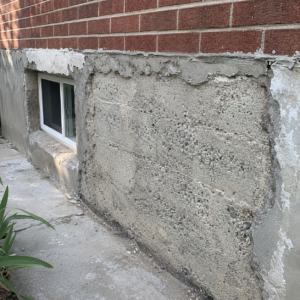
Repair may be enough when the damage is small, the wall is dry, and the existing parging is mostly stable. A localized patch can make sense when only one area is chipped, cracked, or worn.
Repair is more likely to work when:
- The damaged area is small and easy to isolate
- The wall behind the parging is solid
- There is no sign of active water behind the coating
- The surrounding parging is still firmly bonded
- The damage was caused by impact or normal surface wear
- Drainage around the wall is working properly
Even then, the repair area should be prepared correctly. Loose material should be removed, the edge cleaned, and the patch applied to a sound surface. If the patch is placed over weak material, it may fail along with the old layer.
Small repairs are also useful before winter. Closing minor cracks and open edges can reduce water entry and slow further damage.
Replacement May Be Needed When Parging Keeps Falling Off
Full replacement may be needed when large sections are loose, hollow, damp, or separating from the wall. If the coating is failing across a wide area, patching one spot at a time may not be practical.
Replacement is usually the better choice when:
- Parging is falling off in sheets or large chunks
- Multiple sections sound hollow
- The wall stays damp after rain
- Old parging has been patched many times
- The surface is sandy, dirty, painted, or contaminated
- Cracks keep coming back in the same area
- Drainage problems have damaged the lower wall
A proper replacement usually means removing failed material, preparing the wall, repairing damaged areas, and applying new parging under suitable conditions. If moisture is the main cause, water management should be addressed first. Otherwise, the new parging may fail for the same reason the old layer failed.
What Homeowners Can Safely Check Themselves
Homeowners can safely check the visible condition of parging without removing large sections or cutting into the wall. A simple inspection can help decide whether the problem is minor or needs professional attention.
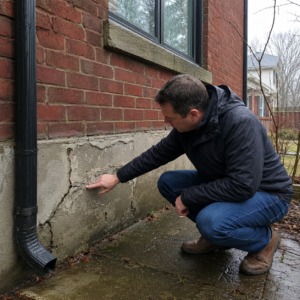
Start by looking for cracks, flaking, damp stains, white deposits, hollow spots, and areas where the parging has pulled away from the foundation. You can gently tap suspicious areas with your knuckle. A hollow sound may mean the parging has separated from the wall.
After rain, check whether water is pooling near the foundation. Look at downspouts, gutters, walkway slope, soil grade, and basement window wells. If the parging is failing near the ground, drainage may be part of the problem.
Also, check whether the damage is spreading. A single chip is less concerning than a growing crack or a section that becomes looser each season. Photos taken a few months apart can help you see whether the failure is getting worse.
When to Call a Mason
You should call a mason when the parging is loose, hollow, damp, falling off in large sections, or failing repeatedly after patch repairs. A mason can check whether the issue is poor bonding, surface wear, drainage, moisture, or damaged masonry behind the coating.
You should also call when parging failure appears near foundation cracks, basement moisture, brick damage, or concrete movement. These signs may point to a broader exterior problem rather than a simple cosmetic issue.
A proper inspection matters because applying new parging under the wrong conditions can waste time and money. The best repair starts by finding out why the old parging failed. Once the cause is understood, the fix becomes clearer.
FAQs About Failed Parging on Toronto Homes
Why does parging fall off a foundation?
Parging often falls off when moisture gets behind it, the surface was not prepared properly, or the wall behind it is weak or moving. Poor drainage can also cause repeated failure.
Can failed parging be repaired?
Yes, failed parging can sometimes be repaired when the damaged area is small, and the wall behind it is solid and dry. Larger loose or hollow areas may need removal and replacement.
Is parging waterproofing?
No, parging is not the same as full waterproofing. It can help protect and finish exposed foundation surfaces, but active leaks or serious moisture problems need proper water control.
Why does parging crack after winter in Toronto?
Parging can crack after winter because water enters small openings, freezes, expands, and pushes the coating apart. Freeze-thaw cycles are a common cause of small cracks becoming larger.
Can I put new parging over old parging?
New parging should not be placed over loose, dirty, damp, or crumbling old parging. The surface needs to be cleaned and prepared so the new material can bond properly.
How do I know if parging failure is caused by moisture?
Signs of moisture include damp patches, white staining, repeated flaking near the ground, pooling water, and failure after rain or snow melt. Drainage around the foundation should be checked.
When should parging be replaced instead of patched?
Parging should usually be replaced when large areas are loose, hollow, falling off, or repeatedly failing. Replacement may also be needed when the wall surface underneath is damaged.
Final Answer
Parging fails on Toronto homes when moisture, poor surface preparation, freeze-thaw movement, drainage problems, or weak masonry break the bond between the coating and the wall. Small, stable areas may be repaired, but widespread loose or damp parging usually needs a more complete fix.
The best repair starts by finding the cause of failure. If water flow, wall condition, and surface preparation are not addressed first, new parging can fail for the same reason the old layer did.