

Quick Answer
Brick spalling happens when the face of a brick flakes, chips, pops, or crumbles, usually because moisture has entered the brick and expanded during freezing weather. In Toronto, spalling is often caused by freeze-thaw cycles, aging mortar, poor drainage, salt exposure, trapped moisture, chimney exposure, or prior repairs using the wrong materials. The right repair depends on whether the damage is isolated, spreading, moisture-related, or part of a larger masonry problem.
Many Toronto homeowners first notice brick spalling as flakes on the ground, rough patches on exterior walls, or brick faces that look like they are peeling away. At first, it can look like a surface problem. The bigger issue is that spalling often indicates moisture inside or around the masonry, not just an aesthetic concern.
Brick is built to handle weather, but it is not meant to stay wet for long periods or freeze while holding too much moisture. Once the outer face breaks away, the brick becomes more exposed. If the cause is not fixed, nearby mortar joints, surrounding bricks, chimneys, porch walls, steps, and lower wall areas may also begin to fail.
This guide explains what causes brick spalling on Toronto homes, what signs homeowners should watch for, when a brick can be repaired, when replacement makes more sense, and why local weather plays such a large role in masonry damage.
Why Brick Spalling Matters in Toronto
Brick spalling matters in Toronto because local homes experience repeated exposure to moisture, snow, ice, salt, and freeze-thaw cycles. Water enters small openings in brick faces, mortar joints, chimney caps, wall edges, porch areas, and lower masonry. When that water freezes, it expands and can push against the brick from inside.
Toronto’s winter and shoulder-season weather can be hard on masonry. A wall may absorb moisture during rain or thaw, then freeze again overnight. This repeated cycle slowly weakens brick faces, mortar joints, and old patch repairs. The National Research Council Canada has published research showing that moisture content, material type, exposure, location, and seasonal temperature changes all affect masonry behaviour during freeze-thaw conditions.
Older brick homes in East York, The Annex, Rosedale, Forest Hill, The Beaches, North York, Etobicoke, Scarborough, and other established Toronto neighbourhoods may have softer brick, older mortar, and past repairs from different periods. Some may also have drainage issues, exposed chimneys, painted masonry, or hard cement patches that do not work well with the original wall.
The City of Toronto Property Standards bylaw expects exterior walls and their components to be kept in good repair, weather-tight, and free from loose or unsecured materials. For homeowners, that means damaged masonry is not only about appearance. Loose, failing, or moisture-damaged brickwork can become a larger maintenance concern if it spreads.
What Brick Spalling Looks Like
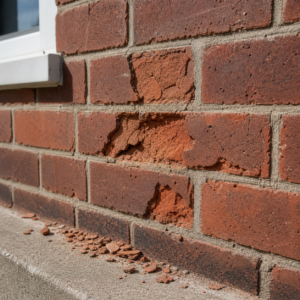
Brick spalling usually appears as flaking, chipping, cracking, peeling, or crumbling on the brick face. Sometimes the damage affects one or two bricks. Other times it spreads across a wall, chimney, step, porch, or lower section of the home.
Common signs include:
- Brick faces are flaking off in thin layers.
- Small red, orange, brown, or grey brick chips on the ground.
- Rough, pitted, or hollowed brick surfaces.
- Brick edges are breaking away near the mortar joints.
- White staining, often called efflorescence, near damaged areas.
- Cracked, recessed, soft, or missing mortar joints beside the damaged brick.
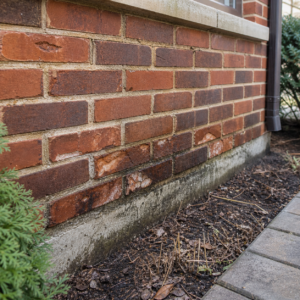
- Spalling near chimneys, porch walls, steps, lower brick walls, or window ledges.
- Painted or sealed brick that is bubbling, peeling, or holding moisture behind the surface.
One damaged brick does not always mean the whole wall is failing. But if several bricks are spalling, if the damage appears after winter, or if the same area keeps failing after patching, there is likely a moisture source or material compatibility issue that needs attention.
Common Causes of Brick Spalling
The most common causes of brick spalling are moisture, freeze-thaw expansion, failing mortar, poor drainage, salt exposure, hard previous repairs, trapped moisture, and heavy weather exposure. These causes often work together rather than acting alone.
1. Moisture Entering the Brick
Moisture is usually the starting point. Brick can absorb some water, but problems begin when water stays inside the brick or enters faster than the wall can dry. This can happen through cracked mortar joints, open wall tops, damaged chimney caps, leaking flashing, poor grading, downspout discharge, or failed coatings.
Once moisture enters the masonry, the brick becomes more vulnerable during cold weather. If the outer face weakens, it can flake or pop away. This is why spalling often becomes more apparent after winter or during early-spring inspections.
2. Freeze-Thaw Expansion
Freeze-thaw damage occurs when water inside masonry freezes, expands, thaws, and re-enters. The expansion puts pressure on brick-and-mortar. After enough cycles, the brick face can crack, loosen, or break away.
This is one of the most important reasons spalling is common in Toronto. Spring may reveal damage that actually began during winter. Otto’s Masonry also discusses this seasonal pattern in its guide to winter damage and spring repairs for Toronto brick and stone, including spalling brick, cracked mortar joints, shifting masonry, and moisture staining.
3. Failing Mortar Joints
Mortar joints help manage water and protect the sides of the brick. When mortar cracks, recedes, turns sandy, or falls out, water has more paths into the wall. That can lead to spalling along brick edges and deeper moisture damage over time.
Brick spalling and mortar failure often appear together. If the brick faces are damaged and the joints are also weak, replacing bricks without addressing the mortar may only solve part of the problem. Otto’s Masonry’s tuckpointing Toronto service is often relevant when failing mortar joints are allowing water into the wall.
4. Poor Drainage Around the Home
Poor drainage can keep brick and mortar wetter than they should be. Water that splashes from hard surfaces, pools near the foundation, overflows from clogged gutters, or drains from downspouts near the wall can increase the risk of spalling.
Lower brick walls are especially vulnerable because they may receive splashback from driveways, walkways, and garden beds, as well as snow buildup. If the same lower section of a wall continues to spall, the cause may be water exposure at grade rather than a simple brick defect.
The City of Toronto’s basement flooding guidance lists poor grading, drainage failure, foundation cracks, overflowing eavestroughs, and leaking or plugged downspouts as common water-related concerns around homes. Those same conditions can keep masonry wet and contribute to brick deterioration.
5. Salt Exposure
Salt can contribute to masonry damage by drawing and holding moisture and by increasing surface stress. In Toronto, salt exposure is common near steps, walkways, driveways, porches, and street-facing lower walls during winter.
Salt damage often appears where de-icing products are used or where salty slush sits against masonry. Homeowners may notice flaking brick, powdery surfaces, white staining, or accelerated deterioration near entry steps and lower walls.
6. Hard or Incompatible Previous Repairs
Some brick spalling is exacerbated by earlier repairs that used mortar or patching materials too hard for the original brick. If replacement mortar is less flexible or less breathable than the surrounding masonry, moisture and stress may be trapped in the brick rather than moving through the joint.
This is especially important in older Toronto homes. The wrong repair may look solid at first, but still cause long-term damage. For older and character masonry, the practical rule is simple: the repair material should work with the existing brick, not against it.
7. Trapped Moisture Behind Paint or Sealers
Brick needs to manage moisture. Some coatings, paints, or sealers can trap moisture if they are not suitable for the wall. When moisture cannot escape, the brick may stay damp and become more vulnerable to freeze-thaw damage.
This does not mean every coating is automatically wrong. It means the wall condition, product type, breathability, and moisture source matter. If the brick is already spalling, painting or sealing over it usually does not fix the cause.
Why Chimneys Often Show Spalling First
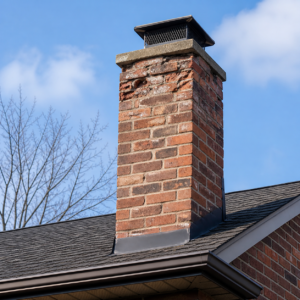
Chimneys often show spalling before other parts of the home because they are exposed to weather from all sides. Rain, snow, wind, ice, and temperature changes affect chimney brickwork more heavily than many protected wall areas.
A chimney with cracked mortar, damaged crown areas, poor flashing, missing caps, or open joints can absorb water and begin to deteriorate. Once freeze-thaw cycles begin, brick faces may flake away, upper courses may loosen, and the chimney may need more than a surface repair.
If spalling appears on a chimney, homeowners should take it seriously. The issue may involve the brick, mortar joints, crown, cap, flashing, or overall stability. Otto’s Masonry’s chimney repair Toronto page explains repair options for deteriorated mortar, damaged brick, crowns, caps, partial rebuilds, and weather-related chimney issues.
Can Spalling Bricks Be Repaired, or Do They Need Replacement?
Spalling bricks can sometimes be repaired when the damage is minor, and the brick is still sound, but replacement is often better when the face has broken away deeply, the brick is soft, or the damage is spreading. The best choice depends on the severity of the damage and the source of moisture.
Repair may be enough when:
- The spalling is light and limited to the surface.
- Only a small number of bricks are affected.
- The surrounding mortar joints are still in fair condition.
- The moisture source has been found and corrected.
- The wall is stable and not showing bulging, leaning, or movement.
Replacement may be needed when:
- The brick face has broken away deeply.
- The brick is soft, crumbling, or hollow-sounding.
- Several nearby bricks are spalling.
- The damage is near a chimney, arch, lintel, porch, or structural area.
- Spalling keeps returning after previous repairs.
- Mortar joints are failing along with the brick faces.
When damaged bricks need replacement, matching the size, colour, texture, and overall look matters. Otto’s Masonry provides brick repair in Toronto for cracked, damaged, deteriorating, and spalled brickwork, restoring both strength and appearance.
Homeowner Decision Guide
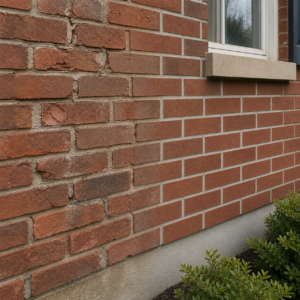
The simplest way to think about brick spalling is to ask whether it is isolated, spreading, moisture-related, or connected to another masonry issue. The more widespread or repeated the damage is, the less likely it is to be a simple surface fix.
Monitor the area when:
- Only one brick has light surface flaking.
- There are no nearby cracked mortar joints.
- The wall dries normally after rain.
- There is no sign of loose brick, staining, or water entry.
Plan a repair when:
- Several bricks are flaking or crumbling.
- Mortar joints are open, cracked, or recessed.
- The damage is near steps, chimneys, porches, or grade level.
- There is white staining or repeated dampness.
- Previous patching is failing.
Call a mason sooner when:
- Bricks are loose or falling out.
- The chimney is spalling, leaning, or shedding brick pieces.
- Water is entering the home.
- The wall appears to bulge, shift, or crack in a pattern.
- Damage worsens after each winter.
What Homeowners Can Safely Check Themselves
Homeowners can safely inspect visible masonry from the ground without scraping, grinding, climbing, or removing materials. A simple visual check can help you understand whether spalling is isolated or spreading.
Look for ground-level flakes, open mortar joints, white staining, damp areas, cracked brick faces, and sections where water collects. Check lower walls after heavy rain, areas near downspouts, brick close to garden beds, porch walls, steps, and chimney sections visible from a safe distance.
It can also help to take photos after winter and compare them again after spring rain. If the affected area grows, if more flakes appear, or if nearby mortar starts failing, the issue likely needs professional attention. Avoid sealing, painting, or patching spalled bricks before determining why they became wet or damaged in the first place.
When to Call a Mason
You should call a mason when spalling is spreading, mortar joints are failing, bricks are loose, the damage is near a chimney or structural area, or water may be entering the wall. A mason can check whether the problem is limited to a few bricks or connected to drainage, mortar, flashing, grade-level water exposure, or a larger wall issue.
For older Toronto homes, it is especially important to avoid quick repairs that use the wrong mortar or trap moisture. A proper assessment should consider the brick’s age, the condition of the joints, the location of the damage, the level of water exposure, and whether previous repairs are contributing to the problem.
If the issue involves more than one area, Otto’s Masonry’s masonry services in Toronto page can help homeowners understand how brick repair, tuckpointing, chimney repair, parging, waterproofing, stone masonry, and related exterior repairs often connect.
FAQs About Brick Spalling on Toronto Homes
What causes brick spalling?
Brick spalling is usually caused by moisture entering the brick and expanding as it freezes. It can also be caused by failing mortar, poor drainage, salt exposure, trapped moisture, chimney exposure, or incompatible past repairs.
Is brick spalling serious?
Brick spalling can be serious if it is spreading, affecting many bricks, or connected to water entry and failing mortar joints. A small surface chip may not be urgent, but repeated spalling usually means moisture should be investigated.
Can spalled bricks be repaired without replacing them?
Sometimes, light surface damage can be repaired if the brick is still sound and the moisture source is corrected. Deeply damaged, soft, crumbling, or loose bricks usually need to be replaced.
Why does spalling happen more after winter in Toronto?
Toronto’s freeze-thaw cycles can force moisture inside the brick to expand and contract repeatedly. This often makes existing cracks, weak mortar joints, and damp brick faces worse by spring.
Does sealing brick stop spalling?
Sealing brick does not automatically stop spalling. If the wrong product is used or moisture is already trapped inside the wall, sealing can make the problem worse. The moisture source should be identified first.
Should spalled bricks be replaced before tuckpointing?
It depends on the condition of the wall. If bricks are severely damaged, they may need to be replaced before or during tuckpointing. If the bricks are still sound but the joints are failing, tuckpointing may be the main repair.
Can poor drainage cause brick spalling?
Yes. Poor drainage can keep masonry wet, especially near lower walls, steps, porches, and foundation areas. Constant moisture exposure increases the risk of spalling during freezing weather.
Final Answer
Brick spalling on Toronto homes is usually caused by moisture, freeze-thaw cycles, failing mortar, poor drainage, salt exposure, trapped moisture, chimney exposure, or incompatible previous repairs. The damaged brick face is often only the visible symptom, so the cause of the moisture should be checked before choosing a repair.
Small, isolated spalling may only need monitoring or targeted repair, but spreading damage, loose bricks, chimney spalling, and failing mortar joints should be assessed by a mason. The best repair protects the wall from future water intrusion, matches the existing masonry, and addresses the underlying cause rather than only covering the damaged surface.