

If you are looking for contractors in Toronto that offer waterproofing as part of brickwork maintenance, the best choice is a masonry contractor that understands moisture behaviour, exterior wall conditions, and how waterproofing fits into long-term maintenance, rather than being sold as a stand-alone cure for every problem. Waterproofing can be a smart part of brickwork maintenance, but only when it is paired with proper diagnosis. If the brick, mortar joints, or lower wall areas are already failing, waterproofing alone is not the real fix.
For homeowners in Toronto, East York, North York, Rosedale, Forest Hill, The Annex, Etobicoke, The Beaches, and Scarborough, this usually comes down to one question: Is the wall mainly dealing with moisture exposure, or is the moisture already taking advantage of a masonry problem that should be repaired first? The answer affects whether the next right step is sealing, parging, foundation coating, full basement waterproofing, or more direct masonry work, such as brick repair or tuckpointing.
That is why the best contractors are not the ones who promise a coating for everything. They are the ones who can explain where the moisture is getting in, what part of the wall is vulnerable, and whether waterproofing is a maintenance measure, a supporting treatment, or only one part of a larger repair plan.
What waterproofing as part of brickwork maintenance actually means
Waterproofing as part of brickwork maintenance usually means protecting masonry that is still broadly serviceable from recurring moisture exposure, splashback, and seasonal weather stress. In Toronto, this can include lower wall moisture management, coating or sealing of foundation-adjacent areas, selective water-repellent treatments, and work tied to parging and foundation coating or broader basement waterproofing where the issue extends below grade.
The key point is that waterproofing is not always the first step. If mortar joints are open, brick faces are spalling, or water is already penetrating through visible deterioration, the wall may need repair before a protective treatment makes sense. A contractor who understands brickwork maintenance should be able to explain whether the waterproofing is being applied to sound masonry, to repaired masonry, or to an area where a more direct fix is still missing.
That difference matters because a protective treatment on a healthy wall can be a smart maintenance move. The same treatment on a failing wall may only mask the symptoms for a short time while the underlying issue continues to spread beneath.
When waterproofing makes sense as part of brickwork maintenance
When the masonry is still sound but exposed
If the brick and mortar are still largely in good condition, waterproofing may help reduce the extent to which the wall absorbs surface moisture. This is especially relevant on exposed lower walls, splash zones, and foundation-adjacent areas where wetting happens repeatedly.
When a restored wall needs added protection
Waterproofing can make sense after repair or restoration work if the wall has been corrected properly, and the next step is helping it hold up better against local weather. In this context, waterproofing supports the repair rather than pretending to replace it.
When the problem is tied to the lower wall and grade area
Some houses show wear where soil, runoff, and splashback keep the base of the wall damp. In those cases, parging, foundation coating, or waterproofing may be part of sensible brickwork maintenance.
When the goal is prevention, not concealment
The best waterproofing work is usually preventive. It helps slow future wear on masonry that has already been inspected and found to be a good candidate. It should not be used to avoid discussing active deterioration.
When waterproofing is not enough
Waterproofing is not a substitute for masonry repair. If the wall has failing mortar joints, loose or cracked brick, visible moisture intrusion through damaged sections, or widespread wall deterioration, the masonry likely needs direct repair first. In those cases, waterproofing may still be part of the overall solution, but it should not be treated as the primary fix.
This is one of the biggest reasons homeowners should look for contractors who handle both masonry repair and moisture-related exterior work. A company that only sells coating or sealing products may not be well placed to tell you whether the wall itself is already compromised.
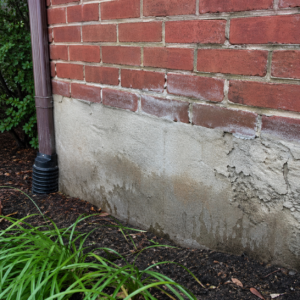
On many Toronto homes, especially older ones, visible staining or dampness at the base of the wall is not just a waterproofing issue. It may indicate failing mortar, weak parging, poor drainage at grade, or masonry that has already begun to break down.
Common moisture-related masonry problems homeowners ask about
Lower wall brick deterioration
This is one of the most common issues because the base of the house sees splashback, salt, soil moisture, and snow accumulation. Waterproofing may help, but not if the masonry is already failing and needs repair first.
Foundation-adjacent wall wear
Walls at or near grade often show early wear because moisture exposure is concentrated there. In some cases, the right solution includes parging or foundation coating. In others, the wall needs direct brick or mortar repair before any protective layer is added.
Recurring dampness near the basement wall areas
When homeowners see moisture marks, deteriorating coatings, or recurring dampness on basement-facing exterior masonry, they often assume they only need to seal. In reality, the problem may also involve grading, foundation condition, or masonry deterioration that should be addressed more directly.
Open mortar joints are taking on water
Mortar joints that are cracked, recessed, or missing are among the easiest ways for moisture to enter the wall. In that case, tuckpointing or repointing often matters more than applying a surface treatment first.
Parging and coating failure
Some homeowners ask about waterproofing because the visible coating or parging is already failing. That can be a sign that the underlying wall condition, moisture load, or previous application method needs to be evaluated more carefully.
Step-by-step: how we assess waterproofing as part of masonry maintenance
Initial inspection and quote
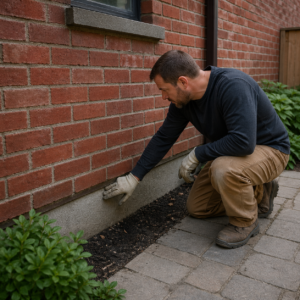
We begin by checking the condition of the brick, mortar joints, lower wall areas, foundation-adjacent surfaces, and any visible signs of moisture-related wear. We want to know whether the problem is mainly exposure-based, whether the masonry is still sound, and whether waterproofing is the right service or only part of it.
After that, we provide a clear quote and explain whether the wall needs maintenance, waterproofing, repair first, or a broader combination of masonry and moisture-control work. This matters because a strong quote should explain why waterproofing is recommended, not just where it can be applied.
Planning, methods, and treatment selection
Once the scope is approved, we plan the work based on wall condition, exposure level, weather timing, and the appropriate treatment or coating for the area. Lower wall masonry, foundation-facing surfaces, and restored brickwork may all require different approaches.
This stage is also where a good contractor should explain what waterproofing can realistically do. It may help reduce moisture exposure and improve maintenance performance, but it should not be sold as if it can solve every wall issue on its own.
On-site work and finish review
During the work, the masonry should be cleaned or prepared as needed, any required repairs should be accounted for, and the selected waterproofing or coating treatment should be applied appropriately for the surface. Before completion, the area should be reviewed for overall condition, visible consistency, and whether the maintenance goal has been met properly.
Why waterproofing should come from a masonry-aware contractor
Waterproofing sounds simple, but weak judgment at the start often leads to disappointing results. A contractor who only sees “moisture” may recommend coating a wall that actually needs brick repair. A contractor who understands masonry conditions is more likely to know when waterproofing supports the wall and when it only hides the symptom briefly.
This matters because brickwork maintenance is about protecting the wall over time, not just improving its appearance this season. A masonry-aware contractor should understand how moisture exposure, mortar failure, brick deterioration, and poor wall conditions interact, especially in the Toronto climate.
That kind of judgment becomes even more important on older homes, on visible front or side walls, and on houses where moisture has already begun affecting the base of the structure or the appearance of the façade.
Local factors in Toronto that affect waterproofing and masonry maintenance
Toronto’s climate plays a major role in why masonry maintenance and waterproofing questions come up so often. Freeze-thaw exposure, recurring wetting, runoff, and moisture retention at lower wall areas all put pressure on brick and mortar over time. The National Research Council Canada has published technical work on moisture degradation and freeze-thaw effects in masonry, which helps explain why moisture behaviour matters so much in Canadian conditions. You can review that here: NRC Canada moisture degradation of masonry walls.
Toronto’s Property Standards chapter also includes standards for exterior walls, steps, walks, and related structures being kept in good repair. That matters because moisture-related masonry issues are not always just cosmetic. Over time, they can contribute to visible deterioration and weakened areas of the wall. You can review that here: City of Toronto Property Standards.
If the work affects a heritage-designated property, the City’s heritage process may also matter for exterior alterations. You can review that here: City of Toronto Heritage Permit Guide.
For broader construction requirements in Ontario, homeowners can also review the Building Code regulation and the current code updates published by the province here: Ontario Building Code regulation and Ontario Building Code updates.
Key questions homeowners ask about waterproofing and brickwork maintenance
Can waterproofing be part of regular brickwork maintenance?
Yes, when the masonry is still broadly sound, and the treatment is used to support long-term maintenance rather than to replace or repair.
Should waterproofing happen before brick repair?
Usually not if the wall is already deteriorating. Repair should usually come first when the brick or mortar is failing.
Is parging the same as waterproofing?
No. Parging is a surface coat typically used on foundation or lower wall areas, while waterproofing refers more broadly to moisture-management treatments. The two may overlap on some projects.
What if my wall only looks damp near the bottom?
That may still point to a bigger issue than surface exposure alone. Lower wall dampness often requires inspection to determine whether the problem is primarily maintenance-related or already within the scope of repairs.
Can waterproofing help after restoration or tuckpointing?
In some cases, yes. It can be part of protecting corrected masonry when the wall is otherwise a good candidate for it.
How do I know if a contractor really understands both masonry and waterproofing?
A good sign is that they explain when waterproofing makes sense and when it does not. If they recommend the same treatment for every wall, that is usually a weak sign.
What to expect when you contact us
- Tell us which moisture, lower wall, or exterior masonry issue you have noticed.
- We arrange an inspection or estimate.
- We assess whether the wall needs maintenance, waterproofing, repair, or a broader masonry scope.
- We provide a clear quote and recommended next step.
- We complete the work with attention to both wall condition and long-term exposure.
When you are ready to discuss the next step, contact us.
Which contractors in Toronto offer waterproofing as part of brickwork maintenance?
The right contractors are the ones who can explain how waterproofing fits into the maintenance plan rather than treating it as a cure-all. If your Toronto home has lower wall wear, moisture-related staining, or exposed foundation-adjacent masonry, the best next step is to get the wall assessed by a contractor who understands both masonry condition and moisture management before recommending the scope.