

If you need emergency masonry repairs in Toronto, the right contractor is a masonry specialist who can assess the damage quickly, determine whether the issue poses a safety risk, and stabilize or repair the affected area before it worsens. Emergency masonry problems usually involve more than appearance. Loose bricks, leaning chimneys, failing mortar, unstable wall sections, and falling masonry can pose an immediate risk to people, property, and the rest of the structure.
For homeowners in Toronto, East York, North York, Rosedale, Forest Hill, The Annex, Etobicoke, The Beaches, and Scarborough, emergency masonry work usually starts with one question: Is the damage dangerous right now, or is it urgent but still stable enough to plan properly? The answer matters because not every fast repair is truly an emergency, but every real emergency should be treated seriously and assessed without delay.
That is why the best contractor for emergency masonry repairs is not just someone who can come quickly. It is someone who can tell the difference between a wall that looks rough and one that may be unstable, and then recommend the right next step. In Toronto homes, that often means dealing with chimney damage, brick movement, lower wall deterioration, or weather-related masonry failure after storms, freeze-thaw cycles, or long-delayed maintenance.
What counts as an emergency masonry repair in Toronto
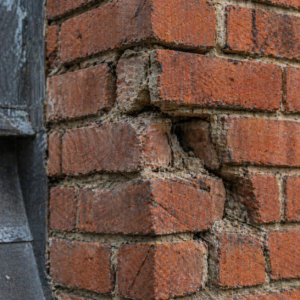
An emergency masonry repair usually means the masonry has become unsafe, unstable, or vulnerable to rapid worsening. This can include loose or falling bricks, leaning or separating chimney sections, deep cracks in load-bearing or visible wall areas, collapsed porch or entry masonry, and sections of brickwork that are no longer properly bonded to the structure. Some emergencies also involve severe mortar failure, where the wall has become loose enough that pieces can shift or fall.
In practical terms, emergency masonry work is about risk. If the damage could injure someone, damage nearby surfaces, allow significant water entry, or worsen further with the next weather event, it should be treated as urgent. That does not always mean full repair happens the same day. Sometimes the immediate goal is to inspect, secure, and stabilize the area first, then complete the right long-term repair once the condition is fully understood.
This is one reason homeowners should be careful with the word “emergency.” A stained wall or a few minor surface cracks are not the same as a chimney that is leaning or dropping material. The right contractor should be able to explain where your problem sits on that scale.
Common emergency masonry problems we see in Toronto
Leaning or unstable chimneys
Chimneys are among the most common masonry emergencies because they sit above the roofline, are constantly exposed to the weather, and often show damage later than the rest of the house. If a chimney starts leaning, shedding bricks, or losing large amounts of mortar, it should be inspected quickly. These cases often overlap with chimney repair and sometimes wider rebuilding or stabilization work.
Loose or falling exterior brick
When bricks are visibly loose, separating from the wall, or falling to the ground, the issue has moved beyond ordinary maintenance. This is especially serious around front entries, walkways, porches, and any area where people pass regularly.
Severe mortar failure
Mortar joints often fail gradually, but when deterioration becomes deep enough, the wall can begin to lose stability. In those situations, tuckpointing may still be part of the final repair, but the first concern is whether the masonry needs immediate stabilization.
Deep cracking near openings or corners
Cracks around windows, doors, corners, and lower wall areas may point to movement or support issues. Not every crack is an emergency, but repeated widening, stepped cracking, or visible separation can be a sign that the wall is under more than cosmetic stress.
Porch, parapet, or entry masonry that has shifted
Emergency repairs are also common when entry structures or visible elevated wall sections begin to move or break apart. These problems can quickly become safety hazards because they are close to walkways and frequently used areas.
What to do first if you think your masonry problem is an emergency
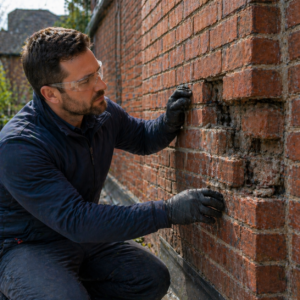
The first step is to keep people away from the affected area if there is any chance that brick, stone, or mortar could fall. Do not stand directly below a damaged chimney or wall section to inspect it closely. Do not move loose masonry unless it is already detached and creating an immediate trip hazard. In most cases, the safest move is to step back, document the damage from a distance, and contact a qualified masonry contractor.
If the problem is near a public walkway, shared driveway, porch, or front entrance, treat it more seriously. A wall that is stable enough when untouched may still become dangerous if people continue brushing past it or if another freeze-thaw cycle, heavy rain, or wind event hits before it is assessed.
This is also where homeowners need to be realistic. Emergency masonry damage is not a good place for DIY guessing. A quick temporary patch may hide the problem but still leave the wall unsafe. The better first move is to inspect and stabilize.
Step-by-step: how we handle emergency masonry repair calls
Initial assessment and urgency review
We begin by understanding what has happened, where the damage is located, and whether the issue is a genuine safety concern. Loose chimneys, falling brick, collapsing entry masonry, and fast-moving wall separation are treated differently from non-urgent cosmetic issues.
Inspection and site evaluation
Once the damage is reviewed, we assess whether the area requires immediate stabilization, restricted access, targeted repairs, or broader masonry correction. This step matters because emergency work often begins with making the area safe before moving into full restoration.
Repair planning and completion
After the urgent risk is controlled, we determine whether the final scope involves brick repair, brick replacement, chimney repair, repointing, lower wall correction, or a combination of masonry services. A good emergency repair should not just stop the immediate risk. It should also solve the cause of the failure, where possible.
Why emergency masonry work should come from a specialist
Emergency masonry problems are easy to misread. A homeowner may see one crack and assume the whole wall is collapsing, or see one fallen brick and assume the rest is stable. A masonry specialist is more likely to understand how the damage pattern fits the structure and which parts of the wall are truly at risk.
This matters because emergency work needs both speed and judgement. A contractor who moves fast but misreads the wall can make the situation worse. A contractor who understands the structure can stabilize the right area first and plan the proper repair without overreacting or underselling the risk.
It also matters for visible and older Toronto homes. If the emergency area sits on a front façade, chimney, porch, or heritage-style wall, the eventual repair still needs to look right once the urgent danger is addressed.
Local factors in Toronto that make masonry emergencies more likely
Toronto’s freeze-thaw conditions are among the biggest reasons masonry problems can become urgent. Water enters weakened mortar joints and brick surfaces and expands when it freezes, accelerating cracking, separation, and material loss. The National Research Council of Canada has published research on moisture content and freeze-thaw cycles in masonry materials, which helps explain why weakened walls can deteriorate quickly in Canadian weather. You can review that here: NRC Canada masonry freeze-thaw resource.
Toronto’s property standards also require exterior walls, chimneys, and related structures to be maintained in good repair, reflecting the real safety risk posed by unstable masonry. You can review that here: City of Toronto Property Standards.
If the property is heritage-designated, exterior repair work may also need to account for the City’s heritage process once the immediate safety issue is under control. You can review that here: City of Toronto Heritage Permit Guide.
For broader construction requirements affecting building work in Ontario, including masonry-related construction rules, you can also review the Ontario Building Code regulation here: Ontario Building Code regulation.
Key questions homeowners ask about emergency masonry repairs
How do I know if my masonry problem is really an emergency?
If bricks are loose, falling, visibly separating, or if the chimney or wall looks unstable, it should be treated as urgent. The safest move is to have it assessed quickly.
Can emergency masonry work always be fully repaired the same day?
Not always. Sometimes the first step is to stabilize or secure the area, followed by the full repair once the condition is properly assessed.
What parts of a home are most likely to need emergency masonry repair?
Chimneys, front walls, porches, parapets, lower brick sections, and areas around openings are among the most common places where urgent problems arise.
Should I cover or patch the damage myself?
Usually no. It is safer to keep clear of the area, document it from a distance, and have a qualified masonry contractor inspect it.
Can emergency masonry damage lead to water problems, too?
Yes. Once the wall opens up, water can enter more easily and create wider deterioration if the problem is not addressed quickly.
What should I ask the contractor when I call?
Describe where the damage is, whether anything is loose or falling, whether the area is above a walkway or entrance, and whether the issue seems to be getting worse quickly.
Do older Toronto homes face higher emergency masonry risk?
Often, yes. Older masonry can be more vulnerable when long-term mortar loss, past patch work, and repeated weather exposure combine over time.
What to expect when you contact us
- You tell us what masonry damage you have noticed and whether the area feels unsafe.
- We review the urgency and arrange an inspection or estimate.
- We assess whether the area needs immediate stabilization, repair, or broader restoration.
- We provide a clear quote and explain the next step.
- We complete the repair with safety, stability, and long-term masonry condition in mind.
When you are ready to discuss the issue, contact us.
Who is available for emergency masonry repairs in Toronto?
The right contractor for emergency masonry repairs in Toronto is a masonry specialist who can quickly inspect the damage, determine whether the issue is truly unstable, and take the right next step to secure and repair the affected area. If your home has loose bricks, a leaning chimney, deep cracking, or visibly failing wall sections, the best move is to have the masonry properly assessed before the problem becomes a greater safety risk.