

If you are looking for brickwork contractors experienced in heritage building restoration in Toronto, the right choice is a masonry contractor that understands older materials, careful mortar matching, and repair methods that preserve the building’s character rather than work against it. Heritage masonry restoration is not just about fixing visible damage. It is about preserving the home’s original look while ensuring the wall remains sound, weather-resistant, and suitable for Toronto conditions.
For homeowners in Toronto, East York, Rosedale, Forest Hill, The Annex, North York, Etobicoke, The Beaches, and nearby areas, heritage brick restoration usually needs more judgment than a standard repair. Older walls often behave differently from newer masonry. The wrong mortar, poor brick matching, or rushed repairs can shorten the wall’s lifespan and make the restoration stand out in the wrong way.
That is why the best heritage masonry contractor is not just someone who can lay brick. It is someone who can read the condition of the wall, explain what is original, what has failed, and what needs to be restored in a way that fits the building. In older Toronto homes, that level of care is often what separates a lasting restoration from a repair that has to be redone.
What does heritage brickwork restoration involve in Toronto?
Heritage brickwork restoration in Toronto can include brick restoration, tuckpointing and repointing, selective brick replacement, chimney masonry restoration, stone detailing, lintel-related repair, and careful matching of mortar colour, joint shape, and brick texture. Some homes also need work tied to stone masonry, sills, coping, entrance features, or exposed lower wall areas where moisture has already affected the façade.
What makes heritage restoration different from a standard repair is the need to respect the building’s age and material behaviour. Older brickwork often needs a softer, better-matched mortar, more careful removal of damaged joints, and more attention to how the finished repair blends into the surrounding wall. On a visible heritage-style façade, the goal is not to make the repaired section look brand new. The goal is to make it look right.
Heritage restoration also requires better judgment about what should be repaired and what should be preserved. Not every weathered brick needs replacing. Not every crack means a full rebuild. Reliable restoration work starts by understanding the wall as a whole, not by assuming the most aggressive or cheapest fix is automatically the right one.
Common heritage masonry problems we solve in Toronto
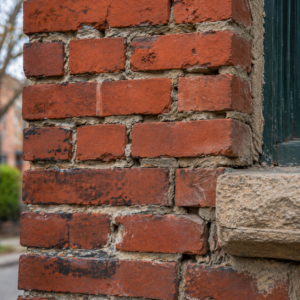
Open or deteriorated mortar joints
Older mortar joints often begin to crumble long before the brick itself fails. Once the joints recede or break down, the wall becomes more vulnerable to moisture and freeze-thaw damage. On a heritage home, proper repointing is often one of the most important repairs because it helps protect the original brick and restore the wall’s resistance to water intrusion.
Spalling or weathered heritage brick
Historic brick can begin to flake or break down when moisture has been getting in over time. This is especially common around exposed walls, chimneys, parapets, and lower façade areas. The right repair may involve selective replacement rather than widespread removal so that as much sound original material as possible is preserved.
Damage around windows, doors, and arches
Openings are natural stress points in older masonry walls. Cracks or deterioration around windows and doors may indicate long-term movement, failed joints, water intrusion, or pressure from support elements behind the brick. Heritage-style openings are also visually important, so repairs need to protect both the structure and the appearance.
Poor past repairs
Many older Toronto homes already carry signs of past work that does not match. Hard mortar, mismatched brickwork, smeared joints, and patchy colour differences can all make future restoration more difficult. A skilled heritage contractor should be able to distinguish between original masonry and later repairs, and plan the next phase of work accordingly.
Chimney and upper wall deterioration
Older chimneys and upper brick sections are often among the first parts of a heritage home to show wear. Exposed on all sides, they endure constant moisture and freeze-thaw cycles. These areas often require a mix of repointing, brick replacement, and structural repairs before deterioration becomes more serious.
Step-by-step: how we handle heritage brick restoration projects
Initial inspection and quote
We start by checking the age and condition of the wall, the mortar joints, the exposed brick, and whether the visible damage is local or more widespread. We also look for signs of moisture, movement, previous patchwork, and how much of the original material can realistically be preserved. That first inspection is where we separate cosmetic wear from restoration work that actually matters.
After that, we provide a clear quote and explain what the building needs. You should understand whether the project is mainly repointing, selective replacement, façade restoration, chimney work, or a broader correction involving several masonry areas at once.
Planning, materials, and scheduling
Once the scope is approved, we plan the work around access, weather, material sourcing, and visibility of the repair area. On heritage-style homes, matching matters. Mortar tone, joint finish, brick size, and surface texture all affect whether the restoration feels natural or looks obviously new.
This stage is also where good restoration contractors stand out. Heritage work should not be rushed into a standard repair pattern. It should be planned around the building itself.
On-site work and quality checks
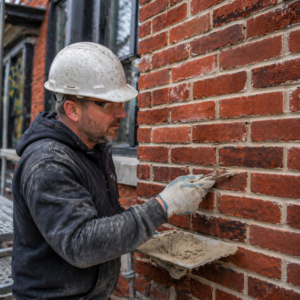
During the work, damaged mortar or brick is carefully removed so that nearby original masonry is not unnecessarily harmed. Restored sections should tie into the surrounding wall cleanly, with attention to durability and visual consistency. Before finishing, the work should be reviewed for soundness and fit, and to ensure the restored area matches the building’s character as closely as possible.
Why heritage restoration should come from a specialist
Older brick walls are less forgiving than modern repairs. The wrong mortar can trap moisture. Poor brick matching can weaken the façade’s appearance. Rushed joint work can make an older home look patched instead of restored. That is why heritage-style masonry should come from a contractor who understands restoration rather than one who treats it like a standard modern repair.
A specialist is also more likely to know when to preserve, when to replace, and when to leave sound material alone. That judgement matters because heritage work is not just about repair cost. It is also about protecting the home’s visual identity and long-term performance.
Local factors in Toronto that affect heritage masonry restoration
Toronto’s freeze-thaw cycles are one of the biggest reasons heritage brickwork deteriorates over time. The National Research Council Canada explains that moisture and freezing conditions are major factors in masonry durability. You can review the NRC Canada freeze-thaw masonry resource here.
If the property is heritage-designated, exterior work may also require City review. The City of Toronto outlines the process in the City of Toronto Heritage Permit Guide.
Toronto’s property standards also require exterior walls and related structures to be kept in good repair. You can review that document here: City of Toronto Property Standards.
Key questions homeowners ask about heritage brick restoration
Do I need a heritage specialist, or just a general mason?
For older and character homes, a contractor with heritage-style restoration experience is usually the safer choice because material matching and repair method matter more.
Can damaged bricks be replaced without making the wall look patched?
Often, yes. The result depends on how well the replacement brick and mortar are matched and how carefully the repair is installed.
Does every older home need a heritage permit?
No. But heritage-designated properties may need City review before exterior changes begin.
Can repointing alone solve the problem?
Sometimes. If the issue is mainly failed mortar, repointing may be enough. If bricks are also breaking down, the project may need selective replacement too.
What to expect when you contact us
- You tell us what masonry issue you have noticed on the older or heritage-style home.
- We arrange an inspection or estimate.
- We assess the wall and explain what type of restoration is actually needed.
- We provide a clear quote and recommended scope.
- We schedule the work and complete it with care and proper site handling.
When you are ready to discuss the next step, contact us.
Where can I find brickwork contractors experienced with heritage building restoration in Toronto?
You can find them through a masonry contractor who already works on older and heritage-style Toronto homes, understands mortar matching, and approaches restoration with care rather than quick patching. If you want a restoration that respects the building and still holds up in local weather conditions, the best next step is a thorough inspection and a quote based on the actual condition of the wall.