
Quick Answer
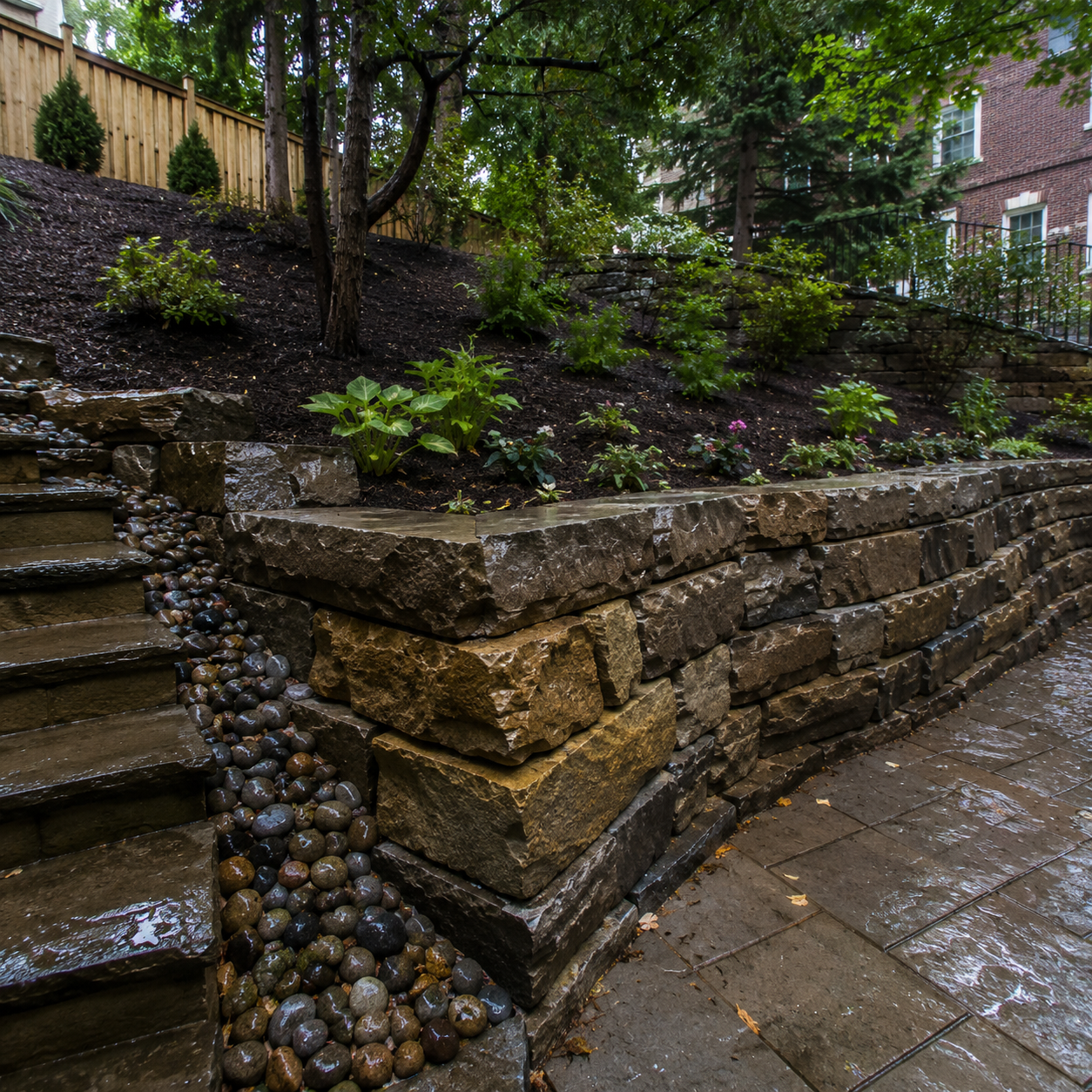
Retaining walls help control erosion by holding soil in place, slowing runoff, supporting sloped yards, and reducing soil washout after rain or snowmelt. In Toronto, they are especially useful on properties with grade changes, clay-heavy soil, older landscaping, basement moisture concerns, or outdoor areas where water moves toward the home. A retaining wall works best when it is built with proper drainage, a stable base, and materials suited to the site.
Soil erosion can happen slowly, which is why many homeowners do not notice it until a garden bed sinks, a patio edge shifts, a slope washes out, or water starts moving toward the foundation. On Toronto properties with uneven yards, narrow side lots, raised gardens, walkways, driveways, and older hardscaping, erosion can affect both appearance and function.
A retaining wall helps by supporting soil that would otherwise move downhill, wash away during storms, or press into areas where it should not go. However, a retaining wall is not only a row of stone, brick, or block. It has to manage soil, water, drainage, load, base support, and seasonal movement.
This guide explains why retaining walls matter for erosion control, how they help Toronto homeowners protect sloped and uneven areas, what warning signs suggest erosion is already active, and when a repair or rebuild may be needed.
Why Erosion Control Matters for Toronto Homes
Erosion control matters because moving soil can affect landscaping, drainage, foundations, patios, steps, driveways, walkways, and neighbouring properties. In Toronto, rain, snowmelt, freeze-thaw cycles, clay-heavy soil, and older yard layouts can make erosion worse over time.
Some erosion is easy to see, such as soil washing onto a driveway after rain. Other erosion is more subtle. Soil may slowly pull away from a wall, settle around steps, form low spots behind a patio, or expose the base of a fence or garden edge.
Toronto homeowners should also think about where water goes after it leaves a roof, driveway, patio, or slope. The City of Toronto’s basement flooding guidance identifies poor lot grading, drainage problems, overflowing eavestroughs, and leaking or plugged downspouts as common water concerns around homes. Those same conditions can contribute to soil movement and erosion around retaining walls, lower masonry, and foundation areas.
When erosion is ignored, it can become more than a landscaping issue. It can create drainage problems, expose masonry bases, undermine hardscaping, and place pressure on structures not built to handle constant wet-soil movement.
How Retaining Walls Help Control Erosion
Retaining walls help control erosion by holding soil in place where a natural slope would otherwise shift, wash out, or collapse. They create a stable barrier between higher and lower ground levels.
A properly built retaining wall can help:
- Hold back soil on a sloped yard.
- Reduce soil washout after heavy rain.
- Support raised garden beds or terraced areas.
- Protect patios, walkways, and steps from soil movement.
- Direct water away from areas where it can cause damage.
- Create a flatter, more usable outdoor space.
- Help prevent soil from pushing toward foundations or basement entrances.
- Reduce the need for repeated soil replacement after storms.
The key point is that the wall must work with drainage. A wall that holds back soil but traps water behind it can become a problem. The best erosion-control retaining walls allow water to move safely while keeping soil stable.
For Toronto homeowners planning a new wall or reviewing an existing one, Otto’s Masonry’s retaining walls Toronto page is the most relevant resource because retaining wall work must account for soil movement, drainage, materials, and long-term performance.
Common Signs of Erosion Around a Retaining Wall
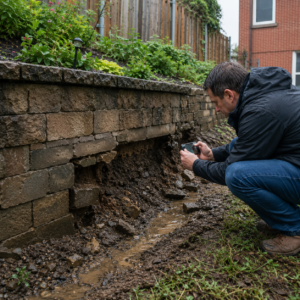
Erosion often shows up as soil movement, settlement, water paths, exposed bases, or shifting hardscaping. These signs may appear before the retaining wall itself starts to fail.
Watch for these signs:
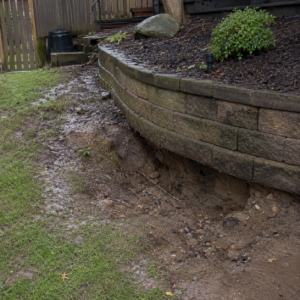
- Soil washing out from behind or under the wall.
- Low spots or holes are forming near the wall.
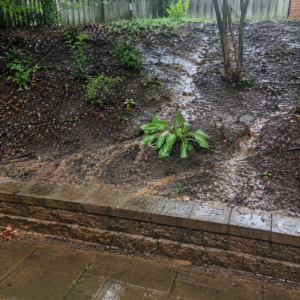
- Water trails cutting through garden beds or slopes.
- Patio stones, steps, or walkways are settling near the wall.
- Mulch, gravel, or soil collects at the bottom of a slope after rain.
- The wall base is becoming exposed.
- Gaps are forming between the wall and the soil behind it.
- Loose stones, bricks, blocks, or caps.
- Leaning, bulging, or cracking in the wall.
- Water pooling behind the wall after rain or snowmelt.
One small washout area may not mean the wall is failing. But repeated soil movement, water pooling, and wall movement together suggest that drainage and erosion control need closer attention.
What Causes Erosion Around Toronto Retaining Walls?
Erosion around retaining walls is usually caused by moving water, poor grading, poor drainage, unstable soil, roof runoff, freeze-thaw action, or a wall not built for the site conditions.
Common causes include:
- Heavy rain: Water running down a slope can carry soil.
- Snowmelt: Spring thaw can saturate soil and increase movement around walls.
- Poor grading: Soil that slopes toward the wall or house can send water where it should not go.
- Short downspouts: Roof water discharged near the wall can wash out soil and overload drainage.
- Clay-heavy soil: Clay can hold water and increase pressure behind a retaining wall.
- Missing drainage layer: Soil packed directly behind the wall can hold too much water.
- Blocked drainage outlets: Clogged weep holes or drain pipes can trap water behind the wall.
- Weak base preparation: A poor base can settle as soil and water move.
- Freeze-thaw cycles: Water in soil and masonry can freeze, expand, and shift wall materials.
The City of Toronto’s lot grading guidance explains the importance of maintaining positive drainage patterns and directing drainage toward suitable outlets. While that guidance applies to specific building situations, the homeowner’s lesson is simple: water should be directed safely, not trapped behind walls or pushed toward structures.
Why Drainage Is Just as Important as the Wall
Drainage is just as important as the wall because water pressure can damage or move even a strong-looking retaining wall. A retaining wall controls soil, but drainage controls the pressure behind it.
A retaining wall used for erosion control may need:
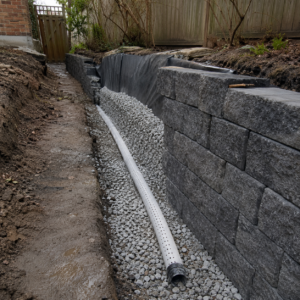
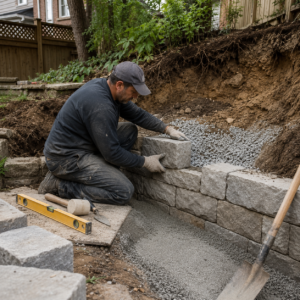
- Drainage stone behind the wall.
- A suitable base below the wall.
- Weep holes or drainage outlets where appropriate.
- Perforated drain pipe in some wall systems.
- Proper grading above and around the wall.
- Downspouts that discharge away from the wall.
- Soil and planting choices that do not overload the wall.
If drainage is missing or blocked, water can build up behind the wall. Saturated soil becomes heavier and exerts greater pressure. Over time, the wall may lean, bulge, crack, or separate. This is why patching cracks without correcting drainage often leads to repeated failure.
If a retaining wall issue is related to water moving toward the house, Otto’s Masonry’s basement waterproofing Toronto page may help homeowners understand how drainage, foundations, and exterior moisture control are connected.
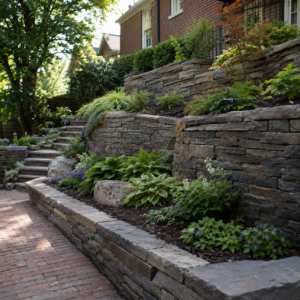
Types of Retaining Walls Used for Erosion Control
Different retaining wall types can help with erosion control, but the right choice depends on the slope, soil, height, drainage, space, appearance, and what the wall needs to support.
Common retaining wall types include:
- Gravity walls: These rely on their own weight to hold back soil. They are often built of stone, concrete, or heavy masonry.
- Segmental block walls: These use interlocking concrete blocks and are common in residential landscapes.
- Natural stone walls: These can suit older Toronto properties and garden settings when built on a proper base with proper drainage.
- Brick or masonry walls: These can match existing exterior masonry, but they must be properly designed and drained.
- Tiered retaining walls: These divide a larger slope into smaller sections, which can reduce pressure and improve usable yard space.
Material choice matters, but design matters more. A wall that looks attractive but lacks drainage or base support may not control erosion for long. Homeowners should focus on how the wall manages soil and water, not only how it looks from the front.
When a Retaining Wall May Be Enough
A retaining wall may be enough when erosion is caused by a manageable slope, garden bed movement, minor grade changes, or runoff that can be redirected with proper drainage. In these cases, a well-built wall can create stability and reduce soil movement.
A retaining wall may be suitable when:
- Soil is sliding down a slope after rain.
- A garden bed is washing onto a walkway or patio.
- A yard needs a flatter usable area.
- Water can be directed away safely with drainage improvements.
- The grade change is not creating a major structural load.
- The wall can be built with a proper base, backfill, and drainage.
For example, a sloped backyard that loses soil after every storm may benefit from a retaining wall with drainage stone, proper grading, and a clean outlet for water. The wall holds the soil while drainage prevents pressure from building behind it.
When a Larger Drainage or Structural Fix May Be Needed
A larger fix may be needed when erosion is severe, water is affecting the foundation, the wall is tall, the wall is already moving, or the property has drainage problems beyond the wall area. A retaining wall should not be used as a quick cover for a larger water problem.
A broader repair plan may be needed when:
- Water is moving toward the foundation or basement entrance.
- A retaining wall is leaning, bulging, or cracking.
- Soil is washing out under patios, steps, or walkways.
- The slope is steep or supports a driveway, public path, or structure.
- Downspouts or roof runoff are discharging into the problem area.
- Drainage outlets are blocked or missing.
- Previous repairs have failed repeatedly.
- The wall may fall under permit or designated structure requirements.
The City of Toronto provides guidance for designated structures, including retaining walls. Homeowners should check the requirements or consult a qualified professional when a wall is tall, close to a public space or a building, or supporting a significant soil load.
Repair Options for Erosion-Damaged Retaining Walls
Repair options depend on whether the wall is stable, how much soil has moved, and whether drainage is still working. A small erosion issue may need grading and drainage changes, while a failing wall may need rebuilding.
Common repair options include:
- Regrading: Adjusting soil so water flows away from the wall or house.
- Downspout extension: Moving roof water away from the wall and slope.
- Drainage repair: Clearing or adding drainage paths, weep holes, or drain pipe where suitable.
- Backfill replacement: Replacing water-holding soil with proper drainage stone behind the wall.
- Repointing: Repairing open joints on a stable masonry wall.
- Resetting loose wall units: Reinstalling shifted stones, bricks, blocks, or caps if the wall is still sound.
- Partial rebuilding: Rebuilding one failed section with better drainage and base support.
- Full rebuilding: Replacing a wall that is leaning badly, undersized, poorly drained, or unsafe.
If erosion has affected nearby patios, walkways, or outdoor living areas, Otto’s Masonry’s interlocking Toronto page may also be relevant because water movement and base settlement often affect pavers, steps, and hardscaped areas around retaining walls.
What Homeowners Can Safely Check Themselves
Homeowners can safely check for erosion from ground level, especially after rain, snowmelt, or a freeze-thaw period. The goal is to observe patterns, not dig into or disturb a wall that may be holding back weight.
Check these items:
- Look for soil collecting at the bottom of the slope or wall.
- Check for water trails cutting through soil or mulch.
- Look for gaps behind the wall or exposed wall base.
- Check whether the wall leans, bulges, or cracks.
- Look for wet soil that stays soggy behind the wall.
- Check where downspouts and roof runoff discharge.
- Look for settling patios, steps, pavers, or walkways nearby.
- Take photos from the same angles after storms to track changes.
Avoid digging behind a leaning wall, removing stones, or standing below an unstable wall. If the wall appears to be moving, loose, or under pressure, it should be assessed before anything is disturbed.
When to Call a Mason
You should call a mason when erosion is causing wall movement, soil washout, cracks, drainage problems, loose masonry, or settlement around steps, patios, or walkways. These signs suggest the issue is no longer only a landscaping concern.
Call sooner if the retaining wall is near a driveway, walkway, basement entrance, property line, public area, or foundation. Also, call sooner if water continues to collect behind the wall after rain or snowmelt.
Otto’s Masonry provides masonry services in Toronto, including retaining walls, stone masonry, brick repair, tuckpointing, concrete repair, parging, interlocking, and basement waterproofing. If erosion is affecting brick, stone, concrete, or nearby hardscaping, a masonry inspection can help determine whether targeted repair, drainage correction, or rebuilding is the better option.
FAQs About Retaining Walls and Erosion Control
How do retaining walls help control erosion?
Retaining walls control erosion by holding soil in place, reducing slope movement, slowing runoff, and supporting areas where soil would otherwise wash away after rain or snowmelt.
Do retaining walls need drainage for erosion control?
Yes. Drainage is essential because trapped water adds pressure behind the wall. A retaining wall without proper drainage can lean, crack, bulge, or fail over time.
What are the signs that erosion is damaging a retaining wall?
Signs include soil washout, gaps behind the wall, exposed wall bases, leaning, bulging, cracks, loose stones or blocks, water pooling, and nearby patios or steps settling.
Can a retaining wall stop water from reaching my foundation?
A retaining wall may help manage soil and redirect water in some situations, but it should not be treated as a full waterproofing solution. If water is reaching the foundation, drainage and waterproofing conditions should also be checked.
Are retaining walls good for sloped Toronto yards?
Yes, retaining walls can be useful for sloped Toronto yards when built with proper drainage, proper base preparation, and materials suited to the site. They can reduce soil movement and create more usable outdoor space.
When does an erosion-control retaining wall need rebuilding?
Rebuilding may be needed when the wall leans, bulges, cracks widely, loses soil support, traps water, or has repeated failed repairs. A wall under heavy soil pressure should not be fixed with surface patching alone.
Should I repair erosion before installing new landscaping?
Yes. Erosion and drainage problems should be addressed before new landscaping, patios, steps, or garden beds are installed. Otherwise, soil movement and water pressure may damage the new work.
Final Answer
Retaining walls are important for erosion control because they hold soil in place, manage grade changes, reduce washout, and help protect patios, steps, walkways, gardens, and nearby structures from soil movement. In Toronto, they are most effective when built with proper drainage, a stable base, and materials suited to local weather and soil conditions.
The practical takeaway is that erosion control is not only about building a wall. It is about controlling water, supporting soil, and preventing pressure from building behind the structure. If a retaining wall is already leaning, cracking, retaining water, or losing soil, it should be inspected before the problem worsens.